Rubio declares offensive phase of Iran war over, but Hormuz ceasefire remains under pressure
Secretary of State Rubio said Tuesday the US military had completed offensive operations against Iran, but warned of a devastating response to new threats in the Strait of Hormuz, where a string of incidents is testing the fragile ceasefire.
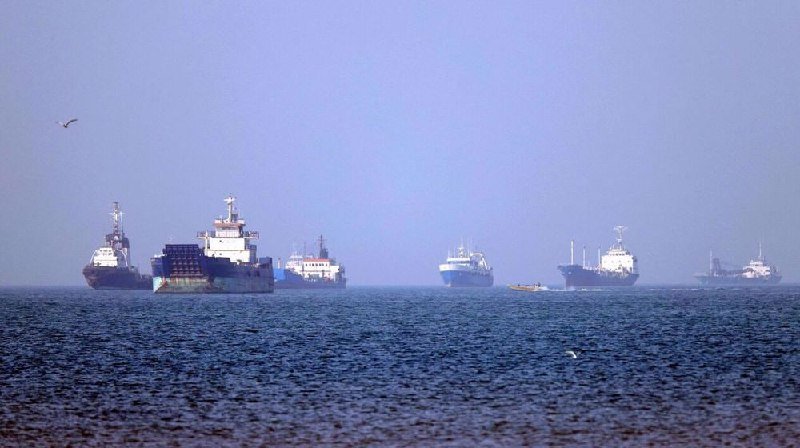
The United States declared on May 5, 2026, that its offensive military campaign against Iran had concluded, marking what officials described as the end of the active combat phase of a conflict that had escalated sharply over preceding weeks. Secretary of State Marco Rubio said the announcement from Washington came as multiple incidents in the Strait of Hormuz continued to test a fragile ceasefire, underscoring how far the broader situation remains from any settled resolution.
Rubio, speaking at a press briefing in Washington, confirmed that American forces had completed their offensive operations but delivered an unambiguous warning to Tehran: any further provocation in the vital shipping corridor would prompt what he described as a "devastating" response. The message was blunt by design — an attempt to deterrent-signal through the ambiguity of the ceasefire rather than through continued kinetic operations.
What the ceasefire actually means
The declared end of the offensive stage does not signal the end of American military presence in the region. US naval assets remain positioned in and around the Persian Gulf, and the Trump administration has been explicit that its forces retain the right to act defensively and offensively if Iranian behaviour warrants it. What has changed is the operational posture — from a campaign of strikes and sustained pressure to something closer to a holding pattern, one that keeps leverage in American hands without requiring constant escalation.
Administration officials have framed the transition as a strategic pause rather than a political concession. The campaign, by US reckoning, achieved sufficient degradation of Iranian nuclear-related infrastructure and Revolutionary Guard Corps capabilities to satisfy the administration's stated goal of eliminating the immediate threat. Whether that assessment is accurate — or whether it reflects the kind of selective reading that tends to accompany declarations of mission accomplished — is a question the evidence has not yet resolved.
What is clear is that the calculus inside the White House is not purely military. With domestic fiscal pressure mounting and an economy that has shown fresh signs of strain in recent weeks, a sustained high-intensity posture in the Gulf had become politically untenable as well as operationally costly. The ceasefire, however fragile, gives the administration a politically defensible exit ramp without requiring it to say so explicitly.
Hormuz under pressure
The Strait of Hormuz is where the ceasefire is most visibly fraying. Multiple incidents — the sources have not specified their precise nature or attribution — have been reported in and around the waterway over recent days, testing the goodwill on both sides and raising the prospect that the declared pause in combat operations could unravel before it has properly taken hold.
The strait handles roughly 20 percent of global oil trade, and any significant disruption sends immediate ripples through energy markets. That is not an abstract concern — it is the structural reason why both Washington and Tehran have an interest, however grudging, in keeping the corridor open. It is also the reason why the current cluster of incidents commands more attention in policy circles than the headline declaration of an end to offensive operations.
For Gulf monarchies — Saudi Arabia, the UAE, Qatar — the Hormuz instability is an existential commercial concern that sits awkwardly with their alignment choices. They have broadly supported the US pressure campaign against Iran, but a sustained disruption to strait traffic would damage their own revenues and their relationships with Western partners who depend on stable energy flows. Their calculus is not neutral, and it is not simple.
"We are just getting started"
The Iranian response to Rubio's announcement was swift and unyielding. An Iranian official, speaking to the BBC on May 5, offered a direct rebuttal to Washington's framing: "We are just getting started." The quote, carried across wire services, signals that whatever pause the US has declared, Tehran is interpreting it differently — not as a conclusion, but as a reorganisation of conditions that may favour Iranian options over a different time horizon.
That reading is not without structural basis. The Revolutionary Guard and Iran's allied militia networks in Iraq, Syria, and Lebanon have not been dismantled — they have been disrupted. Iranian regional influence, while reduced by the campaign's most intense strikes, remains embedded in political and military networks that operate below the threshold of state-on-state confrontation. The ceasefire declared at the strategic level does not automatically extend to those proxies, and the absence of clarity on that point is itself a source of instability.
There is also the question of what the Iranian nuclear programme looks like in the aftermath of the strikes. The US assessment that key facilities were degraded is not one Tehran has confirmed, and international atomic energy monitoring has not yet produced a public accounting that would allow independent verification. The gap between what the US claims and what Iran acknowledges is not a minor diplomatic discrepancy — it is the core question around which the entire conflict has turned.
Stakes and what comes next
The announcement of an end to offensive operations is not a peace agreement, and treating it as one would be a significant analytical error. What it represents is a transition from one phase of the conflict to another — one in which the risk of miscalculation does not diminish but changes character. A ceasefire managed under continued threat of devastating response is not a ceasefire in any stable sense; it is a deterrent relationship with an unresolved underlying conflict.
The immediate stakes are operational: whether the Hormuz incidents can be contained before any single event creates a flashpoint that either side feels compelled to answer. The medium-term stakes are structural: whether the Trump administration's stated goal of a comprehensive deal with Iran — one that would address both the nuclear programme and the regional missile and proxy network — has any realistic pathway given the level of distrust on both sides. The longer-term stakes are geopolitical: what the post-campaign regional order looks like, and whether the moment of American military pressure produces a durable realignment or simply resets the conditions for the next cycle of escalation.
The administration has said it wants a diplomatic off-ramp. Iran has said it is just getting started. The strait is not quiet. What that adds up to is a situation that is, in the most precise sense, unresolved — and that the next few weeks will either settle or destabilise in ways that are not yet possible to predict.
This publication's wire coverage of the Rubio announcement led with the US framing of a decisive military conclusion. The Iran "just getting started" counter-framing received second-position treatment across most Western services — a pattern that reflects source access disparities more than it reflects the symmetry of the two sides' positions.
Wire provenance
This editorial synthesis draws on the following public wire/social posts:
- https://t.me/france24_en
- https://t.me/BBCWorldoffl