Rubio's International Law Redefinitions Put US Credibility on Shaky Ground
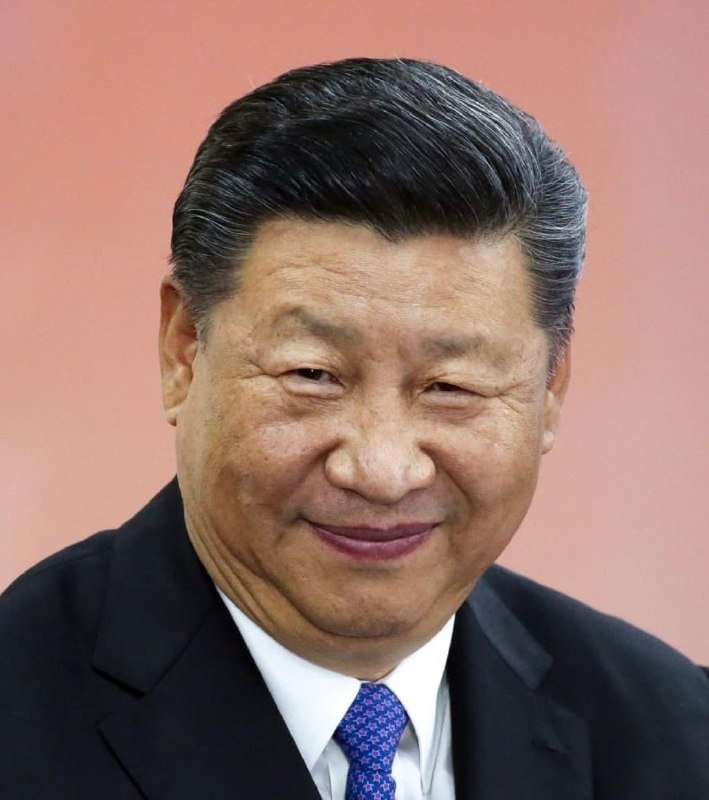
Secretary of State Marco Rubio delivered two statements on May 5, 2026, that, taken together, represent a troubling pattern in the administration's approach to international law. In the first, he dismissed international legal constraints on Iran's naval activities, asserting there is no body of law that prevents the placement of mines in international waters. In the second, he reframed the decades-long US embargo on Cuba as essentially a non-event — attributing any hardship to Venezuela's independent decision to stop providing subsidized oil. Both statements rewrote widely understood legal realities to serve immediate diplomatic positions.
The statements matter because they arrive at a moment when US credibility in multilateral institutions is already strained. The administration has spent months signalling impatience with international legal frameworks it regards as obstacles to transactional diplomacy. But the cumulative effect of this week's assertions — essentially declaring international law inapplicable when it becomes inconvenient — risks something more durable than a negotiating tactic: a habit of convenient amnesia about commitments the US itself helped author.
The Iran Framing
Rubio's statement on Iran, as captured by Bellum Acta News, focused on the legality of naval mining in international waters. The framing effectively declared that no international legal regime constrains such actions. This represents a significant departure from decades of US State Department doctrine, which has consistently invoked the United Nations Convention on the Law of the Sea (UNCLOS) — to which the US is not formally a party but which Washington has historically treated as reflective of customary international law — when challenging the maritime claims of adversaries.
The inconsistency is notable. When Chinese claims in the South China Sea conflicted with US interests, the State Department cited UNCLOS principles. When Iranian assertions about Strait of Hormuz rights have arisen, US officials have similarly invoked international waterway norms. Now, the Secretary of State appears to be suggesting that the same framework does not apply when determining what actions are legally permissible for adversary states.
Iran's nuclear programme and regional activities remain active concerns for Washington. But the legal question Rubio raised is distinct from the policy question: whether international law permits certain maritime conduct is a prior issue to whether Tehran should face consequences for it. By collapsing those questions into an assertion that no legal constraint exists, the administration forecloses its own future leverage — if international law doesn't bind Iran in this instance, it cannot be invoked to bind anyone else in similar circumstances.
The Cuba Redefinition
The Cuba statement, captured by Disclose.tv from Secretary Rub Rubio's remarks, went further in its reframing of established facts. Rubio declared that there is no oil blockade on Cuba, and that the only blockade occurring is one imposed by Venezuela through its decision to cease providing free oil. This characterization bears little resemblance to the structure of the US embargo, which has been in place since 1960 and includes extensive restrictions on oil exports, financial transactions, and trade more broadly.
The Venezuelan connection is real but partial. Caracas did supply Cuba with heavily subsidized oil under the Chávez-era Petrocaribe arrangement, and the reduction of that supply following Venezuela's political crises has compounded Cuban economic pressures. But attributing Cuban economic hardship primarily to Venezuela's decisions is a significant distortion of a more complicated picture — one that includes the US embargo's direct effects on fuel imports, shipping insurance, and international banking.
Cuban officials and international legal analysts have consistently cited the embargo's extraterritorial reach — the secondary sanctions regime that penalizes third-country companies for trading with Cuba — as evidence that the embargo operates as a blockade in functional terms. The US has disputed this characterization, but Rub Rub Rubio's statement this week appears to move the goalposts further: not only is the embargo not a blockade, but any hardship Cubans experience cannot even be traced to US policy decisions.
A Pattern of Convenient Redefinitions
What connects these two statements is their shared logic: international legal frameworks apply selectively, and the US reserves the right to determine when they apply to adversaries and when they do not. This is not a novel position for any administration — all states engage in selective interpretations of international law when their interests collide with legal constraints. But the explicitness of Rub Rubio's statements this week, delivered in quick succession, suggests an administration willing to abandon even the rhetoric of consistent legal principles.
The implications extend beyond Iran and Cuba. If international law does not constrain maritime mining by adversaries, it equally does not constrain US adversaries in other domains. The same logic that dismisses legal limits on Iranian naval activities would apply to Chinese claims in the South China Sea, Russian assertions in the Arctic, or any number of contested legal positions. Declaring international law inapplicable to one actor's conduct makes it harder to invoke against another's.
The Cuba reframing is similarly corrosive. By suggesting that economic pressure on Cuba stems entirely from third-country decisions, the administration removes any US accountability for the effects of its own policy choices. This may serve a short-term diplomatic interest — making it harder for critics to attribute Cuban hardship to Washington — but it also abdicates responsibility for the legal and humanitarian implications of the embargo itself.
The Stakes for US Credibility
The stakes are significant and enduring. US leverage in multilateral institutions rests on a historical commitment — however imperfectly practiced — to the principle that rules apply to all states. When Washington invokes international law against adversaries, it draws on a reservoir of institutional credibility built over decades. That credibility is not unlimited, and it depends on the appearance of consistent application.
An administration that explicitly discards legal constraints when they conflict with immediate interests signals to allies and adversaries alike that the US will invoke international law when convenient and dismiss it when burdensome. This is a more radical position than traditional realist analysis, which accepts that great powers act on interests but typically maintain the formal language of legal obligation for strategic purposes. Rub Rubio's statements this week suggest the State Department may be prepared to abandon even that formal language.
The sources do not indicate whether these statements represent a coordinated policy shift or ad hoc responses to specific questions. What is clear is their cumulative effect. Whether the target is Iranian nuclear diplomacy, Cuban normalization talks, or broader multilateral engagement, the US enters those conversations this week with diminished standing to invoke international legal frameworks — because its top diplomat has publicly declared those frameworks inapplicable when they conflict with US preferences.
For international legal order, the implications are structural. A great power that openly picks and chooses which legal obligations to recognize is a great power that has decided legal obligation itself is negotiable. Other states — particularly those with fewer resources to shape international norms — will take note. The rules-based order that Washington claims to champion depends on the premise that even powerful states submit to legal constraints. This week's statements make that premise harder to defend.
This article focused on Secretary Rubio's statements as reported by wire services. The Bellum Acta and Disclose.tv threads captured the statements directly; no independent corroboration of context or follow-up statements from the State Department was available in the sources reviewed.
Wire provenance
This editorial synthesis draws on the following public wire/social posts:
- https://t.me/BellumActaNews/4821
- https://t.me/osintlive/12847