Rubio's Iran Rant Tells Us More About Washington Than Tehran
Marco Rubio's White House briefing offered tough rhetoric on Iran, but language that crude rarely bends behavior—and the Global South is watching.
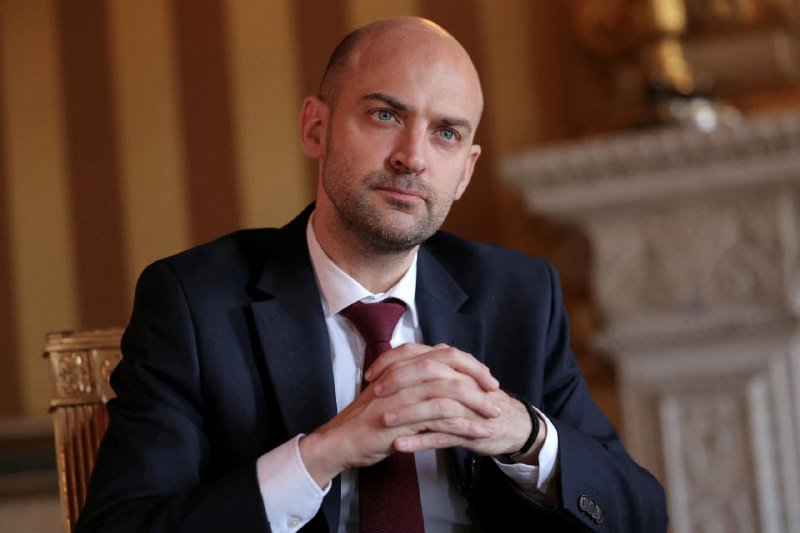
There is a particular kind of confidence that comes from standing at the White House podium for the first time in place of a colleague on maternity leave. On 5 May 2026, Marco Rubio used the moment to tell reporters that the people running Iran are insane. Not diplomatically worded. Not strategically hedged. Insane. The specific phrasing—"insane in the brain," per the transcript—will not appear in any State Department fact sheet. It will, however, land in foreign ministries from Beijing to Brasília, where officials will file it under the same mental folder as every other signal the Trump administration has sent about American耐心 this year.
The substance beneath the rhetoric matters. Rubio's threat of secondary sanctions on any foreign financial institution or commercial actor enabling Iranian sanctions evasion is not idle. Secondary sanctions are a real instrument. They have bitten European banks, Chinese firms, and Gulf-state commodity traders. The mechanism is blunt but proven: cut off access to the dollar system, and most actors fold. The problem is not the threat itself. The problem is what the threat is supposed to accomplish—and whether history offers any encouragement.
The Blunt Instrument Problem
Sanctions regimes against Iran have been in place in some form for four decades. The cumulative pressure has squeezed the economy hard—Rubio's claim that inflation sits at 70 percent and that the rial is in "total and complete freefall" tracks with independent assessments of Iranian economic conditions. These are not invented pressures. The economic distress is real.
But real economic pain has not produced regime change. It has produced resilience, adaptation, and a deepening of ties with non-dollar trading partners. Iranian officials have had forty years to learn that the Western financial architecture can be circumnavigated, not dismantled. The Belt and Road routing, the yuan-oil futures contracts, the SWIFT alternatives being built in Shanghai and Moscow—all of this exists in part because Iran proved the lesson: squeeze hard enough and actors will find the exits.
The secondary sanctions threat Rubio issued is strongest against actors who still want access to the American financial system. It is weakest against those who have already accepted that they cannot have it both ways. For the Chinese banks and Gulf commodities traders who have spent the last decade quietly restructuring their Iranian exposure, the threat lands differently than it would have in 2015. The architecture of evasion is more mature. The geopolitical incentive to use it—to signal independence from American diktat—is higher.
What the Language Reveals
The "insane in the brain" framing is not incidental. Diplomatic communication, even tough diplomatic communication, typically maintains a functional fiction: that the other side is a rational actor operating under misapprehensions that can be corrected through pressure. Calling leadership insane forecloses that fiction. It signals that this administration does not expect negotiation. It does not expect the Iranian system to moderate in response to incentive. It expects only capitulation, and it is communicating that expectation publicly.
That posture has a logical internal coherence: a negotiating strategy built on maximum pressure and diplomatic humiliation has no room for the language of mutual recognition. But it also forecloses off-ramps that a more calibrated approach might keep open. When an Iranian official eventually comes to a table—and absent a military confrontation, eventually they always do—that official will arrive having heard this administration describe them as unhinged. That is not irrelevant context.
The Global South is watching this closely, and not only because of Iran. Every statement of this kind is absorbed into a running tally of what American patience looks like in practice. Countries that have spent years navigating between Washington and Beijing are updating their models. If the United States will describe a sitting government as clinically insane over a press briefing, what vocabulary awaits them if their own geopolitical calculations diverge too sharply from American preferences? The secondary sanctions threat is a reminder that dollar access is conditional. The language is a reminder that diplomatic respect is conditional too.
The Economic Data Is Real, But So Is the Resilience
To be precise about what Rubio said: inflation at 70 percent is a severe number, and a currency in freefall is a genuine crisis for any government to manage. Iranian households are bearing real costs. The sanctions architecture has bite. This publication does not dispute that the pressure is substantial.
What is also true—though it did not appear in Tuesday's briefing—is that Iran has managed comparable or worse economic dislocations before and maintained state cohesion. The Iran-Iraq war years involved hyperinflation and scarcity without producing the regime collapse Western analysts periodically predicted. The 2018 maximum pressure campaign under the Trump administration's first term produced a documented contraction in GDP and a spike in poverty rates. The Iranian rial weakened sharply. And yet the state apparatus held, in part because the survival reflex of a targeted government is not separable from the survival reflex of its population—however much Western analysts might hope otherwise.
The question is not whether the economic pressure is real. It is whether the political objective—behavioral change in Tehran's nuclear program, regional posture, or broader conduct—is achievable through this instrument alone. The historical record, stretched across four decades, offers the honest answer: it is not. Maximum pressure has produced adaptation, not capitulation.
The Stakes Beyond Tehran
If the Rubio briefing accomplishes one thing cleanly, it is to clarify the negotiating position of the current administration. There will be no diplomatic fig leaf here. No careful language designed to leave room for reciprocal gesture. The message is that Iran is a pariah state led by people who do not deserve the courtesy of a diplomatic euphemism.
The stakes of that clarity are not only Iranian. They are architectural. The dollar-based financial system derives much of its coercive power from the assumption that actors will prioritize access over alternatives. Each deployment of secondary sanctions that fails to change behavior—that produces only more sophisticated evasion and deeper engagement with non-dollar infrastructure—erodes that assumption incrementally. China, Russia, the Gulf states, the ASEAN economies building their own payment rails: all of them are watching the enforcement record. Each failure of maximum pressure to achieve its stated objective is a data point in their models of American decline.
None of this is argument that Iran poses no policy problem. The nuclear question is genuine. The regional destabilization is documented. The case for sustained pressure is real. The question is whether this administration's particular version of that pressure—with its contemptuous language and its insistence on humiliation rather than negotiated constraint—is the version most likely to work. The historical record says no. The geopolitical optics say the cost is higher than the briefing acknowledged.
Rubio at the podium is a real moment. So is the long arc of sanctions policy that it extends. One produces a news cycle. The other shapes a world—and that world is not bending as fast as the rhetoric implies.
Wire provenance
This editorial synthesis draws on the following public wire/social posts:
- https://t.me/ClashReport/58214
- https://t.me/ClashReport/58212
- https://t.me/ClashReport/58210
- https://t.me/ClashReport/58202