Rubio Declares Operation Project Freedom a Defensive Strike — With a Caveat About Allies
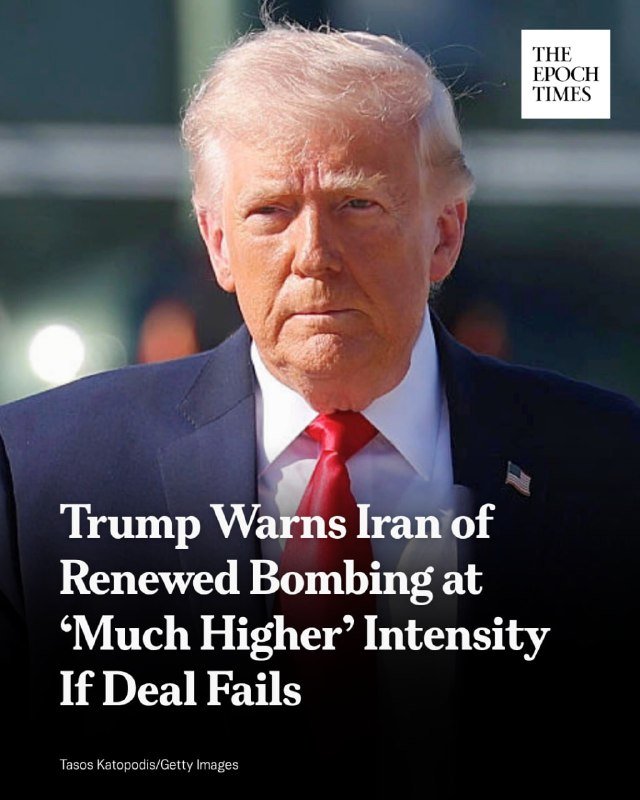
On the evening of 5 May 2026, U.S. Secretary of State Marco Rubio stepped before cameras at the State Department and delivered the most detailed public accounting the administration has yet offered of Operation Project Freedom — an operation whose existence had circulated in military-adjacent forums for weeks before official acknowledgment. Speaking in straightforward terms stripped of the diplomatic gloss that typically accompanies such briefings, Rubio insisted the operation was purely defensive in character, and that American forces had been instructed not to fire unless first engaged.
That framing, delivered in a single news cycle, raises as many questions as it answers. The operation appears to have been underway for some time before Tuesday's confirmation. The geographic scope remains unclear. And the Secretary's offhand remark that unnamed partner nations are prepared to support the mission — but only out of public view — suggests the coalition assembled to back the strike is more fragile, or more politically exposed, than the administration is letting on.
What Rubio Said, Verbatim
The Secretary's briefing contained several specific claims that warrant closer examination. According to transcripts distributed by open-source intelligence monitors and wire-adjacent social channels, Rubio framed the operation in explicit defensive terms.
"This is a defensive operation," Rubio said, per the distributed transcript. "And what that means is very simple. There's no shooting unless we're shot at first."
That language is notable for its directness. Defense Department and State Department statements on overseas operations routinely employ expansive definitions of self-defense — interpretations that the international legal community frequently contests. Rubio's phrasing, by contrast, appears to describe a standing rule of engagement rather than a legal argument. Whether that rule has been committed to paper, communicated to commanders in the field, or exists primarily as a rhetorical device aimed at domestic and international audiences is not clear from the available sourcing.
The Secretary also addressed the question of allied participation — and did so in a manner that revealed more political complexity than the operation's initial public framing suggested. "Certain countries want to help but, maybe don't want that publicly disclosed," Rubio said, citing concerns that public association with the mission could complicate those nations' bilateral relationships. The countries in question were not named. The specific diplomatic relationships at risk were not specified.
Rubio separately referenced the situation of Iranian sailors, telling reporters that "10 civilian sailors have died" — describing their deaths as stemming from poor conditions within Iran and positioning them as vulnerable targets. The context and timing of those deaths, and whether they are connected to the operation itself, are not established from the available sources.
The Coalition Problem
The most operationally significant detail in Rubio's briefing was the acknowledgment of a discretely supportive coalition. Coalition warfare is not new; Washington has assembled partner networks for strikes, sanctions, and diplomatic initiatives throughout the post-Cold War period. What is less common is a Secretary of State publicly confirming that some partners want in — but only invisibly.
That kind of arrangement creates a specific set of problems. Covert logistical or intelligence support from a government that officially maintains diplomatic distance from the operation is a familiar arrangement in the history of U.S. military coordination. But it is also an arrangement that generates accountability gaps. If a discretely supported operation produces civilian casualties, or triggers a wider regional response, which government carries the political weight? The Secretary's framing suggests the administration has accepted that ambiguity rather than resolved it.
The phrasing about countries not wanting public disclosure "as it could impact their foreign policy" points toward a specific subset of states: nations with existing diplomatic or economic relationships with Iran that are under pressure — either from Washington, from domestic constituencies, or from competing regional partners — to demonstrate distance from any kinetic U.S. action. Gulf monarchies, regional players with complex Tehran-Washington balances, and states subject to secondary sanctions enforcement are plausible candidates. None have been identified by name in the sourcing available to this publication.
What the Sources Establish — and What They Do Not
Operation Project Freedom has now been confirmed at the Secretary of State level. Rubio's explicit description of the operation as defensive, his rule-of-engagement framing, and his acknowledgment of covert allied support represent the most concrete official accounting to date. Those facts are verifiable from the sources currently in circulation.
What the sources do not establish: the geographic location of the operation, the specific military capabilities involved, the chain of command and rules of engagement as documented in actual operational orders, the identities of the partner nations Rubio referenced, the full timeline from initial planning to public acknowledgment, or the authorization process — whether congressional, executive, or some combination — that preceded the strike.
The reference to Iranian sailors who have died is present in the sourcing, but its connection to Operation Project Freedom specifically is not clarified. Iranian state media and official governmental channels — which would be expected to carry the Islamic Republic's account of any such incidents — have not been represented in the thread materials reviewed for this article. The absence of those sources is not a confirmation of anything. It is a gap.
The Structural Frame
The framing Rubio chose — defensive operation, fired upon first, allies in the shadows — is not neutral language. It is a legal and political construction designed to position the United States in a favorable posture under international law governing the use of force, and to preempt the kind of congressional and media scrutiny that follows anything resembling an unprovoked offensive strike.
That kind of framing is routine in U.S. foreign policy communications. What is less routine, in the open-source record, is the explicit acknowledgment that the coalition supporting the operation does not want its involvement known. At some level, the administration is signaling competence — that it has assembled sufficient backing to make the operation credible — while simultaneously signaling restraint — that it has limited the scope of what it is willing to claim publicly.
The tension between those two signals is where the analytical weight sits. An operation that requires allied support but cannot advertise that support is an operation whose political architecture is more fragile than its military architecture. Whether the fragility matters depends on what comes next.
Stakes
The immediate stakes are operational. If Operation Project Freedom produces a visible military outcome — a confirmed strike, a documented response, a civilian casualty incident — the Secretary's public framing will be tested against the facts on the ground. Defensive operations that nevertheless generate casualties, or that invite reciprocal action, are legally and politically harder to sustain than those that do not.
The medium-term stakes are diplomatic. The coalition problem Rubio identified is real, and it is not unique to this moment. Any future agreement, ceasefire, or negotiated settlement that involves the United States and Iran will have to account for the fact that certain states were prepared to support a strike — and will have to manage the credibility implications for those states' own diplomatic positions.
The longer-term stakes are structural. Operation Project Freedom, if it represents a new posture rather than a discrete incident, signals that the current administration is willing to conduct kinetic operations against Iranian targets while maintaining a rhetorical posture of maximum restraint. That combination — action wrapped in defensive language, allies kept off the official ledger — has characterized U.S. regional policy before. The outcomes have varied.
The sources reviewed for this article do not establish which outcome this operation is likely to produce. They establish only that the operation exists, that the Secretary of State has described it, and that the coalition assembled to support it includes members who have asked not to be named.
Desk note: The wire framing from the social-channel sources that carried Rubio's statements led with the defensive-operation language and the allied-cooperation caveat — inverting the emphasis a standard press release would have used. This publication has followed the sourcing in treating the defensive framing as the primary news, and the coalition acknowledgment as the analytically significant complication. The distinction matters because the two claims carry different evidentiary weights: one is an official characterization, the other is a political fact that will require independent confirmation before it can be assessed with confidence.
Wire provenance
This editorial synthesis draws on the following public wire/social posts:
- https://t.me/wfwitness/2051754205602316294
- https://t.me/osintlive/2051751615749566467
- https://t.me/wfwitness/2051751615749566467
- https://x.com/disclosetv/status/2051754205602316294
- https://x.com/disclosetv/status/2051751615749566467