Rubio's 'People vs. Government' Line on Iran Is Clever. That Doesn't Make It a Strategy.
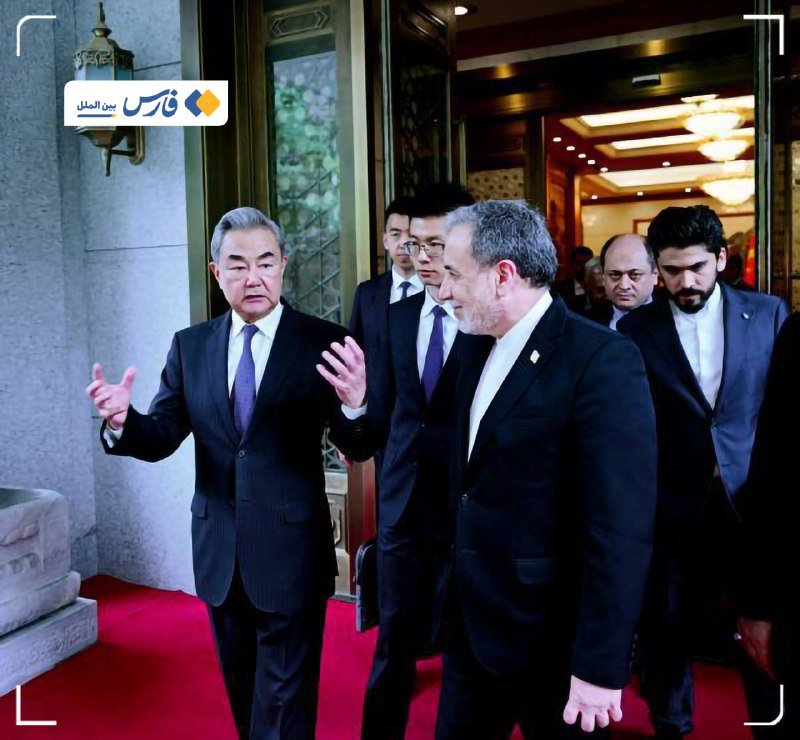
Marco Rubio has a line on Iran that he has clearly been workshopping. At a press conference on 5 May 2026, the Secretary of State said he did not know of "any country in the world where there's a bigger difference between the people and the people who run the country." On the same day he offered a second formulation: Iran should, in his words, "check themselves before they wreck themselves." The first framing is empathetic toward ordinary Iranians. The second is a warning to the Islamic Republic. Together they constitute a posture — and it is worth asking what that posture is actually designed to accomplish.
The people-versus-government frame has become a fixture of US Iran rhetoric for obvious reasons. It separates the population from a regime the US has spent decades trying to isolate, it signals moral calibration to allies in the Gulf and to European partners who resist blanket sanctions that harm civilians, and it gives diplomatic negotiators a pressure lever that does not require them to offer concessions to the Supreme Leader's inner circle. Rubio's version lands these points fluently. What it does not do is confront the structural reason that gap persists — which is that the Islamic Republic has managed to govern without a genuine popular mandate for forty-six years precisely by building institutional resilience into repression.
The Regime's Own People Problem — And Washington's Misread of It
The notion that Iranian citizens are alienated from their government is well-grounded in the polling data that has accumulated since the disputed 2009 election, the Green Movement, the 2019 fuel protests, and — most dramatically — the 2022 Mahsa Amini uprising that saw hundreds killed and internet blackouts imposed across major cities. Iran's security apparatus responded to each of these with force. The regime did not collapse. The structural reason is that the Revolutionary Guard Corps and its affiliatedBasij network do not rely on popular consent in the way a democratic government does; they rely on a layered system of economic patronage, ideological loyalty structures, and elite coercion that survives precisely because it is not dependent on winning a popularity contest.
Washington's "people vs. government" framing treats this as a bug. The implicit bet is that isolating the leadership — cutting deals with the population over the heads of the clerics — will eventually produce a governability problem that forces concessions or regime change. But the history of the last two decades of "maximum pressure" suggests this bet is not reliably structured. Sanctions have reduced living standards. They have not produced political opening. The Trump administration's withdrawal from the JCPOA in 2018 was premised on a theory that better terms could be negotiated from a position of maximum economic coercion. What followed was an acceleration of Iran's uranium enrichment programme, not a negotiating table.
The Nuclear Talks Are What They Are — And the Framing Won't Change That
The current round of US-Iran nuclear discussions — ongoing as of this writing, with talks continuing through the spring of 2026 — has been characterised by a familiar pattern: periodic positive signals, then hard-line reversals, then another round of talks. Iran's enrichment levels have continued to climb. The International Atomic Energy Agency has reported unresolved questions about the scope and purpose of Iran's programme at multiple board meetings. None of this is new.
The "people vs. government" rhetoric does not change the negotiating geometry. Iran's delegation will not concede its nuclear programme because the US Secretary of State expresses sympathy for the Iranian people. The IRGC's economic interests — which are substantial and in many sectors dominant — will not become more flexible because Washington signals it views the Supreme Leader as disconnected from his own population. What the framing does, at best, is keep European and Arab partners who are wary of humanitarian sanctions committed to the US position. At worst, it provides the appearance of moral seriousness without the substantive leverage that would actually shift Tehran's calculus.
What the Framing Actually Signals
There is a domestic political dimension to this that is worth naming. The "Iran vs. its people" frame is a useful reframe for a US administration that is simultaneously conducting nuclear negotiations — a process that typically generates criticism from the right as appeasement — and wants to signal strength to Gulf allies who funded normalisation with Saudi Arabia. By framing the current moment as a moral contest between a population and its rulers, rather than as a geopolitical negotiation between states, the administration immunises itself partially against the accusation that it is doing business with a hostile regime.
That is a communications strategy. It is not a diplomatic one. The substantive question — whether the current round of talks produces verifiable constraints on Iran's enrichment, whether any agreement includes snapback provisions that actually function, whether Tehran's regional behaviour changes in response to a deal — will be answered by the details of whatever is negotiated. The framing will not help with any of those questions. It may, however, make it easier to sell whatever agreement is reached to a domestic audience that has been told for months that the Iranian leadership is an illegitimate outlier.
The Stakes, and Why They Resist Clean Resolution
If the current talks collapse, the US will face a familiar choice: escalate sanctions and risk a regional acceleration, or accept a limited agreement that leaves Iran's enrichment capacity partially intact. The people-versus-government framing does not resolve that dilemma. It colours the way the collapse is communicated. What it cannot do is alter the underlying strategic calculation that has driven Iran's nuclear programme since 2003 — which is that a nuclear breakout capability serves the regime's core interest in self-preservation in a region where it has faced military threats, including from Israel and the United States, for four decades.
The Secretary of State's framing is empathetic, sharp, and quotable. It may win a news cycle. Whether it survives contact with the actual negotiating record that is being assembled in Vienna or wherever the current talks are physically located is a different question — and one that the available public record does not yet answer.
Monexus covered this story through the lens of diplomatic messaging versus structural leverage — a framing the wire services tended to treat as secondary to the policy outcome itself.
Wire provenance
This editorial synthesis draws on the following public wire/social posts:
- https://t.me/osintlive/5432
- https://twitter.com/Osint613/status/20517566877
- https://twitter.com/Osint613/status/20517566877