Rubio Tells China to Pressure Iran as US Warns of 'International Waterway' Threat
Secretary of State Marco Rubio publicly appealed to Beijing on Monday to use its influence over Tehran, as the United States warned that Iranian actions posed a threat to freedom of navigation in critical maritime corridors.
Secretary of State Marco Rubio publicly pressed China on Monday to use what leverage it holds over Tehran, warning that Iranian actions threatened to destabilise critical international shipping lanes. Speaking at the State Department, Rubio suggested Beijing's economic ties with Tehran gave it a unique responsibility to intervene before any crisis escalated further.
The remarks came as the administration intensified its public pressure campaign against Iran, signalling that diplomatic channels remained open while keeping military options on the table. The dual-track approach — public ultimatum wrapped in diplomatic language — has defined the administration's posture since taking office, but Monday's briefing marked some of the bluntest language yet directed at the Islamic Republic.
A Direct Appeal to Beijing
Rubio's comments at the podium on 5 May were addressed as much to China's leadership as to a domestic audience. "I hope the Chinese will tell Iran something that needs to be said — that what you are doing poses a threat not just to the region but to the global economy," according to the text of his remarks as distributed by the department's communications office. The secretary said he believed Chinese officials understood the stakes and hoped they would act accordingly.
The framing reflected a consistent White House strategy: rather than engaging Tehran directly, Washington has sought to pressure Iran through third parties with greater economic leverage. China is Iran's largest trading partner and a significant purchaser of its oil, giving Beijing a relationship that American officials have long argued could be used to restrain Iranian behaviour. Whether China is willing to wield that influence, and at what cost to its own interests, remains the central question.
Beijing has maintained a studied neutrality in public statements about US-Iran tensions, neither endorsing Iranian actions nor aligning itself with American pressure. Chinese officials have previously argued that unilateral sanctions and maximum-pressure campaigns only entrench hardliners in Tehran and reduce the space for diplomatic progress. That position has not shifted, according to available reporting from Chinese state media.
The 'Insane' Comment and Diplomatic Norms
Among the sharper remarks attributed to Rubio during the briefing was a characterisation of Iranian leadership that one outlet reported verbatim: that "the leaders of Iran still haven't surrendered. That's because they're insane in the brain." The comment, by its nature, departed from the calibrated language typically employed by senior diplomats in public settings.
The remark drew immediate reaction from observers who noted that it represented a notable break from norms governing executive-branch communications on foreign adversaries. Such language, while reflecting a view clearly held within the administration, complicates efforts to maintain credibility with European and Asian partners whom the United States needs to coordinate any broader pressure campaign. Several Nato allies have publicly cautioned against rhetoric that forecloses diplomatic off-ramps.
State Department officials offered no formal correction to the characterisation as it circulated in wires and on social media. A department spokesperson, when asked to clarify the secretary's remarks, said Rubio's position was "well known" and pointed back to the official transcript. No further elaboration was provided.
International Waterways and the Legal Framework
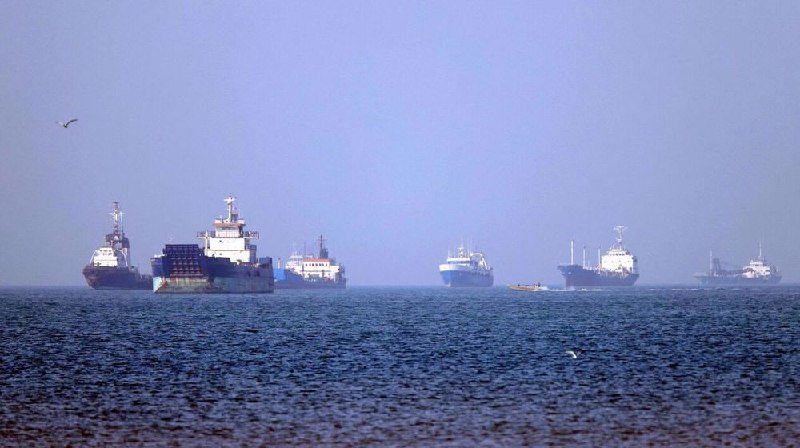
Separately, Rubio addressed questions about the legal basis for action regarding what he described as threats to "an international body of water." "There is no international law that allows you to say, 'I'm going to put mines in an international body of water and that is acceptable,'" he told reporters, according to remarks confirmed by multiple outlets tracking the briefing. The comment appeared aimed at pre-empting any argument that Iranian military posturing in the Strait of Hormuz or adjacent waters could be legally justified under customary international law.
The Strait of Hormuz carries roughly one-fifth of the world's oil shipments and remains one of the most strategically sensitive maritime corridors on the planet. Any credible threat to disrupt passage through those waters would carry immediate global economic consequences, a reality Rubio appeared intent on making central to the public record.
Iranian officials have historically justified naval exercises and missile tests near the strait as exercises of sovereign rights under international law, a position that finds some support in legal scholarship on the rights of coastal states in their exclusive economic zones. Whether any actual mining operation would be involved — or is merely being used as rhetorical leverage in current negotiations over Iran's nuclear programme — remains unclear from the available sources.
Escalation Risk and Diplomatic Off-Ramps
The combination of public pressure on China, informal threats, and the administration-level language used on Monday raises the question of whether the United States is genuinely preparing for a confrontation or simply calibrating its coercive posture ahead of renewed nuclear talks. Administration officials have consistently maintained that diplomacy remains the preferred outcome, but the timeline for any resumed negotiations with Tehran is not clear.
European powers — France, Germany, and the United Kingdom — have urged the administration to keep communications with Tehran open and to avoid steps that would make a negotiated solution harder to sell domestically in Iran. The window for such a deal, if it exists, appears to be narrowing as domestic political pressures in both capitals harden.
What the sources do not establish is whether the current rhetoric reflects a deliberate escalation strategy or a negotiating posture designed to extract concessions before any talks begin. The distinction matters: one scenario involves a possible military confrontation over Hormuz shipping; the other involves a familiar pattern of pressure-and-negotiate that has defined US-Iran relations for years. The evidence from Monday's State Department briefing alone is insufficient to determine which trajectory is operative.
This publication's wire coverage of the State Department briefing led with the China's-role framing rather than the inflammatory language, reflecting a decision to foreground the policy mechanism — third-party pressure — over the rhetorical content.
Wire provenance
This editorial synthesis draws on the following public wire/social posts:
- https://t.me/farsna/8743
- https://t.me/Middle_East_Spectator/11482
- https://t.me/BellumActaNews/9201