Russia Strikes Kramatorsk and Zaporizhzhia in Day of Attacks on Civilian Areas
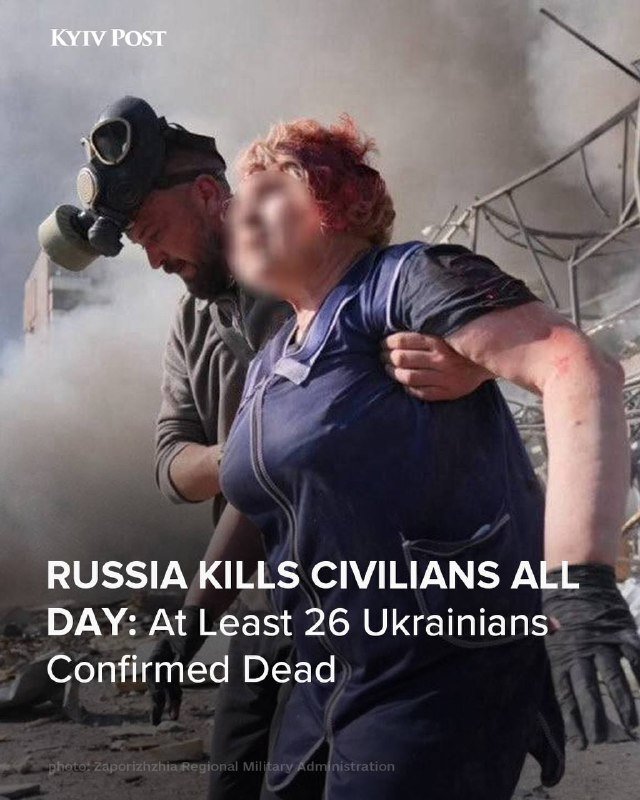
On May 5, 2026, Russian forces struck the centre of Kramatorsk with guided aerial bombs, Ukrainian military and official sources reported. The attack ignited fires in a residential area of the city, which lies roughly twenty kilometres west of the current front line in Donetsk Oblast. The Operativno ZSU Telegram channel, managed by Ukraine's operational command, confirmed at 15:02 UTC that the city was "engulfed in fire" with casualties reported. A second strike, confirmed by independent monitoring accounts citing Ukrainian sources, struck Zaporizhzhia in the south of the country earlier the same afternoon. The exact casualty figures from both attacks remained unconfirmed at time of publication.
The dual strikes underscore a pattern that has defined much of Russia's strike campaign in the second half of the war: the targeting of population centres well behind the front line, using precision-guided munitions that suggest deliberate selection of objectives rather than the collateral effect of inaccurate weapons. Kramatorsk is not a military installation. It is a city of roughly 150,000 people that has served for years as a hub for civilian evacuation, humanitarian logistics, and local governance for surrounding communities displaced by fighting further east. Whatever assessment of military necessity Russia applies, the strikes landed in a district where civilians live, not where Ukrainian forces are organised.
A pattern of attacks on civilian-adjacent targets
The strikes on May 5 are not isolated. They fall within a months-long pattern of Russian aviation activity directed at the urban centres of eastern and southern Ukraine, not in close proximity to active battlefield engagements but at distances and locations that point to a campaign of attrition against the civilian infrastructure of cities Ukraine's government is trying to keep functioning. Kramatorsk has been struck multiple times before. The city's railway station, a critical civilian evacuation and logistics node, was hit in April 2022 in an attack that killed dozens and became one of the war's most widely documented early atrocities. That the city has been struck again, with a different weapon system and at a different location, reflects Russia's continued willingness to treat civilian-concentrated areas as legitimate targets.
The Zaporizhzhia strike, reported by Ukrainian sources in the early afternoon of May 5, targeted the city with a KAB — a corrected guided aerial bomb. Russian forces have increasingly relied on such weapons throughout 2025 and 2026, converting Soviet-era unguided bombs into precision-strike weapons by fitting them with satellite navigation kits. The approach is cost-effective for Russia and allows aircraft to deliver ordnance from beyond the range of most Ukrainian air defence systems. Ukrainian officials have repeatedly raised concern about the weapons' accuracy, noting that navigation kit failures or GPS jamming can send corrected bombs dozens or hundreds of metres off target — a tolerance that is acceptable over a dispersed military formation but potentially devastating over a residential block.
Tactical choices and the question of intent
Russia has a choice, at each strike decision, about what to target. Its forces have demonstrated the ability to strike military logistics nodes, supply routes, troop concentrations, and command facilities when those objectives are identified and prioritised. The strikes on May 5 targeted civilian districts. The Russian Ministry of Defence has not issued a statement addressing either strike at time of publication. Russian state media had not, as of 18:00 UTC on May 5, published casualty figures, target descriptions, or any official characterisation of the attacks.
The targeting pattern invites a structural question: what does Russia accomplish by striking Kramatorsk's residential centre rather than its railway infrastructure or command facilities located nearby? One plausible read is that the attacks aim at civilian morale and at compelling Ukraine to divert air defence assets from front-line positions to protect rear cities — a tactic with a long history in strategic bombing doctrine. A second is that the strikes simply exploit the opportunity presented by airspace conditions, choosing targets that are accessible rather than strategically selected. A third — difficult to verify from open sources but consistent with documented Russian strike behaviour — is that civilian harm is itself the objective, designed to accelerate displacement and erode the economic viability of cities Ukraine's government seeks to maintain. These readings are not mutually exclusive.
What is clear is that Western military support to Ukraine has, in recent months, included authorisations for Ukraine to strike military infrastructure inside Russia using long-range Western-provided systems. Whether those authorisations have altered Russian strike calculations — either by encouraging Russia to escalate its own aviation activity in anticipation of reduced Ukrainian air defence coverage, or by producing a pause in certain categories of Russian strikes pending assessment of the new threat environment — is a question the available sources do not resolve. The strikes on May 5 suggest that whatever calculation Russia is making, it has not produced restraint.
The human and legal dimensions
The attacks on Kramatorsk and Zaporizhzhia land in a conflict where the legal framework is well established, even if enforcement remains absent. The use of explosive weapons in civilian areas violates international humanitarian law when the weapon employed is incapable of distinguishing between military and civilian objects — a category that includes uncorrected aerial bombs and, under certain conditions, guided bombs used against targets adjacent to civilian habitation without sufficient precautionary measures. Russian forces have been accused by international bodies and Western governments of repeated violations since the invasion began in February 2022. The attacks of May 5 will feed into ongoing documentation efforts.
The human consequences are more immediate. A strike on a residential area in Kramatorsk produces displaced families, destroyed homes, and casualties whose individual identities and stories will emerge in the hours and days following the attack. The sources at hand do not provide specific casualty figures, and this publication declines to offer estimates in the absence of verified data. What can be said with the information available is that the strikes targeted places where people live, and that Ukrainian emergency services were responding to fires at the time the sources were written.
What happens next
Ukraine will incorporate the strikes into its ongoing diplomatic and military communications with Western partners, where the pattern of civilian harm continues to be a consistent argument for sustained support. The strikes also reinforce a structural dynamic that has defined the war's recent phase: Russia conducting a high-volume strike campaign against Ukrainian cities while Ukrainian forces, recently empowered to strike targets inside Russia, attempt to degrade the aviation platforms and logistics networks that enable those strikes. Both sides are engaged in a contest over the depth and sustainability of the other's infrastructure. Civilian areas sit inside that contest, not outside it.
What the strikes on May 5 do not change is the fundamental legal position: Russia's invasion of Ukraine is a violation of territorial integrity and sovereignty under international law. The targeting of civilian infrastructure within that context is not a tactical footnote — it is a continuation of the original act of aggression through a different means. The question of what international mechanisms can meaningfully respond to that reality remains unanswered.
Kramatorsk and Zaporizhzhia are both cities that have endured repeated Russian strikes since 2022. This article will be updated as casualty figures are confirmed and official Russian accounts of the attacks become available.
Wire provenance
This editorial synthesis draws on the following public wire/social posts:
- https://t.me/operativnoZSU/
- https://t.me/Kyivpost_official/
- https://t.me/Tsaplienko/