Semeru Erupts Again: Nine Explosions in 24 Hours Test Indonesia's Disaster Architecture
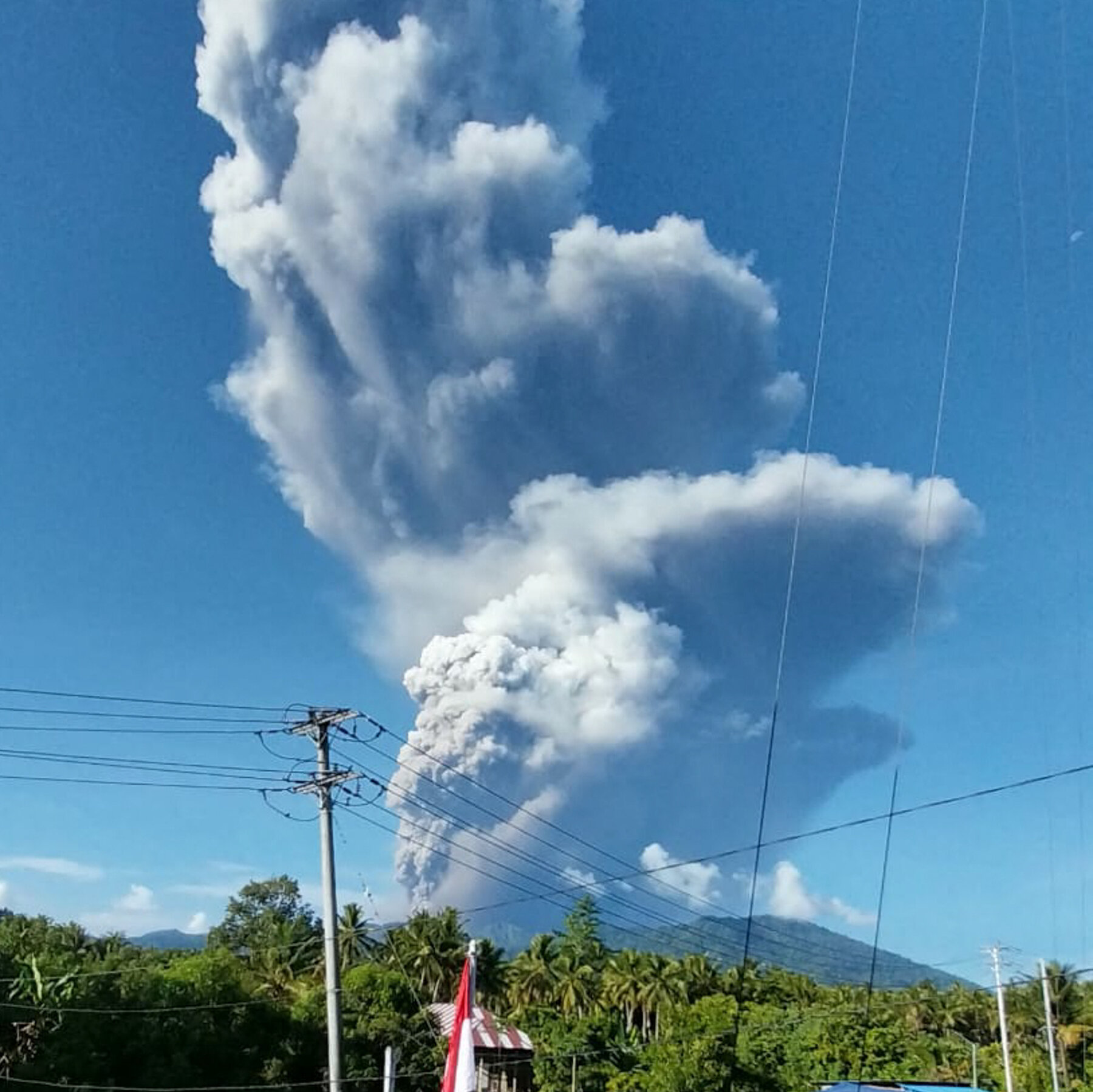
Indonesia's most active volcano erupted nine times over a 24-hour period beginning May 5, 2026, according to the Volcanology and Geological Disaster Mitigation Center (Magma Indonesia). The successive eruptions sent ash columns approximately 1,000 meters above the summit, with ash drift affecting communities in Lumajang Regency, East Java. The Disaster Mitigation Agency (BNPB) maintained an alert at Level II — the third-highest of a four-tier system — and restricted access within a four-kilometer radius of the crater. No fatalities had been reported by midday May 5, though officials cautioned that ash fall posed acute risks to respiratory health and aviation. The events followed several weeks of elevated seismic activity that the monitoring agency had flagged in its April bulletins.
What the data shows, and what it obscures, matters here. Magma Indonesia's real-time reporting feeds show that Semeru has been in a state of persistent unrest since 2021, when an eruption triggered a pyroclastic flow that killed more than 40 people and displaced thousands. The nine eruptions recorded on May 5 represent a spike in frequency, not a departure from an established pattern. The BNPB's decision to hold at Level II rather than escalate to Level III reflects an institutional calculus: the agency determined that the eruption style — phreatomagmatic bursts producing ash columns rather than large-volume lava flows — fell within parameters that existing exclusion zones were designed to manage. Whether that assessment holds under continued activity is a question the next 48 hours will answer.
The Immediate Hazard Profile
Semeru sits at the eastern end of Java, a 3,676-meter peak that has erupted more frequently than any other volcano in Indonesia's 130-strong monitored catalog. The immediate hazard in any eruption cycle is not primarily the lava — it is the ash fall and the secondary hazards it triggers. Communities in Lumajang Regency, particularly those in the Pronojiwo and Candipuro districts, experience reduced visibility, crop damage, and respiratory distress during sustained eruptive periods. Roads serving those communities become difficult to transit, complicating evacuation logistics even when orders are issued. The BNPB reported on May 5 that emergency response teams had been pre-positioned in the regency, but the sources do not specify whether those teams had expanded capacity compared to pre-2021 levels.
Aviation disruption is the secondary concern. The ash column produced by a Semeru eruption can reach cruising altitudes and drift toward the busy airspace serving Surabaya and Bali. The Volcanology agency's advisories are fed into the aviation color-coded warning system used by ICAO-member airlines, meaning pilots receive automated alerts when ash concentrations exceed thresholds. Whether the May 5 eruptions crossed those thresholds — and whether any flight diversions resulted — cannot be determined from the sources reviewed.
Disasters and Institutional Memory
The 2021 Semeru eruption exposed how much room existed between the formal architecture of Indonesian disaster management and its performance in a real emergency. Official response was criticized for delays in evacuation orders, confusion over shelter locations, and gaps in early warning coverage in the most exposed river valleys. The event prompted a review — commissioned by the BNPB and supported by international disaster finance mechanisms — that led to upgrades in monitoring equipment on Semeru's slopes, wider deployment of community-based siren networks, and revisions to the evacuation mapping for Lumajang's most exposed villages.
The May 2026 eruptions are, in one reading, a test of whether those reforms held. Magma Indonesia's public bulletins are now more granular than they were in 2021, showing seismic amplitude readings and gas emission rates alongside the alert levels. The BNPB's pre-positioning of response teams suggests institutional preparedness has improved. But Indonesia faces a structural constraint that no amount of equipment procurement resolves: the sheer geographic scale of its volcanic exposure. With 130 active volcanoes spread across an archipelago of 17,000 islands, monitoring and response resources are distributed across competing priorities. Semeru commands attention when it erupts, but it is one node in a national system that was stretched before this week began.
What the Alert Level Does Not Tell You
A persistent feature of Indonesian volcanic reporting — one that the May 5 coverage reproduces — is the gap between the official alert level and the lived experience of communities near the volcano. The Level II designation is a technical assessment based on seismic data, gas readings, and eruption style. It communicates risk to the extent that the public understands its four-tier structure, has access to radio or digital channels where it is broadcast, and trusts the agency delivering it. Indonesia's media landscape — fragmented across regional outlets with varying editorial standards — does not always transmit those alerts in a consistent register.
On social media, the picture that emerges is less orderly. Indonesian-language posts from Lumajang residents on May 5 described thick ash fall, closed roads, and confusion about whether an evacuation recommendation had been issued. The official BNPB account, posting in Indonesian, confirmed the exclusion zone but did not issue a broader evacuation advisory. The gap between the agency's calibrated response and the ambient anxiety in the affected communities is a feature of Indonesian volcanic risk management that the 2021 review identified and that the May 2026 events are testing once again.
Regional Stakes and the Infrastructure of Coexistence
For Indonesia, Semeru's eruptions are a recurring stress test of a governance model built on central coordination, international partnerships, and local adaptation. The archipelago's position along the Pacific Ring of Fire is not a metaphor — it is a structural fact that shapes public investment, insurance markets, agricultural zoning, and the curriculum of every Indonesian primary school. Children in Lumajang learn the names of their local evacuation routes the way children elsewhere learn street names. The normalization of volcanic risk is both a resilience factor and a risk in itself: when eruptions are frequent, the signal-to-noise problem intensifies. Each new event must compete with the memory of the last one for public attention and resource allocation.
The stakes beyond Indonesia are subtler. Semeru is one of several Indonesian volcanoes monitored under the Global Volcano Observatory Network, a framework that connects Indonesian data to broader ash-advisory systems used by airlines operating across the Indo-Pacific. A sustained eruption cycle in Java has downstream effects on aviation routing, insurance loss estimates, and the volcanic risk models that reinsurance companies use to price coverage in Southeast Asian markets. The international system has an interest in Indonesian monitoring capacity performing well — not out of charity, but because that performance reduces externalities that travel far beyond the island's airspace.
Whether the May 5 eruptions represent a significant escalation in that ongoing story remains to be seen. Magma Indonesia is expected to issue its next bulletin before 18:00 local time (11:00 UTC). The agency has not signaled an escalation in alert level as of press time. The more important question — one the available data does not yet answer — is whether the reforms implemented after 2021 translated into meaningful operational improvement on the ground, or whether they remain improvements on paper.
— —
Desk note: Monexus checked the Magma Indonesia public bulletins, the BNPB official account, and Indonesian wire reporting to verify the timeline and alert-level information. No English-language wire service carried a dedicated Semeru dispatch on May 5; our coverage draws on Indonesian-language official sources. The Indonesian Volcanology agency has not held a public briefing as of our publication deadline.
Wire provenance
This editorial synthesis draws on the following public wire/social posts:
- https://t.me/sprinterpress/4561
- https://t.me/ekonomat_pl