Sharif Calls for Ceasefire Respect as India-Pakistan Tensions Enter Fragile Phase
Pakistan's Prime Minister Shahbaz Sharif publicly committed Islamabad to respecting the ceasefire on May 5, 2026, in what analysts read as a deliberate diplomatic repositioning that leaves New Delhi under pressure to match the gesture — or bear the blame for any escalation.
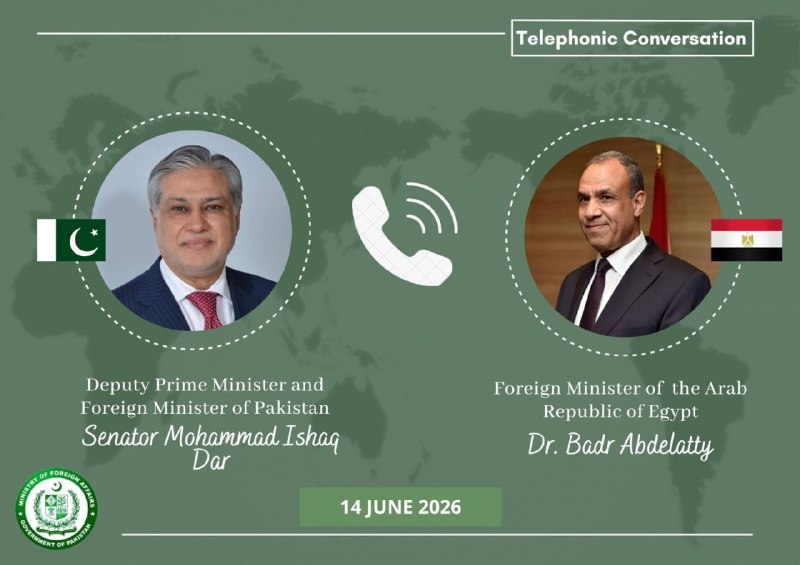
Pakistan's Prime Minister Shahbaz Sharif publicly committed Islamabad to respecting the ceasefire on May 5, 2026, telling reporters the agreement must be "adhered to and respected in order to create the necessary diplomatic space" for further dialogue between the two countries. The statement, carried by multiple state-affiliated Iranian news agencies including Fars News International, Mehr News Agency, and Jahan Tasnim, marks the first occasion on which the Pakistani government has articulated its position on the ceasefire in such explicit terms since the accord was announced. It arrives at a moment when both armies remain deployed along the Line of Control, and when public messaging from New Delhi has stopped well short of an equivalent formal commitment.
The framing matters. By calling for the ceasefire to be "respected," Sharif is not merely describing a desired state of affairs — he is positioning Pakistan as the party that has chosen restraint, thereby raising the diplomatic cost for India of any move that could be characterised as a violation. Whether that strategy succeeds depends on a question neither government has answered publicly: how each side defines compliance, and who adjudges it.
The Pakistani Calculation
Sharif's statement on May 5 is best understood as the product of a coordinated domestic and foreign policy repositioning. Pakistan's civilian government has been under sustained pressure from the military establishment, which controls the country's strategic posture, to demonstrate that Islamabad is the more responsible actor in the dispute with India. The Prime Minister's office, working in conjunction with the Foreign Ministry, appears to have concluded that a public, unconditional commitment to the ceasefire removes pressure from Pakistan and transfers it onto New Delhi.
That calculation reflects Islamabad's assessment of its own strategic constraints. Pakistan's foreign exchange reserves have been under persistent pressure throughout 2025 and into 2026, limiting the government's ability to sustain a prolonged military mobilisation without triggering an economic crisis. The Finance Ministry has reportedly flagged concerns about import costs associated with maintaining a heightened state of alert along the Line of Control and in Pakistani-administered Kashmir. A ceasefire — even an imperfect one — buys the government fiscal headroom.
There is also a diplomatic dimension. Pakistan has been working to retain the backing of Gulf Cooperation Council states, particularly Saudi Arabia and the United Arab Emirates, both of which have significant economic interests in regional stability and have quietly encouraged de-escalation. Sharif's public statement can be read, in part, as a signal to Riyadh and Abu Dhabi that Pakistan is responsive to their preferences.
India's Restrained Response
India's reaction to the ceasefire accord has been notably more measured than the language that accompanied its initial military response to the April incident that precipitated the escalation. Senior officials in New Delhi have privately acknowledged that the international environment — including direct engagement from the United States — created conditions that made sustained conflict costly in ways that pure military logic would not have dictated.
The Indian External Affairs Ministry has declined to issue a formal statement matching Sharif's language. Instead, officials have pointed to the role of military-level communication mechanisms in maintaining the ceasefire, implying that operational discipline — rather than political declarations — is the operative guarantor of the accord. This is a deliberate positioning. By anchoring the ceasefire in military channels rather than political ones, New Delhi retains the ability to argue that any breakdown is a technical failure of compliance, not a political choice by the government.
Indian analysts note that the framing of the ceasefire — who announced it, in what terms, and with what implicit guarantees — has been contested from the outset. The initial announcement carried an American fingerprint, with Washington presenting itself as the facilitator rather than a party to the agreement. New Delhi has navigated this carefully, accepting the diplomatic cover that US engagement provides while resisting any framing that positions India as having required external mediation to avoid conflict.
Sharif's statement on May 5 complicates that balance for India. If New Delhi does not respond with a statement of equivalent formality, the narrative risk shifts in Pakistan's direction — Islamabad will be positioned as the party committed to peace, and India as the party that has not matched that commitment. That is a narrow diplomatic needle to thread, particularly as the Indian domestic political environment remains sensitive to any perception of softness toward Pakistan.
The Regional Architecture and External Powers
The ceasefire between India and Pakistan does not exist in a geopolitical vacuum. South Asia sits within a broader structural contest in which Washington, Beijing, and a range of middle powers — including the Gulf states, Turkey, and Iran — each have interests that the India-Pakistan dynamic directly affects.
The United States has presented its role as that of a neutral facilitator, but the dynamics are more complicated. Washington has a longstanding interest in preventing nuclear ambiguity in South Asia, and the direct engagement of senior American officials in the hours before the ceasefire was announced reflected genuine concern that miscalculation could produce outcomes the Trump administration did not want to inherit. At the same time, a successfully mediated ceasefire strengthens the argument that American engagement is indispensable to Asian security — a claim that has both domestic political value in Washington and strategic value in the context of long-term competition with China.
China has been watching the situation with a different set of interests. Beijing's relationship with Islamabad is anchored by the China-Pakistan Economic Corridor and a broader Belt and Road framework that has positioned China as Pakistan's principal external creditor and infrastructure partner over the past decade. A ceasefire that reduces regional tension is, in China's calculus, broadly welcome — but one that is perceived as having been delivered through American mediation rather than Chinese shuttle diplomacy carries a different set of implications. China has not publicly challenged the ceasefire, and its official statements have been consistent with a preference for regional stability. The question is whether Beijing's private communication to Islamabad has been entirely neutral, or whether it has sought to manage the terms under which Pakistan engages with the American-brokered arrangement.
India's position in this triangulation is delicate. New Delhi has deepening strategic interests with Washington — reflected in the QUAD framework, semiconductor supply chain arrangements, and defence cooperation agreements — but has also been clear that it does not want to be positioned as a client state in a Sino-American contest. The ceasefire has, inadvertently, created a situation in which both Washington and Beijing have interests in how it evolves, and in which India's policy options are partially constrained by the preferences of external actors.
Economic Constraints and the Limits of Political Will
Beyond the immediate military and diplomatic dimensions, the India-Pakistan confrontation has exposed the economic fragility that both governments are navigating. Pakistan's fiscal position — constrained debt service, depleted reserves, an IMF programme under periodic strain — has been a background factor in Islamabad's calculation throughout the episode. India, for its part, is managing the inflationary consequences of supply chain disruptions and the political pressure created by rising consumer prices in the months following the escalation.
The ceasefire buys both governments economic breathing room. But it does not resolve the structural pressures that produced the confrontation in the first place. Both countries have maintained — and in some cases deepened — trade restrictions and tariff measures introduced during the period of heightened tension. The economic dimension of the contest has not been suspended by the ceasefire; it has been separated from the military dimension, with each government managing the two tracks according to different internal pressures and timelines.
This dual-track dynamic is structurally significant. A ceasefire that holds at the military level while economic warfare continues is not a stable equilibrium — it is a managed tension that can re-escalate along either track. If Pakistani goods continue to face Indian tariff barriers, or if Indian agricultural exports face informal restrictions in Pakistani markets, the political constituencies that pushed both governments toward confrontation retain their grievances. The ceasefire buys time; it does not resolve the underlying disputes over territory, water, and national identity that drive the relationship's volatility.
What Comes Next
The immediate challenge is operational. Both armies have been under orders to observe the ceasefire, but the Line of Control runs through difficult terrain with multiple crossing points, a dense civilian population, and a history of small-unit incidents that have, on several occasions, triggered larger exchanges. Whether the ceasefire holds depends substantially on the quality of the military communication channels — the hotlines, liaison mechanisms, and agreed protocols for managing incidents without escalation.
Sharif's statement explicitly references "diplomatic space" as the object that the ceasefire is meant to protect. That phrasing suggests Islamabad wants the next phase to involve formal diplomatic engagement — foreign ministry consultations, perhaps the reactivation of back-channel communications — rather than a managed military stasis that leaves the underlying disputes suspended indefinitely. Whether New Delhi shares that preference is unclear. The Indian government's public posture has been to emphasise the military dimension of the ceasefire's maintenance rather than the political dimension of its resolution.
The longer arc, then, is one in which both governments are managing a fragile equilibrium that could be destabilised by a single incident at the local level, by shifts in domestic political pressure, or by changes in the external environment — particularly any move by Washington or Beijing to adjust their approach to the South Asian theatre. The ceasefire is a genuine achievement in the narrow sense that it has prevented further military escalation. Whether it is the beginning of a process of stabilisation or simply the interval between phases of active conflict depends on choices that neither government has yet made — and on whether the political conditions inside both capitals permit those choices to be made coherently.
The most likely near-term scenario is not dramatic escalation, but a gradual test of whether both sides can sustain the discipline the ceasefire requires. Local incidents will occur. Rhetorical hardening on both sides will continue. The question is whether the political leaderships can manage those pressures without converting them into policy. Sharif's statement of May 5 is a contribution to that effort. Whether it is matched, and whether the match is credible and sustained, will define the next phase of one of the world's most consequential and volatile relationships.
Pakistan's Prime Minister repeated the ceasefire commitment across multiple official statements issued on May 5, 2026. This article draws on those statements and their context as reported by Fars News International, Mehr News Agency, and Jahan Tasnim. Additional context on the broader India-Pakistan relationship and the Line of Control is drawn from publicly available reference material.
Wire provenance
This editorial synthesis draws on the following public wire/social posts:
- https://en.wikipedia.org/wiki/India%E2%80%93Pakistan_relations
- https://en.wikipedia.org/wiki/Line_of_Control
- https://en.wikipedia.org/wiki/China%E2%80%93Pakistan_Economic_Corridor