Gaza Solidarity Convoy Reaches Crete With Hospitalized Activists
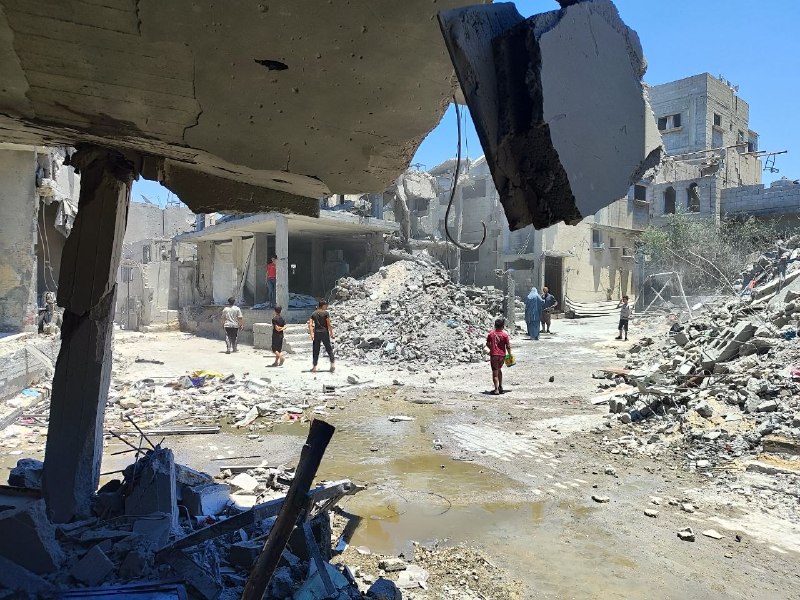
The Summud flotilla reached the island of Crete on 5 May 2026 carrying 31 activists and crew members who were immediately rushed to hospital upon arrival. Three of them sustained serious injuries, according to initial reports from the port of entry. The landing completes a voyage that began amid heightened scrutiny of humanitarian convoys attempting to reach the Gaza Strip, and places the question of civilian aid access — and who controls it — back into the international frame.
The scene in Crete is not simply a humanitarian logistics story. It is the latest expression of a pattern that has repeated across the eastern Mediterranean for nearly a decade: solidarity missions assembling in ports from Istanbul to Barcelona, loaded with medicine, food, and building materials, and met at sea by interdiction efforts that vary in intensity and legal basis. The Summud flotilla follows convoys like the Rachel Corrie in 2010 and the Mavi Marmara in 2010 — vessels that became geopolitical flashpoints precisely because they forced the question of what humanitarian access looks like when political channels have closed. What is different in 2026 is not the dynamic but the heightened urgency, as the humanitarian situation inside northern Gaza has been described by multiple UN agencies as approaching famine thresholds.
What We Know About the Landing
The 31 activists and crew members reached Crete after a passage that sources describe as concluding with the vessel entering Greek territorial waters and docking at a Cretan port. Three individuals were classified as seriously injured upon arrival, according to accounts from the island's medical infrastructure. The remainder of the group required medical assessment but were not in critical condition. The flotilla's composition, flag state, and the conditions under which the vessel sailed from its port of departure remain limited in the publicly available record — gaps that tend to narrow only after such events, when passenger manifests and transit documentation surface through subsequent reporting cycles.
The Greek authorities have not yet issued a formal statement on the landing as of the time of this report. Greece, which shares maritime boundaries with the eastern Mediterranean and has occasionally constrained or redirected solidarity convoys in previous years, occupies a structurally sensitive position in this dynamic — between EU-coordinated sea policy on one side and active domestic political pressure from both pro-solidarity and pro-security constituencies on the other.
A Parallel Signal From Caracas
The same day the Summud flotilla was arriving in Crete, Caracas was marking May Day with a cultural and musical program that included a Peace Festival organized as part of the country's Labour Day observances. Venezuelan state media described the program as explicitly framing itself as a statement of solidarity with Gaza — positioning the festival not as a domestic labour event alone but as part of a hemispheric counter-narrative to what organizers call Western-backed unilateral interventionism.
The coincidence of timing is not incidental. Venezuela's diplomatic posture toward the Gaza question has been consistent for years: Caracas recognizes the Palestinian Authority, conducts annual solidarity events, and has historically voted in step with a broader non-aligned bloc at the UN. The Peace Festival's framing — as reported by Telesur — makes that political alignment explicit: the language of peace and the language of geopolitical solidarity are deployed together, without the separation that Western diplomatic communications typically preserve.
This matters for how solidarity movements are understood globally. In Caracas, the Gaza question is not primarily a humanitarian abstraction to be managed — it is a frame for a wider argument about the legitimacy of international order, the standing of Global South agency, and the right of non-Western capitals to hold positions that diverge from Western wire-service consensus. That argument has a structural weight that the coverage of aid convoys alone, framed as humanitarian stories, tends to obscure.
The Structure of the Question
The political friction around the Summud flotilla is not simply about the vessel's cargo. It is about who has the legal authority to deliver aid to a besieged population, under what legal framework that authority operates, and whether the delivery of aid constitutes a political act that can be regulated or interdicted. Israeli authorities have long maintained that aid flows into Gaza through designated crossing points under international supervision — and that independent convoys operating outside that framework represent a political provocation, not a humanitarian supplement. That position has legal complexity that courts have not fully settled, particularly regarding the rights of third-party vessels in international waters.
The counter-position — articulated by the flotilla organizers and by their supporters in civil society networks spanning the Mediterranean, Latin America, and parts of Southeast Asia — holds that the designated crossing system is itself insufficient to meet the scale of need inside Gaza, particularly in northern areas that aid agencies have repeatedly described as effectively unreachable through established channels. If that account is accurate, the convoys are not a provocation; they are evidence of a failure of the formal system. That structural claim is difficult to resolve without independent verification of aid-delivery volumes and their geographic distribution inside the Strip — a verification that has been complicated by access restrictions imposed on UN and NGO staff.
What is clear is that the political cost of blocking aid convoys has risen. The hospitalization of 31 activists on Greek soil on a single May Day — arriving alongside the visual record of a Peace Festival in Caracas organized in part around Gaza solidarity — documents how the question has moved beyond maritime interdiction. It is now a recurring feature of how different regions of the world understand their obligations and allegiances.
What Remains Uncertain
The specific injuries sustained by the three seriously wounded activists have not been characterized by medical authorities on Crete as of publication. Whether those injuries were sustained during the voyage itself, during any interaction at sea, or through pre-existing medical conditions that deteriorated in transit is not yet established from the available record. The legal status of the vessel — whether it was in international waters when reached, whether Greek port authorities have jurisdiction over its passengers under domestic or EU law, and whether any criminal investigation has been opened — also remains unspecified in the sources currently available. These details will determine how the landing is classified by relevant authorities and how it is framed in subsequent wire coverage. For now, the story sits at the intersection of humanitarian need, legal ambiguity, and a geopolitical argument that has not been resolved in fifteen years of intermittent convoys and intermittent crisis.
Wire provenance
This editorial synthesis draws on the following public wire/social posts:
- https://x.com/telesurenglish/status/1920897568499810607
- https://x.com/telesurenglish/status/1920881529389834347