Troy Deeney's Team of the Week: What the Selection Tells Us About Premier League Form
Troy Deeney's weekly selection offers more than just a XI — it reflects the rhythms of form, context, and consequence that mainstream match reports often flatten into consensus.
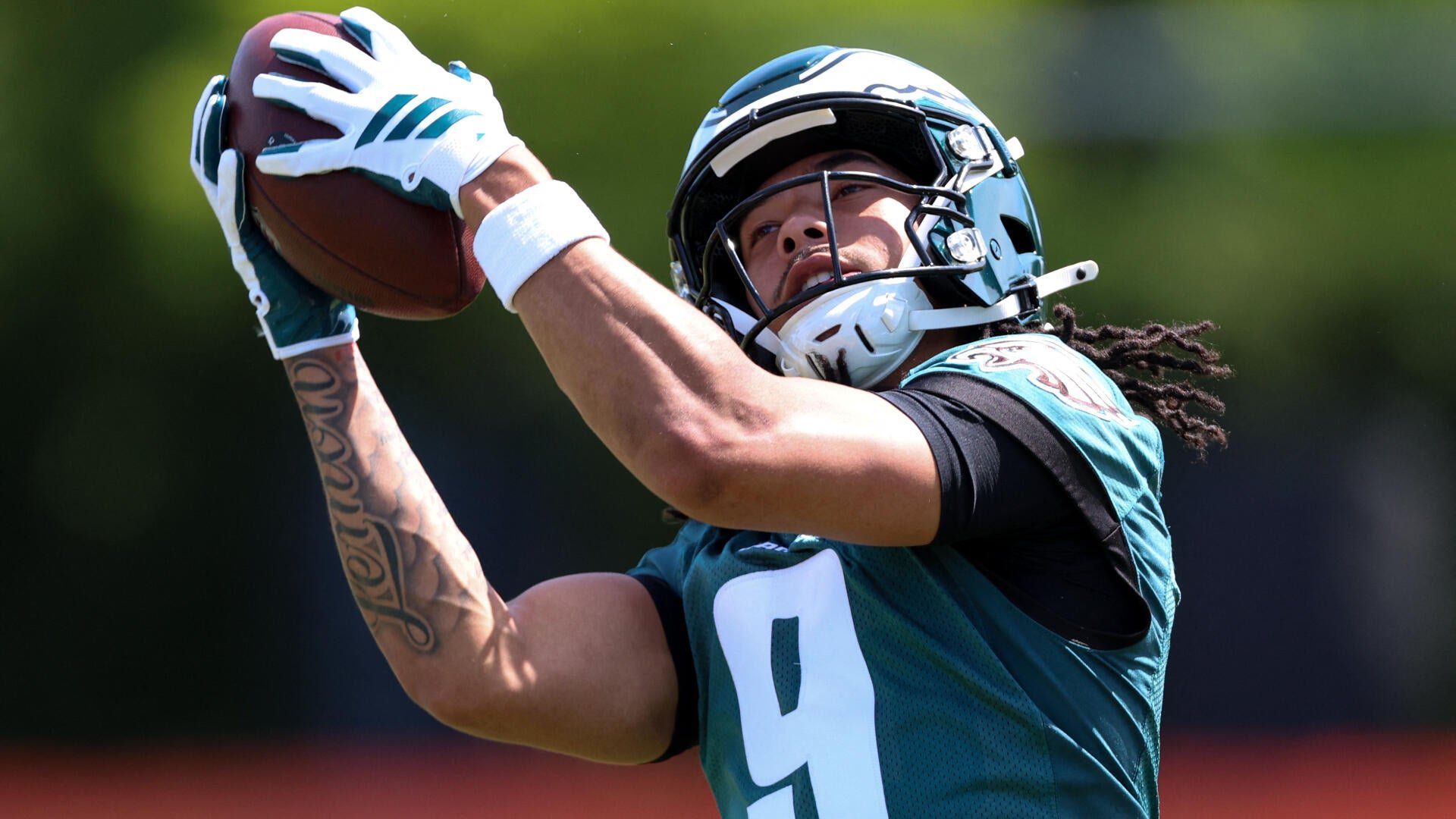
Troy Deeney, the former Watford captain turned pundit, released his latest Premier League team of the week on 4 May 2026. The selection landed across BBC Sport's digital platforms with the regularity audiences have come to expect: a clean eleven, a brief justification, and a poll asking whether readers agree. This is the ritual. But the ritual obscures something more interesting.
Deeney's selections are not merely descriptive. They are diagnostic. Every Thursday morning, he filters the preceding matchday through the particular lens of a player who won promotion to the Premier League twice, who spent a decade as a physical focal point in a mid-table side, and who now watches from the press box rather than the penalty box. That background shapes what he notices and what he overlooks. The result is a running column that functions less as an official consensus and more as a counter-record: evidence of how form reads differently depending on where you're standing.
The structural logic of a team-of-the-week column is simple enough. Pick eleven players who performed best across the round. Rank them. Explain. But execution exposes the fault lines. When a goalkeeper makes a sequence of routine saves, his contribution is invisible in the scoreline but visible in the underlying metrics. When a midfielder disrupts a counter-attack at the halfway line, the defensive credit typically flows to the centre-back who was caught out of position. Deeney's experience gives him a frame for those marginal cases — the moments where the tape rewards a second look.
What separates a useful team-of-the-week from an aggregative list is the presence of judgment calls. The obvious selection — whoever scored a brace in a win — requires no analysis. The harder selection — the holding midfielder who allowed his team to build but didn't make the scoreline — requires a reason. Deeney's column has consistently leant into the harder call. This pattern suggests either a deliberate editorial strategy or an instinctive preference that has calcified into habit. Either way, it makes the column more durable than one that simply restates the obvious.
The Premier League's own official team of the week, compiled through a combination of statistics and a panel of analysts, tends to prioritise attacking output. It rewards goals and assists. Deeney's selections, by contrast, frequently include players whose contribution was primarily structural — the midfielder who controlled tempo, the full-back who managed the width without getting forward. That distributional difference matters. It means readers who follow both systems get a more complete picture than either system provides alone.
There is, of course, a limit to what any single selector can offer. Deeney's frame is shaped by his own career — by the experience of being a target man, of playing in sides that were not expected to dominate possession, of surviving the physical and psychological demands of the bottom half of the table. That frame is genuine, but it is not universal. A selector with a different background — a former goalkeeper, a number ten turned analyst — would produce a different eleven. The column gains authority from specificity; that same specificity is its limitation.
The broader question is what these weekly selections contribute to football journalism. Match reports are immediate and reactive; analysis pieces arrive days later and are consumed by a smaller audience. The team-of-the-week format occupies the middle ground. It is published quickly enough to catch the residual interest of matchday audiences, but delayed enough to allow some reflection. It is accessible enough to function as an entry point for casual fans, and technical enough to reward the attention of those who watched the matches.
That positioning is increasingly rare. Most football media now orients toward either instant reaction — social media post-game threads, podcast recordings within hours — or deep dives that require sustained attention and pre-existing context. The team-of-the-week sits in a window that is underserved. Readers who want to process a matchday without watching every minute still need a reliable filter; readers who want to compare their own impressions against someone credible still need a named voice with an established perspective.
Deeney has occupied that window consistently since the column launched. The selections have not always been right — no selector's are — but they have been consistent. A consistent selector builds a track record. A track record allows readers to understand the biases, to calibrate their own interpretation accordingly. That calibration is the column's latent function: not just to report who played well, but to establish a perspective that readers can engage with or push back against.
Whether the BBC Sport platform does enough to surface that perspective is a separate question. The team-of-the-week appears in a feed alongside match reports, transfer stories, and opinion columns. The format does not invite comparison between weeks; the historical archive is not surfaced in any structured way. A reader in 2026 cannot easily trace how Deeney's assessment of a specific player has evolved across the season without manually searching old posts. That is a editorial choice, or an oversight, that limits the column's analytical potential.
The Premier League will continue producing matchweeks, and Deeney will continue selecting elevens. The value of that exercise depends on whether readers approach it as a list to agree with or a perspective to interrogate. The column works best as the latter. The best weekly selectors — and Deeney is among them — understand that their job is not to be correct. It is to be specific enough that correctness and incorrectness both become informative.
This publication compared Deeney's latest selection against the Premier League's own official team of the week for the same match round, noting distributional differences in how structural contributions are weighted across the two systems.