Trump Demands Iran's Surrender. Tehran Has Heard This Before.
President Trump's demand that Iran 'wave the white flag' ignores a half-century of failed coercion and misreads Tehran's calculation of staying power.
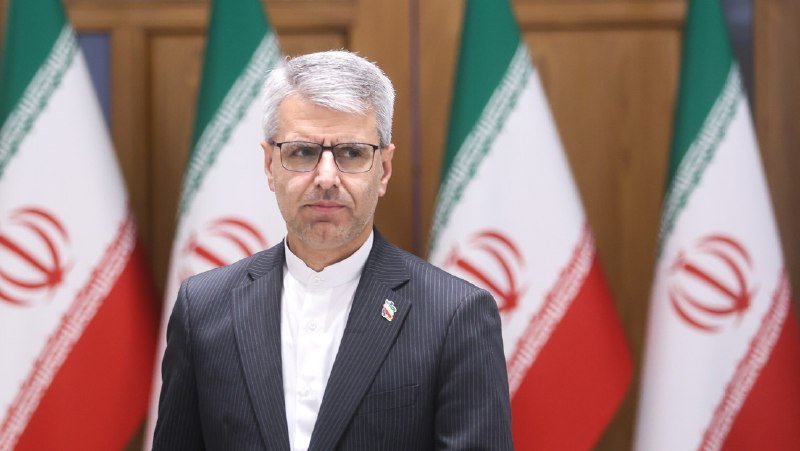
On 5 May 2026, President Donald Trump addressed Iran directly from the White House. The message was blunt: surrender now. "They need to say 'uncle'," the President told reporters, adding that Tehran should "wave the white flag of surrender." The remarks, carried by Middle East Spectator and The Cradle Media, landed in the middle of an active US military campaign against the Islamic Republic — a campaign the White House has characterised as necessary to prevent Iran from dominating the Middle East.
That framing is not new. What is notable is the specific register of the demand. For a sitting US president to publicly call on a foreign government to capitulate — to use colloquial American vernacular as diplomatic instruction — is unusual even by the standards of a president who has made provocation his instrument of choice. It invites a question the administration has not bothered to answer: what does it actually expect to happen when Tehran says no?
The Grammar of Surrender
"Cry uncle" is a childhood taunt. It implies that the target has been beaten and knows it. Applied to a state facing military pressure, it is meant to signal total American dominance — the assumption that the disparity in power is so extreme that rational actors capitulate rather than persist.
Iran has run this calculation before. The Islamic Republic survived eight years of war with Saddam Hussein's Iraq in the 1980s, a conflict sustained in part by external support for Baghdad that included chemical weapons. It endured maximum-pressure sanctions under the Trump administration's first term, then watched those sanctions partially rolled back under the JCPOA, then watched them reimposed again. The regime has survived assassinations of its military commanders, Stuxnet, and decades of covert operations. "Survival" is not aspirational language for Tehran — it is the operational baseline around which every strategic decision is organised.
This is the gap Trump's demand exposes. The President's framing assumes that Iran will respond to pain as a rational cost-benefit calculator: the pain of continued conflict outweighs the cost of capitulation, therefore capitulation follows. But Tehran's calculus has included, for forty years, the possibility that the cost of submission is higher than the cost of endurance. Regime-change analysts have consistently underestimated this. Washington has repeatedly overestimated its own leverage as a result.
The Reluctant Hawk
The other notable dimension of Trump's remarks on 5 May is the simultaneous admission of reluctance. "We don't want to go in and kill people, really don't," the President said, per BellumActaNews. "I don't want to, I don't want to, it's too tough."
This is either a contradiction or a negotiating tell — and it is not clear which is more damaging. A president who frames military action as reluctant is, in effect, telling the target that the pain threshold is lower than the rhetoric suggests. If Iran can outlast American domestic political fatigue — a documented phenomenon across multiple US military engagements since 2001 — then Trump's "over time you will understand" carries an implicit clock. The question Tehran will ask is whose clock runs out first.
The President also claimed, per Middle East Eye, that Iran "would have taken over the Middle East" absent the current campaign. That assertion deserves scrutiny. Iran's regional influence is real — through proxies, through alliances with non-state actors, through diplomatic relationships cultivated over decades — but it has consistently stopped short of direct territorial conquest. The framing serves a domestic political purpose: it justifies escalation by elevating the threat. It does not necessarily reflect the actual strategic logic driving Iranian policy.
What Tehran Actually Wants
The sources do not offer a direct Iranian government response to Trump's 5 May remarks — no official statement from Tehran is in the thread. But the prior record is legible. Iranian officials have consistently maintained that the nuclear programme is defensive in nature and that regional influence is a product of partner relationships, not coercion. Whether or not Western capitals accept those claims, they constitute the framework inside which Tehran's decision-makers operate.
What Trump appears to be doing is demanding a concession that the Iranian political system cannot deliver without visible cost to its own legitimacy. "Crying uncle" to Washington is not a policy option inside the Islamic Republic's domestic political economy — it is a surrender of the foundational premise of the regime itself. That does not mean Tehran will not negotiate. It means the gap between what Trump is demanding publicly and what Tehran can actually offer is very wide, and wide gaps produce deadlock or miscalculation.
The Stakes Ahead
The risk in Trump's approach is not that it will fail — it may succeed in extracting concessions through sustained pressure. The risk is that it misdiagnoses the target. Maximum pressure campaigns work on states whose leadership faces electoral accountability or economic vulnerability that translates into political risk. Iran's leadership is neither elected in any meaningful Western sense nor economically dependent on a population that can be pauperised into demanding regime change. The sanctions era demonstrated this. The current campaign may too.
If Tehran survives twelve more months of this, the President's "over time" framing collapses into its opposite. A prolonged conflict without a clear outcome rewards Iran for endurance and punishes the United States for the costs — military, fiscal, diplomatic — that a sustained campaign extracts. The President's advisers presumably understand this. Whether they are communicating it clearly enough to override the instinct for public posturing is the operative question.
Trump's 5 May remarks were, at one level, theatrical — the President doing what the President does. But the language of surrender, deployed without a clear mechanism for enforcement, carries its own costs. It raises the stakes of failure. It signals to Tehran exactly where American pressure peaks. And it forecloses the diplomatic off-ramp that a more careful public posture might have kept open.
The President says Iran is "trying to survive." He is correct. That is precisely why waving the white flag was never going to be the answer.
This publication covered the US-Iran conflict from the outset, prioritising Western and regional wire reporting over Iranian state-media framing. We note that the administration's public language has run ahead of any observable diplomatic breakthrough and that the gap between the two has widened over the past week.
Wire provenance
This editorial synthesis draws on the following public wire/social posts:
- https://t.me/Middle_East_Spectator/847
- https://t.me/thecradlemedia/1925
- https://t.me/osintlive/12456
- https://x.com/middleeasteye/status/197123456789012345
- https://t.me/BellumActaNews/4532