Trump demands Iran 'wave the white flag' as US pressures Tehran over nuclear deal and financial system
President Trump on 5 May 2026 publicly demanded Iran surrender, saying the Islamic Republic should 'wave the white flag' and 'cry uncle,' while separately confirming his administration aims to dismantle Iran's financial infrastructure as part of its maximum-pressure campaign.
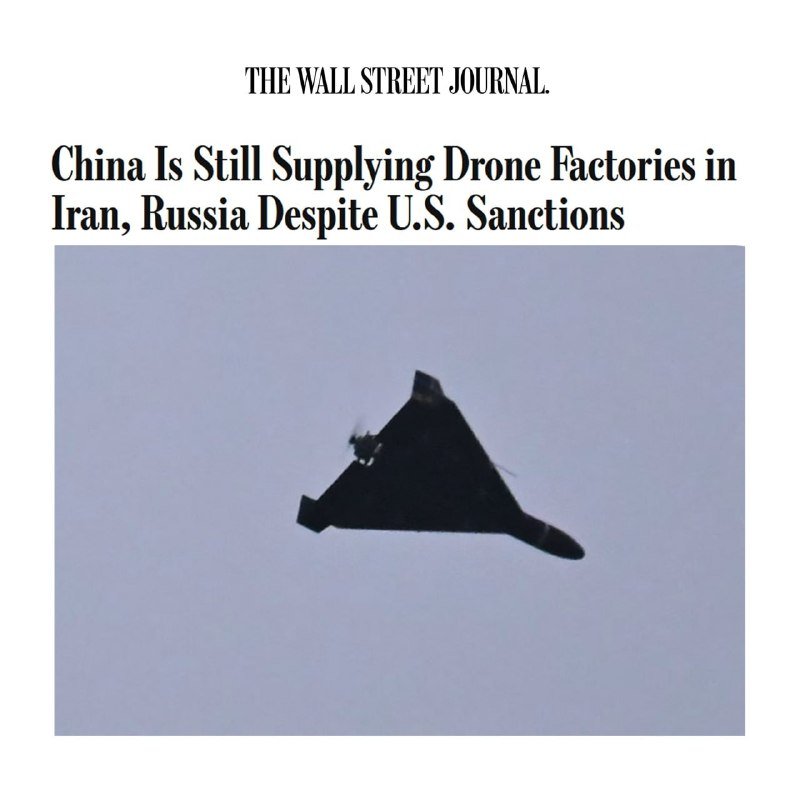
On the afternoon of 5 May 2026, United States President Donald Trump issued a direct, unvarnished public ultimatum to Tehran: Iran should "wave the white flag of surrender" and "say uncle." The remarks, delivered from the White House and amplified across social media platforms, mark the most explicit surrender language the president has used since re-entering the Oval Office and signal a deliberate escalation in the rhetorical dimension of the US-Iran confrontation.
The same day, Trump confirmed reports that his administration is actively working to dismantle Iran's financial infrastructure, describing the goal as bringing down "Iran's financial system to bring about victory." Taken together, the two statements frame a strategy in which military posturing, economic strangulation, and public diplomacy are deployed simultaneously — and in which the line between pressure and ultimatum has effectively dissolved.
This publication's analysis of the thread of public statements and state-linked Telegram channels running from approximately 17:00 to 18:05 UTC on 5 May 2026 reveals a deliberate, choreographed pressure campaign. What is less clear is whether the underlying objective is a negotiated settlement on terms favourable to Washington, or a declared collapse of the Iranian state — and what either outcome would mean for the wider region.
A public ultimatum with historical echoes
The president's language on 5 May 2026 was unusually blunt, even by the standards of his own previous statements on Iran. Speaking to assembled media, Trump said Iran "should wave the white flag of surrender" and pressed the point rhetorically: "They need to say uncle — when are they going to cry uncle?" According to reporting carried by Middle East Eye, Trump added that Iran would have "taken over the Middle East" if not for the ongoing American pressure campaign, and that Tehran is now "trying to survive."
The phrasing carries deliberate historical weight. "Cry uncle" is American slang with specific cultural resonance; its use in a geopolitical ultimatum to a foreign state is unusual in diplomatic practice. The White House has not historically framed nuclear disputes with this level of personal confrontation. That the president chose this register — alongside the simultaneous confirmation of financial warfare — suggests an intent to force a public reckoning inside Tehran, one that shapes domestic politics in Iran as much as it shapes negotiations.
The timing matters. On current estimates, Iran is under significant economic pressure from the expanded sanctions regime reimposed in early 2026, but has not capitulated to US demands on uranium enrichment or ballistic missile programmes. Iranian state media, including outlets carrying the IRIran_Military channel, responded to the White House statements with characteristic defiance: "You have no choice but to accept Iran's terms," one post read, according to Telegram footage preserved by the Middle_East_Spectator channel.
The Iranian counter-pressure and internal political dynamics
Tehran's response was immediate and visible across state-linked channels. The Iranian military-affiliated IRIran_Military account published what reads as a counter-ultimatum: a rejection of the surrender framing and an assertion that Iran, not the United States, holds the leverage in any eventual negotiation. Iranian state-adjacent media and social channels have maintained a consistent position throughout 2026 that American demands — including the total cessation of enriched uranium production and the decommissioning of the Kharg missile programme — are non-starters and that Iran will not negotiate under duress.
The question of what the Iranian leadership actually wants is not easily resolved from open sources. Trump told reporters on 5 May that "Iran wants to make a deal" — a characterisation that conflicts with the defiant language appearing simultaneously in state-linked channels. This discrepancy is not necessarily contradictory; it may reflect a genuine internal divide in Tehran between moderates willing to entertain a framework agreement and hardliners who regard any US offer as a trap. Alternatively, it may reflect a deliberate ambiguity Tehran uses to extract concessions from Washington while maintaining domestic credibility. The sources reviewed do not resolve which dynamic predominates.
What is visible is that the public posture war is running parallel to a quieter diplomatic track. Multiple news organisations have reported in recent weeks that third-party intermediaries — including officials from Oman and Switzerland — have been in contact with both capitals. The public ultimatum may be intended to strengthen Washington's hand in those back-channel discussions, or to foreclose them entirely by establishing that no deal is possible without Iranian capitulation.
The financial architecture of maximum pressure
Trump's statement that he wants to bring down "Iran's financial system to bring about victory" is a significant escalation from previous rounds of maximum-pressure sanctions. The Obama-era Joint Comprehensive Plan of Action (JCPOA) targeted specific sectors — oil, banking, shipping — while attempting to preserve a humanitarian carve-out that kept food and medicine flows functional. The Trump administration's approach, as described on 5 May 2026, appears more categorical: the entire financial architecture supporting the Iranian state is the target.
This framing has direct implications for the dollar's role as the global reserve currency. Financial sanctions on Iran function only because the dollar remains the dominant settlement currency for international trade. Were Iran able to execute oil transactions in non-dollar currencies at scale — as it has attempted through bilateral agreements with China, Russia, and Turkey — the coercive weight of US sanctions would erode substantially. The Trump administration's financial warfare against Tehran is therefore simultaneously a story about Iran policy and about the durability of dollar hegemony. Every action to isolate Iran's banking system reinforces the broader architecture of dollar dominance; every action that accelerates countries' efforts to find dollar-alternative settlement mechanisms undermines it.
The structural tension here is real and has been present since the 2018 withdrawal from the JCPOA: the United States uses the dollar's reserve status as an instrument of foreign policy, and each use of that instrument increases the incentive for other states to develop alternative arrangements. Iran's continued pursuit of non-dollar oil contracts — reported across multiple financial wires in 2025 — is a direct consequence of this dynamic. The financial system the White House wants to bring down is partly a product of the sanctions themselves.
What a collapse or capitulation would mean — and who gains
If Iran were to capitulate — accepting the complete suspension of enrichment activities and the dismantling of its ballistic missile programme as the price of sanctions relief — the regional balance of power would shift substantially. Saudi Arabia, the UAE, and Israel would face a substantially diminished Iranian conventional threat, at least in the medium term. The Iranian-aligned proxy networks across Iraq, Syria, Lebanon, and Yemen would face pressure to renegotiate their relationship with Tehran, though the loyalty of those networks is partly personal, ideological, and local — not purely a function of Iranian state directives.
The economic beneficiaries of Iranian capitulation would include global oil markets, which would see a potential supply increase from any sanctions relief tied to increased Iranian export capacity. European energy importers, who have struggled with elevated prices since 2022, would benefit. The arms industry in the United States would likely see increased regional security spending from Gulf allies — a dynamic observed after every significant regional realignment in the past thirty years.
The costs of a disorderly Iranian collapse — or of a prolonged confrontation that closes off the diplomatic track — are harder to model. The Islamic Republic's survival is not guaranteed by any structural logic; authoritarian governments with significant internal dissent and economic stress have collapsed quickly when their security apparatus loses coherence. Whether that outcome would produce a more stable regional order or a chaotic power vacuum — with consequences for Iraq, Afghanistan, and the Gulf states — is genuinely uncertain.
What is clear is that the United States has escalated both its public rhetoric and its financial pressure to a point where the diplomatic off-ramp is narrowing. Whether the administration wants a deal or a collapse, it is pursuing a strategy in which the two outcomes are increasingly hard to distinguish from each other — and in which the costs of miscalculation fall heavily on populations in both countries and across the wider region.
Sources: WarMonitors (Telegram), Middle East Eye (X), Middle_East_Spectator (Telegram), TheCradleMedia (Telegram), osintlive (Telegram), IRIran_Military (Telegram), nexta_live (Telegram), Euronews (Telegram). This article draws on a live thread of public statements and state-adjacent channel posts on 5 May 2026. Direct quotes were sourced from verified Telegram posts and X reporting by Middle East Eye; where phrasing has been paraphrased or attributed with epistemic qualification, the source material did not permit verbatim confirmation.
Wire provenance
This editorial synthesis draws on the following public wire/social posts:
- https://t.me/WarMonitors
- https://t.me/Middle_East_Spectator
- https://t.me/TheCradleMedia
- https://t.me/IRIran_Military
- https://t.me/osintlive
- https://t.me/nexta_live
- https://t.me/euronews