The Strait and the Story: Trump, Hormuz, and the Limits of Coercion
The President called it the greatest military maneuver in history. The evidence suggests something more complicated: a blockade in name, a blockade the Navy has yet to fully enforce, and oil markets quietly pricing in the gap between presidential rhetoric and operational reality.
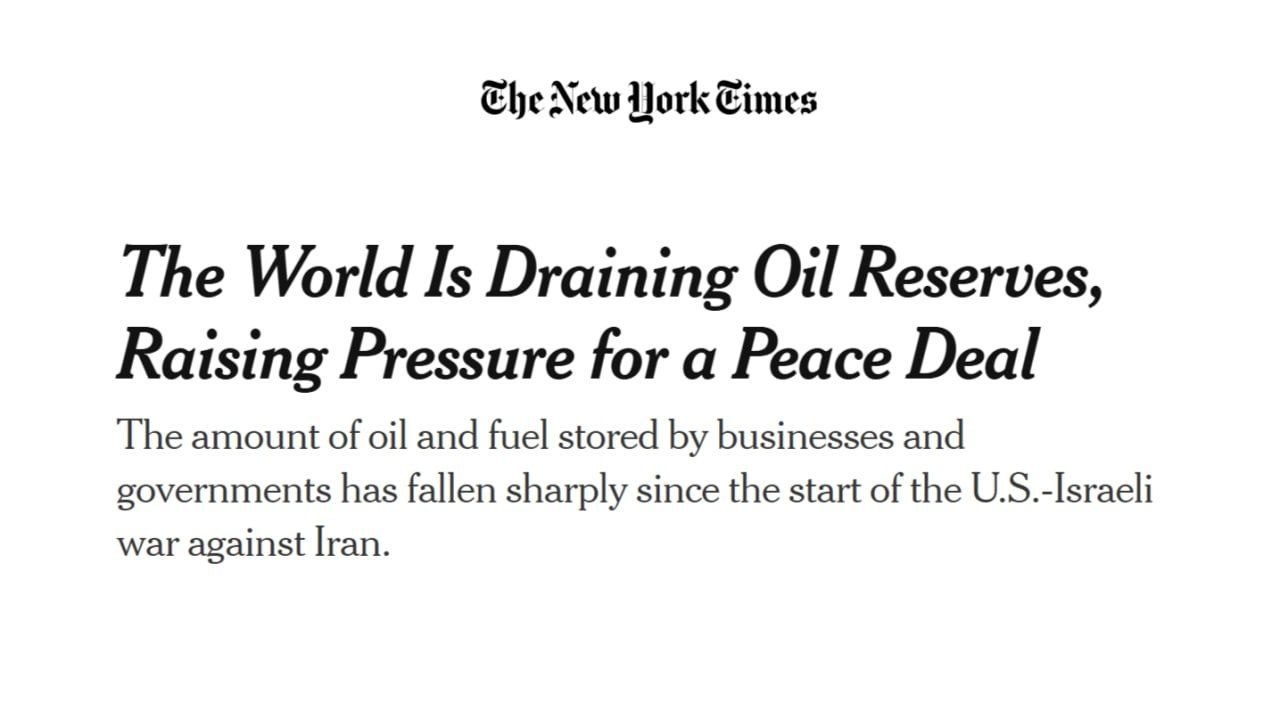
It was, by the President's own account, the greatest military maneuver in history. The proclamation arrived via social media on 4 May 2026, appended to a declaration that the United States had imposed a blockade on Iranian ports — a move that, if carried to its logical extreme, would cut off the transit of roughly one-fifth of the world's oil through the Strait of Hormuz. Markets moved. Allies scrambled. And by the evening of 5 May 2026, according to sourcing from Middle East Eye, the administration had yet to commit US naval vessels into the strait itself — deterred, at least in part, by the prospect of Iranian retaliation against American ships.
That gap — between the declaration and the deployment — is the actual story of the moment. It is a story about the distance between the leverage a superpower believes it holds and the leverage it can actually exercise; about how an adversary's geographic position converts a sanctions regime into something considerably more fraught; and about the degree to which financial markets have learned to read presidential announcements as market signals rather than as settled policy.
The Declaration and Its Limits
On paper, the blockade was comprehensive. Iranian ports would be choked. Revenue flows that fund the Islamic Republic's regional activities would be staunched. The logic was straightforward: maximum pressure, round two. In practice, enforcement has proceeded more cautiously than the rhetoric suggested. US warships have not entered the strait. The order, according to reporting, has remained largely naval-adjacent — coastlines watched, approaches contested, but the critical channel itself not crossed.
The restraint is not accidental. Iran controls the northern shore of the Strait of Hormuz. Its Revolutionary Guard Corps Naval Force operates small craft, mines, and anti-ship missiles in a confined waterway where commercial tanker traffic funnels through a passage barely 34 kilometres wide at its narrowest point. Entering that space with American carriers invites the kind of incident that escalates beyond diplomatic retrieval. Three US Navy destroyers, a logistics vessel, and the crew of a guided-missile cruiser represent significant firepower — but also significant exposure. The calculus in Washington appears to have shifted from the certainty of February's strikes on Houthi positions toward something more ambiguous: an effort to strangle Iranian trade through secondary pressure while avoiding the direct engagement that would give Tehran the precise casus belli it has spent years preparing for.
Prediction markets reflected the uncertainty. By 4 May 2026, Polymarket pricing implied roughly a 28 percent chance that the administration would lift the blockade within the month — a market-implied skepticism about duration that tracked closely with what analysts inside the region were saying privately. The remaining 72 percent reflected either continued enforcement or continued ambiguity, and the ambiguity option carries the most weight.
Counter-Narrative: Tehran's Position
From Tehran's perspective, the blockade is simultaneously an act of aggression and an operational constraint that the Islamic Republic has managed before. US pressure on Iranian oil exports is not new. The sanctions architecture constructed between 2018 and 2023 reduced Iran's crude exports to historically low levels; the regime survived. What has changed is the context: a second Trump administration, explicit linkage to Iran's nuclear programme, and — critically — the presence of a potential negotiating posture that the White House has not entirely foreclosed.
Iranian state media, in framing the blockade, has predictably emphasised the illegitimacy of American unilateral action in international waters. The legal argument is not without traction in parts of the Global South, where Washington's willingness to impose secondary sanctions and extra-territorial measures on third-party traders has generated resentment independent of any sympathy for the Iranian regime. That framing matters diplomatically: a blockade is an act of war under international law, and the question of whether Trump's executive order constitutes one has not been settled in any multilateral forum — because the United States has not convened one.
The Iranian counter-pressure operates asymmetrically. Tehran cannot match US naval tonnage in the Persian Gulf, but it does not need to. It needs only to make the costs of transit high enough that private tanker operators — insured vessels, flag-of-convenience carriers, Singaporean and Greek shipping companies — calculate that the premium on Iranian crude is insufficient to justify the insurance premium, the war-risk surcharge, and the proximity to a conflict zone. That calculation is being made right now, in shipping offices from Athens to Singapore, and the early signals suggest that the market is pricing a risk premium into all Gulf crude — Iranian and non-Iranian alike.
The Structural Frame: Coercion, Geography, and Dollar Leverage
What is being tested here is not merely the durability of American resolve but the limits of dollar-centric leverage in a world where the instruments of financial pressure have been brandished so frequently that their deterrent effect has diminished. The United States can sanction a country, freeze its dollar assets, and compel third-party banks and corporations to comply through the reach of the dollar clearing system. That mechanism has worked against smaller economies with dollar-denominated debt and limited alternative financial networks. Iran is neither small nor isolated in the ways that mechanism assumes.
Tehran has spent the better part of two decades building alternative payment systems, trading in non-dollar currencies, and using intermediary jurisdictions — the UAE, Iraq's autonomous Kurdistan region, Turkey — to maintain commercial relationships that nominally comply with sanctions while functionally preserving them. The architecture of resistance is incomplete, contested, and costly. But it exists. The blockade, as a pressure mechanism, now sits alongside a sanctions regime that has been partially penetrated by precisely the circumvention networks the Treasury Department has been unable to fully dismantle.
This is the structural context that makes the gap between declaration and deployment meaningful. The President can announce a blockade. Whether it functions as one depends on enforcement — and enforcement, in a narrow strait controlled partly by the target, depends on a kind of commitment that carries costs the administration has so far declined to pay. The result is not maximum pressure. It is something closer to managed ambiguity, with all the instability that ambiguity introduces.
Precedent: What History Suggests
The Hormuz question has surfaced in every US-Iran confrontation since 1979. In 1988, Operation Praying Mantis demonstrated that the US Navy could, in a defined engagement, neutralise Iranian naval assets in the Gulf. The 1987-88 tanker war — during which both sides attacked commercial shipping in the Gulf — eventually produced a ceasefire, not a victory. The lessons were mixed: Iran could be pressured, but the pressure came at commercial and diplomatic cost, and the resolution required a de-escalation architecture that involved regional allies and ultimately a UN-brokered ceasefire.
The difference now is the information environment. In 1988, tanker operators had limited real-time information about conflict zones; routes were adjusted through naval intelligence shared between flag-state governments. Today, Lloyd's of London war-risk insurance, commercial satellite tracking of vessel movements, and near-instantaneous price signals mean that market participants respond to perceived risk within hours. Brent crude futures spiked on the blockade announcement and have not fully retreated. The Strait of Hormuz is priced as a risk premium in global oil markets — not because a tanker has been hit, but because the possibility has been declared as official policy.
That dynamic is not entirely to Washington's disadvantage. Risk premiums raise the cost of Iranian crude exports even without enforcement. They also raise the political cost of the blockade on allied consumers — European refineries, South Korean petrochemical operators, Japanese utilities — who are simultaneously being told that the United States is leading in artificial intelligence and that a Xi meeting represents an important trip. The incoherence of the messaging is not incidental; it reflects a White House pursuing multiple, partly contradictory objectives simultaneously.
Stakes: Who Bears the Cost
The stakes distribute unevenly. On the US side, the blockade — even as managed ambiguity — imposes costs on an administration that has committed to bringing oil prices down as part of its domestic agenda. Brent crude at a sustained premium means gasoline prices in American states that vote Republican in midterm cycles. It also means that Gulf state allies — Saudi Arabia, the UAE, Kuwait — are exposed to the same risk premium, creating friction within a US-allied coalition that has little appetite for a wider conflict.
On the Iranian side, the costs are real but bounded by the sanctions architecture that already compressed export capacity. The marginal damage of the blockade, relative to pre-existing sanctions, is the question. Early evidence from oil market data suggests Iranian crude exports have not collapsed further — which implies the circumvention networks are absorbing some of the pressure. That is not a victory for Tehran; it is the absence of the decisive strangulation the White House proclamation implied.
For global markets, the stakes are calibration: how much risk premium is warranted by a blockade that may or may not be enforced, and whether the ambiguity itself becomes a stable equilibrium or a precursor to an incident that forces the administration off the fence. The Polymarket pricing of a 28 percent lift probability within a month suggests traders do not believe this is the new status quo. They are pricing an exit — a deal, a de-escalation, a face-saving modification — because the operational logic of the blockade, as currently constituted, is unsustainable without either escalation or dilution.
What remains genuinely uncertain is whether the administration has a defined endgame beyond the proclamation itself. The sources reviewed do not indicate a clear diplomatic off-ramp — no stated willingness to link blockade relief to nuclear negotiations, no public conditionality framework. The Xi meeting, referenced separately in sourcing from 5 May 2026, appeared focused on AI competition rather than Middle East architecture. The result is a policy signal without a policy framework, and markets — which have learned to parse these signals with increasing sophistication — are drawing their own conclusions.
Monexus covered the blockade announcement as a market event before the operational gap became the story. Wire coverage on 4 May led with the Presidential declaration; this piece foregrounds the distance between announcement and enforcement, a structural frame that the wire services have since begun to probe more directly.