Trump Administration Declares Military Phase in Iran Over, Opens Diplomatic Track
The Trump administration says it has concluded Operation Epic Fury and pivoted to a new diplomatic push called Project Freedom, despite Rubio warning that escalation remains on the table if talks falter.
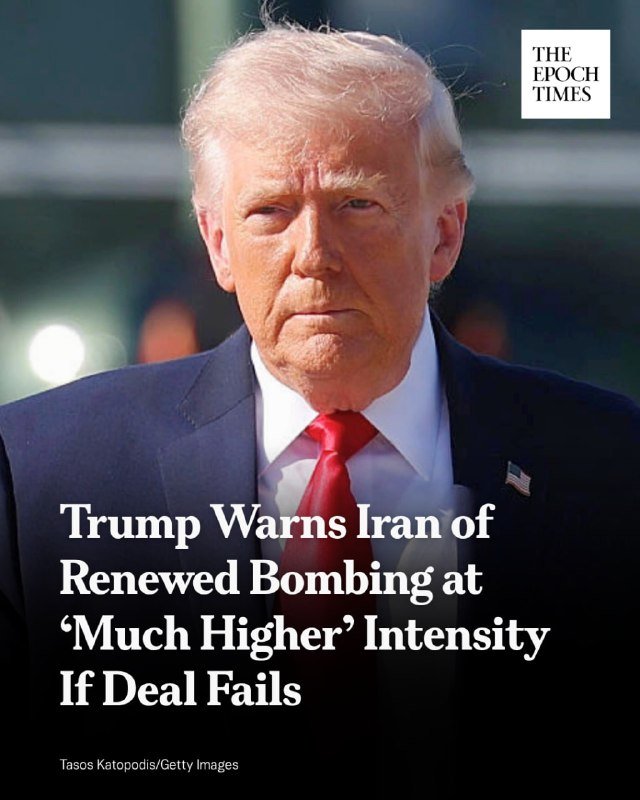
The Trump administration declared on 5 May 2026 that its military campaign against Iran — designated Operation Epic Fury — has concluded, and has opened a new diplomatic chapter under the banner of Project Freedom. US Secretary of State Marco Rubio said the decision had been communicated to Congress and that the executive was now committed to pursuing a negotiated resolution of the nuclear dispute. The shift marks the most significant pivot in the administration's Iran posture since the strikes began, though Rubio was explicit that the door to further escalation remains open should negotiations collapse.
The sequencing matters. For weeks, the administration had maintained ambiguity about whether the strikes constituted a one-time惩罚 or the opening phase of a sustained campaign. The abrupt pivot to diplomacy — with nuclear negotiations elevated as the primary vehicle — suggests the White House concluded that the military demonstration had achieved what it needed politically and is now searching for an exit that does not appear as a retreat. Rubio's own phrasing, "we prefer a peaceful solution," is worded to signal that the administration was never committed to regime change, a framing it can now use to cushion the diplomatic pivot domestically.
What Operation Epic Fury achieved
The administration has offered no public accounting of the strikes' targets, duration, or effectiveness. What is known from official statements is that Rubio described the operation as "completed" and framed it as a discrete phase rather than a failure to sustain pressure. The absence of casualty figures, damage assessments, or confirmed target lists in the public record means the military record remains largely unverifiable from open sources. This opacity is not unusual for US kinetic operations of this scale, but it leaves a significant gap between the administration's claim of having achieved the operation's goal and any independent verification of what that goal was.
Congressional notification, which Rubio said Trump had carried out, provides the formal institutional anchor for the operation's conclusion. Under the War Powers Resolution, the executive is required to notify Congress within 48 hours of introducing US armed forces into hostilities or imminent hostilities. The notification does not, however, require congressional approval, and the administration has not sought an authorization vote. This keeps the legal footing of the extended operation deliberately ambiguous — a pattern that has characterised successive administrations' approach to Iran-related military action.
Project Freedom and the nuclear talks
The new phase is centred on negotiations over Iran's nuclear programme. The name itself — Project Freedom — signals the ideological framing the administration wants to attach to any eventual agreement, a term designed for domestic political consumption as much as for international audience. The core ask, according to Rubio's public remarks, is structured around Iran's nuclear activities: enrichment levels, monitoring access, and the status of the infrastructure that has accumulated over years of sanctions relief under the 2015 Joint Comprehensive Plan of Action.
The negotiating environment is not favourable. Iran has consistently maintained that its nuclear programme is entirely peaceful and has refused to accept constraints that apply to its sovereign right to enrichment. The United States, for its part, re-imposed sweeping sanctions in 2018 after withdrawing from the JCPOA. The gap between what each side has signalled it will accept is wide, and the trust deficit on both sides is significant. That said, the mere fact of direct diplomatic engagement — rather than either confrontation or isolated sanctions pressure — is a shift worth noting. Previous administrations have oscillated between maximum pressure and conditional dialogue; this administration has moved from strikes to talks within weeks, compressing a cycle that usually takes considerably longer.
The escalation caveat
Rubio's statement that the option of escalation remains if negotiations reach a dead end is not boilerplate. It is a deliberate signal — to Tehran, to European partners, and to domestic audiences — that the administration has not foreclosed further military action. The phrasing is calibrated: it does not promise escalation, only preserves it as a latent threat. This is significant because it means the talks, if they proceed, are conducted under the shadow of renewed strikes. That shadow is itself a negotiating tool, but it also carries risk. Every day the talks continue without visible progress, the pressure inside the administration to demonstrate that the diplomatic pivot is not weakness grows. The risk is not simply that negotiations fail — it is that they are weaponised domestically before they have had room to work.
Iranian state media, in initial coverage, described the operation's conclusion as a victory for Tehran's resilience. That framing is predictable and should be read as reflexive rather than substantive. More consequential will be how Iran's negotiating team responds to the formal opening of talks: whether they engage substantively, set preconditions, or use the pause to consolidate their nuclear position. The sources reviewed do not yet contain details on Iran's response to the Project Freedom overture, and that gap matters. Any credible analysis of where this process is heading must account for Tehran's next move — and the sources currently available do not allow that analysis to be made.
The structural context
What is being described here is not simply a bilateral dispute between Washington and Tehran. The Iran nuclear question sits inside a broader architecture of Middle Eastern security relations that includes Israel, Saudi Arabia, the UAE, and the Gulf states — each of which has a stake in the outcome that is distinct from, and sometimes in tension with, the US position. Israel's security apparatus has long argued that any negotiated arrangement must include permanent constraints on Iran's enrichment capacity, not time-limited ones. The Gulf states have pursued their own, quieter diplomacy with Tehran, and have not publicly aligned with the maximalist US position. European parties to the original JCPOA — France, Germany, and the UK — have consistently argued that the deal's verification mechanisms, imperfect as they were, were better than the alternative of no framework at all.
The United States, under this administration, has operated from a different premise: that the JCPOA was structurally flawed because it allowed Iran to develop the infrastructure for a nuclear weapon without actually building one, and that any new arrangement must address that infrastructure directly. Project Freedom is, at minimum, an attempt to negotiate on those terms. Whether Iran will accept constraints it rejected during the original deal — and whether the administration has the patience to sustain diplomacy when the political incentives point toward a quicker, harder result — is the central question this process will answer.
For now, the immediate facts are these: the strikes have stopped, the diplomatic channel is open, and the threat of renewed military action has been explicitly preserved. The people who live in the region — in Iran, in Israel, in Lebanon, in Iraq, in Jordan — are managing the space between those facts as best they can. What happens in the negotiating rooms in the coming weeks will determine whether the pause holds or collapses back into the kinetic rhythm that preceded it.
This publication covered the transition from military to diplomatic phase as a direct consequence of Rubio's announcement. The wire picture was dominated by the administrative framing — completion language, congressional notification, Project Freedom as the new vehicle — with limited independent corroboration of what the military operation actually achieved on the ground. Iranian state framing was available but treated as a counterclaim rather than a primary source.
Wire provenance
This editorial synthesis draws on the following public wire/social posts:
- https://t.me/operativnoZSU
- https://t.me/euronews
- https://t.me/nexta_live
- https://t.me/abualiexpress
- https://t.me/osintlive