Trump's Iran Calculus: War Avoided, Pressure Persistent
Trump has publicly ruled out military invasion while simultaneously betting that financial isolation will force Tehran to bend. That combination is not new. Its track record is mixed at best.
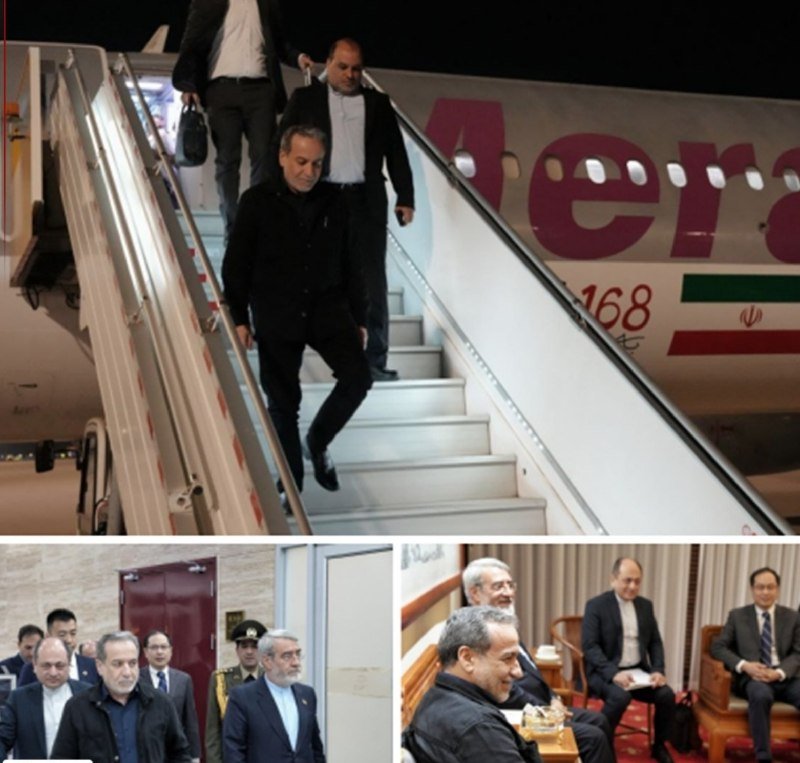
On 5 May 2026, Donald Trump gave his most direct public reckoning with the prospect of war against Iran. The United States, he said, did not want to enter and kill people. "It's too tough." The remarks, carried by conflict-analysis wire BellumActaNews, landed in an already charged atmosphere. Hours earlier, the President had offered a different kind of threat: not bombs, but bankruptcy. He expressed hope that Iran's financial and economic system would collapse under its own weight, a prospect he framed as aid of a sort.
The twin statements — military restraint paired with economic suffocation — define the administration's current posture toward Tehran with unusual candour. Trump is saying, in plain terms, that he wants a victory without paying the price of war. The question is whether the price of sanctions alone is one Iran will eventually pay.
The Case for Economic Strangulation
The logic behind "maximum pressure" is not complicated. Iran operates under some of the heaviest Western sanctions regimes in the world. Oil exports, the cornerstone of government revenue, have been systematically throttled since 2018 when the Trump administration first withdrew from the Joint Comprehensive Plan of Action (JCPOA). The rial has depreciated sharply. Inflation has eaten into household purchasing power. The Iranian state has been forced to ration its spending, prioritise security institutions over civilian infrastructure, and lean harder on networks — many of them informal or grey-market — to sustain basic functions.
That the system has not collapsed outright is itself a testament to resilience, but also to a tolerance for human suffering that sanctions advocates tend to underweight. Iran has weathered earlier rounds of comparable pressure. It found workarounds. It deepened ties with China, which now absorbs the bulk of Iranian oil exports at discounted rates. It developed its own circumvention infrastructure. Each iteration of sanctions has been followed by a period of adaptation, not capitulation.
Tehran's Counter
Iran's response to Trump's latest remarks has been consistent in tone if not in substance. State-linked media, including Fars News Agency, has characterised the financial-collapse gambit as an extension of psychological warfare — a signal designed to panic markets and populations rather than a credible projection of economic mechanics. Iranian officials have long argued that their diversified trade relationships, including expanded energy ties with China and selective engagement with Central Asian and Gulf interlocutors, provide insulation that Washington underestimates.
That argument has limits. Iranian state media's framing of the situation as external aggression is not new, but the structural conditions it describes are real. The question is whether the gaps in the sanctions wall are wide enough for Iran to sustain governance at its current configuration, or whether accumulated pressure will eventually force negotiation on terms the United States finds acceptable.
What "Too Tough" Actually Signals
Trump's admission that military action against Iran would be "too tough" is notable less for what it says about Iran than for what it reveals about the limits of American conventional power in the region. The United States has conducted precision strikes, conducted cyber operations, and maintained a significant military footprint in the Gulf. What it has not done — and what Trump appears to be ruling out — is the large-scale ground invasion that would be required to fundamentally reorder Iran's political structure.
That constraint is partly strategic, partly political. American audiences have shown little appetite for wars of choice in the Middle East since the experiences of Iraq and Afghanistan. Regional partners — particularly Gulf states with their own economic and Shia-population sensitivities — have been ambivalent about open-ended confrontation with Iran. The result is a posture that combines aggressive rhetoric with operational caution: show the costs without paying them.
The Stakes of Indefinite Pressure
The trajectory, if sustained, favours neither clean victory nor managed equilibrium. For the United States, indefinite sanctions maintenance without a diplomatic off-ramp risks turning Iran into a permanent adversarial managed problem — one that requires constant military vigilance, constant intelligence investment, and constant diplomatic management of third-party countries who find the discounts on Iranian oil attractive enough to look the other way on sanctions compliance.
For Iran, the cost of resilience is stagnation. The economy functions, but below its potential. The population bears costs the political class has largely insulated itself from. Over time, that gap between state behaviour and population experience creates internal pressure that Iranian leaders have historically managed through external nationalism — a dynamic that makes diplomatic concessions domestically costly even when they are strategically rational.
Neither side has an obvious exit. Trump's stated preference — economic collapse without military engagement — is a bet on time and internal Iranian fracture. History suggests that bet has a meaningful probability of failing. It also suggests that failure does not produce the clean resolution its advocates imagine. What it produces is an Iran that is more isolated, more paranoid, and more committed to the asymmetric toolkit — proxies, enrichment, regional messaging — that has defined its posture since 2003. The question for American policy is whether that outcome represents a win.
This publication covered the thread via BellumActaNews and Fars News Agency Telegram channels, which carried the primary quotes. Western wire framing emphasised the military dimension of Trump's remarks; the economic-pressure angle received comparatively less attention in initial English-language coverage.
Wire provenance
This editorial synthesis draws on the following public wire/social posts:
- https://t.me/BellumActaNews
- https://t.me/farsna
- https://t.me/FarsNewsInt