Trump Tells Iran to 'Wave the White Flag' — But the Calculus in Tehran Is Harder Than It Looks
The president's blunt public demand that Iran surrender sits uneasily with the more nuanced signals emerging from his own administration — and with what Iranian hardliners may be reading into the chaos around them.
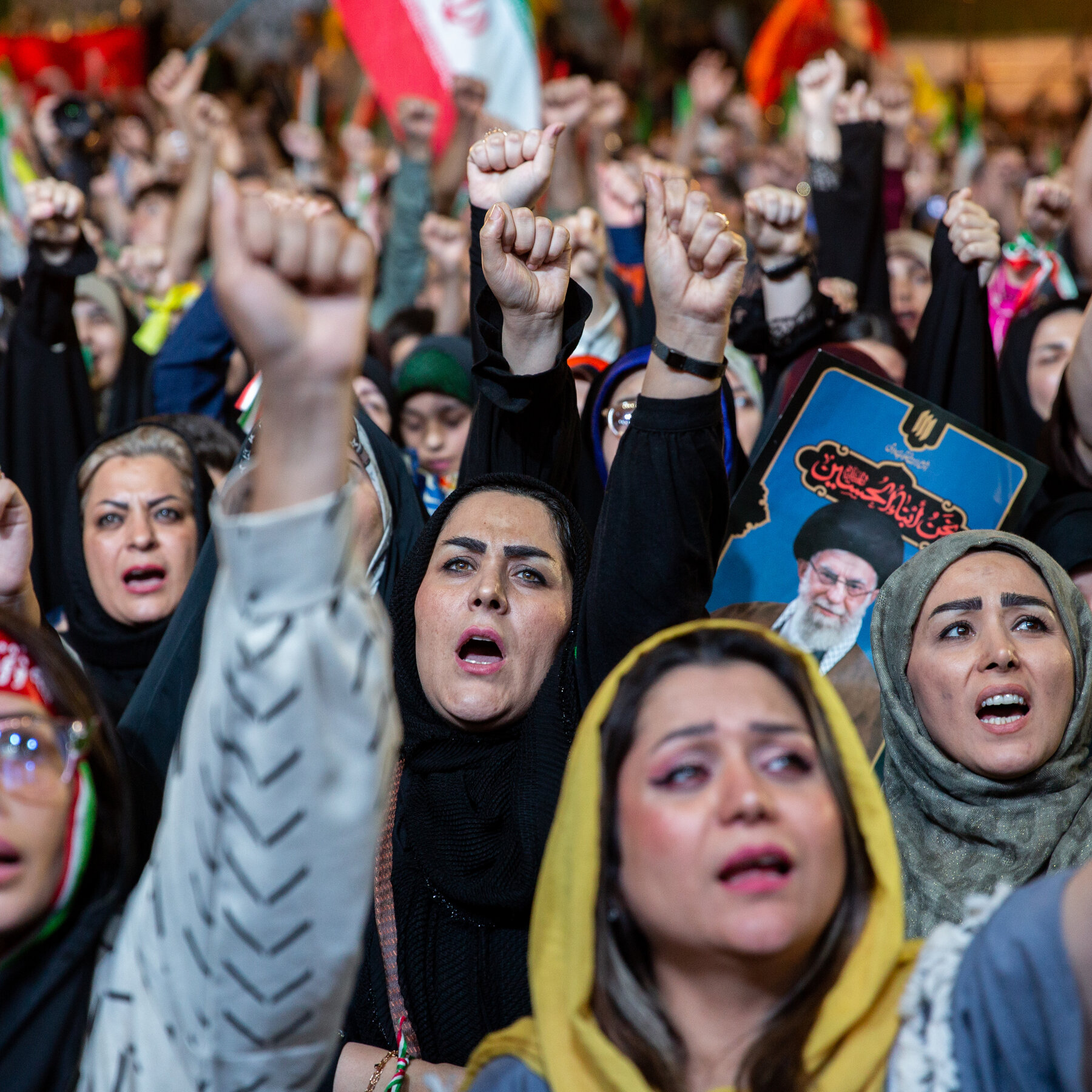
On 5 May 2026, Donald Trump posted publicly that Iran should "wave the white flag of surrender." It was the sharpest public ultimatum of his second term so far — a sentence designed for cable news chyrons and social media virality in equal measure. Within hours, Iranian state-adjacent channels reported air defense systems active above Marivan, in Kurdistan province. The optics were made for each other: American escalation, Iranian fortification.
But the gap between the two images is wider than it appears.
Trump's demand, blunt as it was, is not the whole story of how his administration is handling Iran. Sources familiar with the internal deliberation have told multiple outlets that alongside the public bluster, senior officials have been conveying more calibrated signals through back-channels — that the door to a negotiated nuclear deal remains open, that the administration is not unified on the pace and scope of pressure. Whether those signals are genuine diplomatic flexibility or a well-worn coercive tactic — starve the economy, then offer relief in exchange for concessions — is the central question animating the debate in Tehran and among Western allied governments watching from the sidelines.
The Pressure Campaign and Its Internal Contradictions
The public posture has been unambiguous. Since the start of the second Trump term, the administration has reimposed the maximum-pressure framework that defined the first term's approach to Iran. Oil sanctions have been tightened. Secondary sanctions targeting third-country entities dealing with Iranian oil have been escalated. The stated goal is not just to constrain Iran's nuclear programme but to force a comprehensive renegotiation of the 2015 Joint Comprehensive Plan of Action — the deal Trump withdrew from in 2018, and which Iran has spent years progressively violating in response.
Yet the coherence of the pressure campaign has been questioned by regional analysts and by officials in allied governments who note the administration's mixed signals. While the Treasury Department issues sanctions designations with regularity, the State Department has simultaneously signalled — through quiet diplomatic channels and through statements by senior officials — that a deal is achievable if Iran makes meaningful concessions. Whether this is intentional sequencing or bureaucratic incoherence is not always easy to distinguish from the outside. What is clear is that the Iranian leadership is reading both signals simultaneously, and calibrating accordingly.
What Tehran Is Actually Doing
The air defense activity reported above Marivan is the kind of move that resists easy interpretation. Iranian air defenses operating in the country's western provinces — near the Iraqi border — could indicate a response to perceived external threats, an internal training cycle, or a deliberate signal of defensive readiness. The sources describing the activity are Iranian-adjacent; they cannot be treated as independently verified. But the broader pattern of Iranian military behaviour over the past eighteen months is consistent with a posture of controlled readiness rather than collapse.
Iran has spent the years since the 2018 US withdrawal from the JCPOA accelerating its uranium enrichment programme. It has moved enrichment levels higher, reduced International Atomic Energy Agency inspection access, and built a domestic infrastructure that is now far more resilient to sanctions pressure than it was in 2018. It has also cultivated relationships with Russia and China that give it diplomatic cover and economic lifelines the first maximum-pressure campaign lacked. The idea that Iran will simply capitulate under external pressure — wave the metaphorical flag — underestimates how much its negotiating position has been shaped by eight years of adversarial contact with US policy.
Iranian hardliners, meanwhile, are watching the chaos inside the US political system — the legal jeopardy, the legislative battles, the fractious nature of the Republican coalition — and drawing their own conclusions. Internal Iranian discourse, as reported by Iran-based and regional outlets, frames the Trump ultimatum as a domestic American performance rather than a credible policy signal. That reading may be self-serving. It may also be correct.
The Structural Context: Sanctions, Leverage, and the Limits of Coercion
The history of maximum-pressure sanctions on Iran is instructive here. The first iteration, under the first Trump administration, produced significant economic pain and triggered domestic unrest — the 2019 fuel protests were partly a product of currency collapse. But it did not produce a negotiated capitulation. It produced a negotiated deal — the JCPOA — only after multilateral pressure including European and Asian partners. What the current administration is attempting to do without that multilateral architecture is structurally different. The economic leverage exists. The diplomatic coalition does not.
China, which remains Iran's largest trading partner and a critical buyer of Iranian oil through informal channels, has shown no appetite for joining a US-led sanctions intensification. Beijing's calculation — that containing US leverage in the Middle East serves its broader interest in a multipolar global order — is not hidden. It is stated, in essence, at every press conference where Chinese foreign policy officials are asked about Iran. European allies, for their part, are concerned about nuclear proliferation risks but have also made clear that they view unilateral US pressure as insufficient and potentially destabilising.
This is the structural gap Trump's public ultimatum does not bridge. A demand to surrender is only credible if the demanding party has the leverage to enforce it and the diplomatic context to make surrender the rational choice. The economic leverage is real. The diplomatic context is not present. Iran knows this. Its calculus is not irrational — it is the rational response of a regime that has learned it can survive maximum pressure, that has built redundancy into its economy and its security relationships, and that has concluded — not unreasonably — that waiting out a chaotic adversary is a viable strategy.
The Stakes if This Trajectory Continues
If the current dynamic persists — escalating public pressure, mixed diplomatic signals, no meaningful back-channel progress — the most probable outcome is not Iranian surrender. It is a slow-motion crisis in which Iran's nuclear programme continues advancing, regional risks accumulate, and the administration finds itself facing a choice between military action and a de facto accommodation it describes as something else.
The stakes are not abstract. A nuclear-armed Iran would fundamentally alter the regional balance of power in the Middle East, trigger a Saudi response, destabilise Iraq and the Levant further, and create a direct proliferation incentive for other states in the region. Preventing that outcome is the stated rationale for the pressure campaign. Whether the campaign as currently configured achieves that goal — or accelerates the very outcome it seeks to prevent — is a question the administration's own officials do not appear to have resolved.
What is clear on 5 May 2026 is that Trump's public demand for surrender is the loudest sound in the room. It is not, by itself, a policy. The policy — whatever it is — is still being worked out. And the gap between the tweet and the strategy may be wider than the White House is currently willing to acknowledge.
—
This publication covered the White House ultimatum as a concrete statement of intent while contextualising it within the more complicated picture of internal administration deliberation, Iranian resilience, and structural constraints on the maximum-pressure approach. Wire framing focused on the spectacle of the demand; this piece examined the conditions under which such a demand might — or might not — produce the desired result.
Wire provenance
This editorial synthesis draws on the following public wire/social posts:
- https://t.me/sprinterpress
- https://t.me/sprinterpress
- https://t.me/ekonomat_pl