Trump tells Iran to 'wave the white flag' as US pressure campaign targets financial architecture
The US president dismissed Iran's military capacity in unusually stark terms on May 5, 2026, telling Tehran to surrender while announcing a campaign to dismantle its financial system — a pressure lever with historical precedent but uncertain outcome.
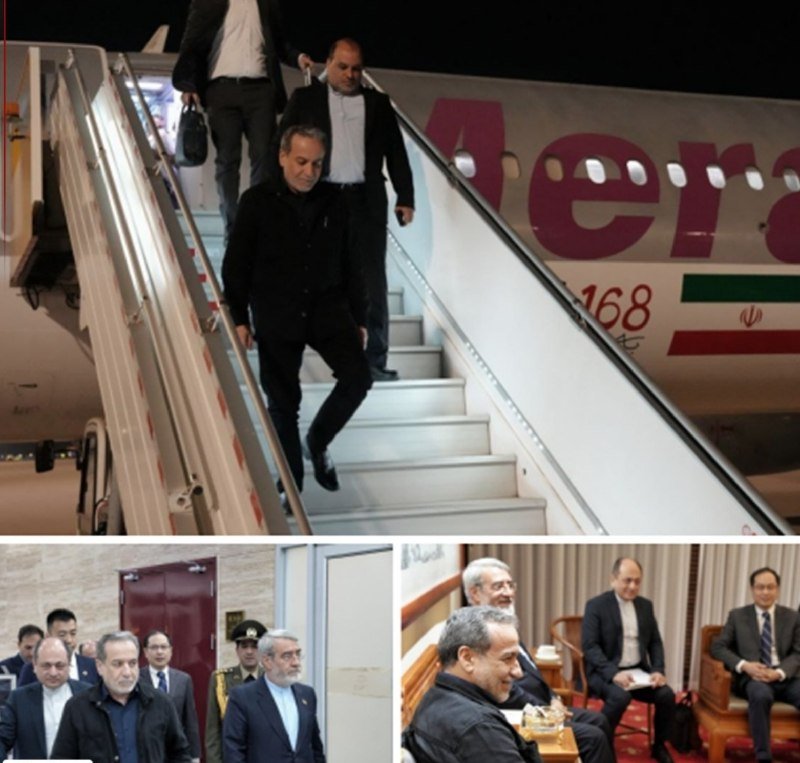
Speaking from the White House on May 5, 2026, US President Donald Trump delivered one of the starkest direct messages yet to Tehran, telling Iran to "wave the white flag of surrender" and to "say uncle" in the president's words. The remarks, which included a video clip circulated across Middle Eastern and geopolitical Telegram channels, also featured Trump telling reporters that Iran had "no chance" and dismissing its military capabilities as effectively eliminated. "They have no Navy, totally wiped out. They have no Air Force, totally wiped out," the president said, according to a transcript cited by the Middle East Spectator channel. That same day, the White House signalled a secondary pressure vector: Trump stated that his administration aimed to bring down Iran's financial system entirely, a goal that amounts to a maximalist economic surrender demand rather than a negotiating position.
The statements arrive at a moment of acute diplomatic tension. US-Iran nuclear negotiations, which restarted in early 2026 after a period of near-total breakdown, have failed to produce any agreed framework. Iran, through official and semi-official channels, has maintained that it seeks a deal — a framing corroborated by Middle East Eye's reporting that Tehran is currently "trying to survive" — but has refused to accept preconditions that would require it to dismantle its civilian nuclear programme before sanctions relief is granted. The disconnect between Washington's declared goal of a deal and its stated demand for unconditional capitulation has left negotiators without a clear meeting point, and Thursday's remarks from the president appear to have foreclosed whatever diplomatic space remained.
The immediate context matters here. Trump is not speaking to an empty room. The administration has sustained a high-pressure sanctions posture since the breakdown of the JCPOA in 2018 and its withdrawal from the Iran nuclear agreement. Successive waves of secondary sanctions — targeting Iran's oil exports, banking sector, and dual-use technology imports — have produced measurable economic contraction. The IMF's most recent figures, compiled before the current escalation, showed Iranian GDP per capita declining and inflation remaining in double digits. What is new in Thursday's remarks is not the pressure campaign but its explicitly stated endpoint: not negotiated restraint, not a mutual return to the JCPOA framework, but systemic collapse of the Iranian financial architecture. This is a different category of demand, and it changes the nature of what is on the table.
The counter-narrative: what Iran says it wants
Iranian officials, including representatives at the International Atomic Energy Agency and in bilateral back-channel communications, have consistently maintained that Tehran is seeking a negotiated resolution. Reporting from Middle East Eye on May 5 quoted the Iranian position as one of seeking a deal — not regime survival through maximalist defiance, but a transactional agreement that preserves Iran's nuclear programme at a civilian level while restoring economic access. That framing sits uncomfortably with the administration's public position, which presents Iran as recalcitrant and expansionist. Trump told assembled media on May 5 that Iran "would have taken over the Middle East" if not for the ongoing American pressure campaign — a claim with no cited evidence in the thread context, and one that is sharply contested by regional analysts who note that Iran's regional posture has been primarily defensive and proxy-mediated rather than territorial.
The divergence matters because it shapes how the international community — and particularly the European parties to the defunct JCPOA — will read the current situation. Three European states (France, Germany, Britain) have maintained that a return to the nuclear agreement remains the most viable path to containing Iran's programme. Their diplomats have privately signalled frustration with the maximalist framing from Washington, according to accounts cited across several wire services. A negotiated outcome requires both sides to see value in talks; if the US position is systemic regime weakening rather than non-proliferation, the European interlocutors have little to offer.
The financial architecture as target
The second dimension of Thursday's statements deserves separate attention. Trump said explicitly that his goal was to "bring down" Iran's financial system — not to sanction specific entities or sectors, but to dismantle the infrastructure that allows Iran to participate in global commerce at all. This is a maximalist economic posture that goes beyond anything imposed during the 2018-2025 period, even at the height of the maximum pressure campaign.
The tool of choice here is the dollar system's extraterritorial reach. Because most global trade is settled in dollars and because the US controls the primary correspondent banking networks, American sanctions can effectively cut a target state off from the international financial system regardless of whether third countries wish to trade with it. This leverage — deployed against Russia, against Venezuela, against North Korea — has produced different outcomes depending on the target state's economic resilience, its access to alternative financial channels, and the willingness of its trading partners to absorb the cost of US secondary sanctions. Iran's position is more constrained than Russia's: it lacks Russia's commodity leverage (hydrocarbons at a scale that forces third-party compliance), and its largest trading partners — China, Turkey, the UAE — have shown varying degrees of willingness to absorb American pressure rather than lose access to the dollar system themselves.
Chinese institutions, which have been a significant off-ramp for Iranian oil exports in recent years, face a calculation. Beijing has a strategic interest in maintaining Iran as a partner and in diversifying its energy supplies away from the Gulf; it also has a structural interest in not being cut off from the dollar system entirely. The historical evidence suggests that China will continue to seek workarounds — using yuan-denominated trade instruments, routing transactions through third-country intermediaries — but that it will not openly confront US financial leverage on Iran's behalf. That asymmetry is the foundation of the administration's calculation: financial pressure works not because it destroys the target state but because it makes that state's partners calculate the cost of association as too high.
What comes next
The question is whether financial strangulation produces the diplomatic outcome the administration seeks. There is a historical parallel worth noting: the Trump administration's "maximum pressure" campaign of 2018-2021 produced severe economic distress in Iran but did not produce nuclear concessions. The Biden administration's more calibrated approach produced indirect talks but no breakthrough. The current administration is now combining the maximum pressure logic with an explicit stated goal of systemic financial collapse — a demand that Tehran cannot meet without ceasing to function as a modern state. This is not a negotiating position; it is a surrender demand. Iran, whatever its internal divisions and whatever the pressure on its leadership, has historically demonstrated that it does not capitulate to demands framed as unconditional. The 1980s standoff with Iraq — a decade-long attritional war that killed hundreds of thousands and produced no territorial concession — is one data point. The more recent nuclear talks, which produced the JCPOA precisely because both sides needed an off-ramp, produced it not under maximum pressure but under a framework that offered partial relief in exchange for partial concessions.
The forward view is therefore constrained. On the current trajectory — with the US demanding systemic capitulation and Iran refusing to provide it — the most likely outcomes are a prolonged standoff with continued escalation, or a third-party mediation effort (European, possibly Emirati or Omani) that creates off-ramp language for both sides to claim partial victory. What appears unavailable, at least for now, is the outcome the administration says it wants: a quick, total collapse of Iranian financial capacity that forces a surrender the Iranian state cannot survive politically. The sources do not indicate whether the administration has contingency plans for the more likely scenario in which pressure produces not capitulation but further nuclear advancement — a development that would force a decision no-one in Washington has publicly laid out.
This publication framed the May 5 statements as a maximalist demand with structural financial implications rather than a negotiating position — a reading the thread's wire context supports but one that several regional outlets framed as standard presidential bluster.
Wire provenance
This editorial synthesis draws on the following public wire/social posts:
- https://reut.rs/4eMQnC3
- https://t.me/WarMonitors/14283
- https://t.me/Middle_East_Spectator/2847
- https://t.me/TheCradleMedia/8921
- https://t.me/osintlive/9841
- https://t.me/nexta_live/6612