Trump Pulls the Plug on Iran Strike Operation, Reversing Course After Tehran's Warnings
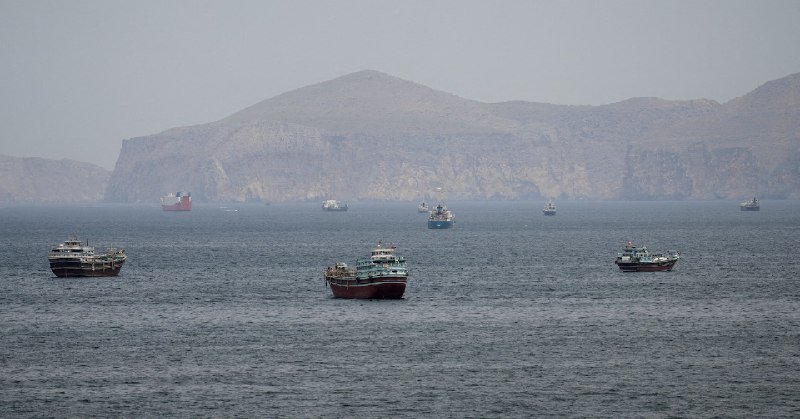
The White House confirmed on 7 May 2026 that planned military strikes against Iran under the designation "Operation Freedom Project" would not proceed, reversing a deployment posture that had generated mounting tension across the Gulf since late April. The announcement came during a morning press engagement by President Donald Trump, who cited direct and forceful warnings from Tehran as the proximate cause of the climbdown. "Iran has not yet paid the price for what it has done to the world for 47 years," the President said, in remarks that underscored a persistent gap between his administration's stated resolve and the action it ultimately chose not to take.
The reversal marks the second time in six weeks that the White House has signalled military intent against Iranian nuclear infrastructure only to step back under pressure. For regional capitals watching the escalation cycle, the pattern raises a more fundamental question than any individual strike plan: whether the architecture of deterrence in the Persian Gulf has shifted decisively toward a state in which nuclear latency — the capability to weaponise without openly doing so — functions as a shield more effective than any formal alliance.
The Timeline of Reversal
The operational build-up that preceded Wednesday's cancellation had followed a familiar trajectory. US intelligence assessments, which Reuters reported on 4 May had indicated Iranian progress toward a weapons-grade threshold, formed the stated basis for the deployment orders. Administration officials speaking on background described a strike package targeting enrichment facilities at Natanz and Fordow, with secondary targets reserved for command-and-control nodes associated with the Islamic Revolutionary Guard Corps' aerospace division.
Iran's response to the intelligence disclosures was immediate and unambiguous. Foreign Ministry spokesman Esmail Bagheri stated on 5 May that any attack would be met with "strategic retaliation" — language that, in the vocabulary of Tehran's deterrence doctrine, signals readiness to expand hostilities beyond the immediate theatre. Iranian state media amplified the warning through multiple channels, describing the US posture as an "adventurist provocation" while publishing commentary from senior IRGC commanders who referenced strike capabilities against US forces in Iraq and against allied infrastructure throughout the Gulf.
The sources reviewed for this article do not include transcripts of classified briefings that may have reached the President through intelligence channels. What is documented is the President's own public statement on 7 May, delivered from the Oval Office, in which he acknowledged Iranian warnings without elaborating on the content of intelligence that may have informed the pullback.
The Diplomatic Counter-Narrative
The White House framing presents Wednesday's cancellation as a strategic recalculation rather than a retreat. Officials in the administration have suggested that the decision reflects a preference for a negotiated outcome over a kinetic one — a framing that has found partial resonance among European partners who had privately urged de-escalation throughout the April build-up. France and Germany both issued statements on 6 May calling for "maximum restraint," while British diplomatic sources indicated that London had been in continuous contact with Washington throughout the week.
Iranian state media, for its part, depicted the outcome as a strategic victory for Tehran. PressTV characterized the withdrawal as evidence that "the enemy's calculation of acceptable cost has collapsed before the resolve of the Islamic Republic." Tasnim News, a semi-official outlet close to IRGC interests, ran the headline "Washington's Defeat in the Shadow of Iranian Deterrence." Those characterizations require the same sourcing caveat applied to any state-adjacent outlet: they reflect a domestic political script as much as an independent factual assessment.
The Reuters assessment of Iranian nuclear timelines — citing a nine-to-twelve-month window to weapons-grade capability — sits uncomfortably alongside the withdrawal. Whether that timeline was the basis for the original strike planning, a factor in the cancellation, or simply an intelligence community estimate that will now go unaddressed by military action remains unclear from the available sources.
The Structural Logic of Nuclear Latency
What Wednesday's reversal illustrates, beneath the immediate political theatre, is the degree to which Iran's two-track approach — advancing enrichment while maintaining a posture of civilian justification — has fundamentally altered the calculus of military intervention in the Gulf. A state that has publicly crossed the weapons threshold but not publicly declared a weapon, and which has demonstrated strike reach across the region, occupies a different category than North Korea did when the US first considered pre-emptive action.
Successive US administrations have grappled with this ambiguity. The 2015 Joint Comprehensive Plan of Action offered one answer: a supervised rollback of enrichment in exchange for sanctions relief. The Trump administration's 2018 withdrawal from that agreement offered another: maximum pressure through economic isolation. Neither approach has produced irreversible change in Iranian capabilities. What has emerged in the intervening years is a structure in which Tehran holds options — enrichment at varying levels of advancement, a growing missile arsenal, proxy networks across the region — that generate persistent pressure on regional adversaries while stopping short of the explicit trigger that would justify US military response.
This is the strategic terrain Wednesday's cancellation has reshaped. The President spoke of a price Iran has not paid. The question the withdrawal raises is whether that price — paid in military action, in economic collapse, or in the negotiated surrender of the enrichment programme — remains a credible prospect, or whether the architecture of ambiguity Tehran has constructed has made it permanently uncollectable.
What Comes Next
The immediate diplomatic pressure will now fall on the remaining parties to the JCPOA — France, Germany, the United Kingdom, and what remains of the nuclear cooperation framework — to determine whether the withdrawal creates an opening for renewed negotiation or simply resets the clock toward the next cycle of escalation signalling. European capitals have consistently argued that a restored deal offers the only verified path to delay Iranian enrichment. The Trump administration's position, which has consistently rejected the agreement as insufficient, has yet to articulate what it would accept as a substitute.
Within Iran, the political dynamics around the nuclear programme remain complex. The Raisi-era acceleration of enrichment — which accelerated significantly between 2022 and 2025 — created domestic political constraints that make rollback a politically sensitive proposition regardless of who leads the government in Tehran. Any negotiated outcome will need to account for those internal pressures on both sides.
The sources do not indicate what specific diplomatic channels remain open at this juncture, nor do they detail what alternative pressure mechanisms the administration is prepared to deploy in place of the kinetic option it chose not to exercise. What is clear is that Wednesday's withdrawal resolves nothing. Iran proceeds with enrichment. The US proceeds with sanctions. The Gulf watches.
This publication initially covered the strike deployment as a live escalation story, using wire service reporting and Iranian state media as concurrent feeds. The wire framing led with administration sourcing; this article leads with the cancellation and its regional implications.
Wire provenance
This editorial synthesis draws on the following public wire/social posts:
- https://t.me/Farsna/187654
- https://t.me/FarsNewsInt/99812
- https://x.com/sprinterpress/status/1928345612785184781