Trump's Taiwan Gambit: Trade, Theater, and the Art of Great-Power Restraint
As Trump prepares to meet Xi Jinping, Taiwan has surfaced as a negotiating chip — yet the president's own rhetoric about military intervention suggests limits to even his most aggressive postures.
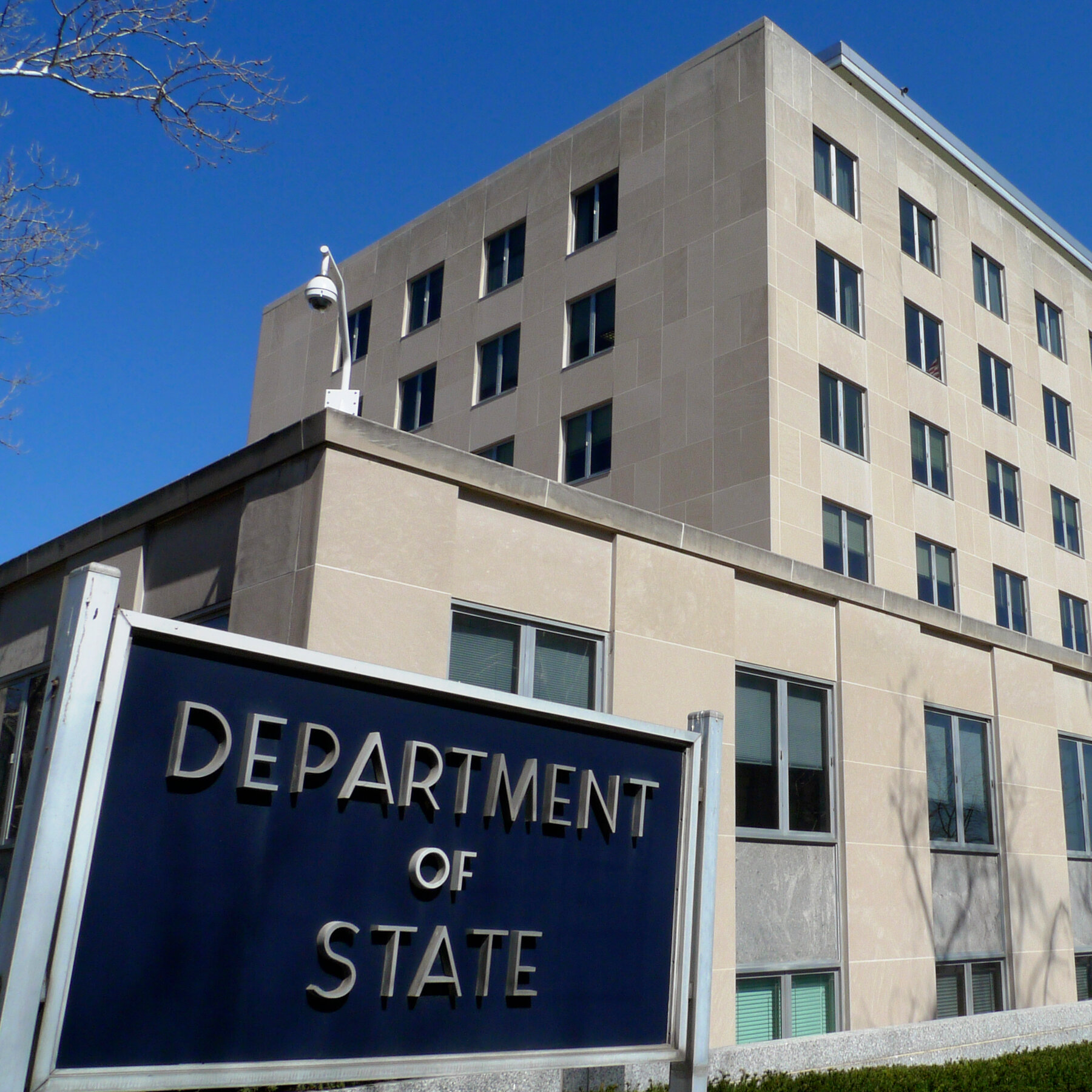
On 5 May 2026, a new data point surfaced in the loose constellation of signals surrounding the Trump administration's approach to Beijing: Taiwan would reportedly be a topic of conversation when the president meets Xi Jinping in the coming week. The information, flagged on the Polymarket tracking feed and cross-referenced across several Washington-adjacent accounts, arrived alongside a sequence of video moments — Trump dancing, Trump bantering with a child, Trump insisting he does not want to kill anyone — that together painted a portrait of a president acutely conscious of his image as both enforcer and dealmaker.
The meeting itself is not surprising. The two leaders have met before; channels of communication between the world's two largest economies remain open even as tariffs cycle and rhetoric spikes. What is notable is the framing. By positioning Taiwan as a topic — rather than a red line or a non-starter — the administration is signaling that the island democracy sits inside the negotiating box, available as leverage in whatever larger arrangement Trump hopes to construct.
The Leverage Calculus
Taiwan occupies a peculiar position in great-power diplomacy. It is not a United Nations member state. It does not have formal diplomatic relations with Washington. And yet it is the site of one of the world's most consequential semiconductor supply chains, a democratic polity of 23 million people, and a persistent friction point in the US-China relationship. Administrations of both parties have for decades navigated a careful fiction: the United States does not formally recognize Taiwanese independence, but it does sell weapons and maintain unofficial ties, maintaining what observers have called strategic ambiguity.
The Trump administration's posture under this calculus has been inconsistent in tone but consistent in method. The president talks tough — and then, in the same public breath, steps back. On 5 May 2026, a video circulated in which Trump, addressing a public gathering, said: "We don't want to go in and kill people, really don't. I don't want to, I don't want to, it's too tough." The statement, presented without full context on the social feeds that amplified it, reads as an unusually direct admission of restraint from a figure whose brand has long been built on force of will.
Taiwan, in this context, becomes a筹码 — a bargaining chip — rather than a cause. The administration is not signaling that it will defend Taiwan militarily come what may. It is signaling that Taiwan has value in a negotiation, and that value is extractable.
What Beijing Sees
The Chinese government's reading of this calculus is not complicated. Beijing has long maintained that Taiwan is a domestic matter — an extension of the One China principle that has been the foundational axiom of US-PRC relations since the Shanghai Communiqué of 1972. Every administration since then has had to navigate that axiom while maintaining its own domestic political constraints.
What has changed under the current configuration is the temperature. Chinese state media has been consistent in framing Taiwanese separatism as a core interest. The question for Beijing is not whether the United States understands this — it is whether Washington will treat it as a negotiating lever or as a genuine red line. The reported positioning of Taiwan as a "topic of conversation" suggests the former, and Chinese diplomatic actors will calibrate accordingly.
The structural dynamic here is not unique to this administration. In the early decades of the dollar-based international financial architecture, hegemonic powers routinely extracted concessions from smaller states by creating uncertainty about their commitment to defend them. Taiwan sits inside that logic. A president who presents himself as a dealmaker — who publicly describes military intervention as "too tough" — is sending a signal that the island's value to Washington is transactional rather than principled.
Beijing will note this. Whether it interprets it as weakness, as opportunity, or simply as the normal operating procedure of a commercially-oriented administration remains to be seen.
The FAA Contractor and the Temperature of the Moment
On the same day, Reuters reported that an FAA contractor had been charged with making a threat against the president. The specific circumstances of the charge were not elaborated in the wire report, but the fact of the charge speaks to a broader atmosphere. The Trump presidency has generated an unusual volume of documented threats against the office and its occupant — a pattern that reflects both the polarisation of the American political environment and the particular toxicity that surrounds this figure.
The contractor's case does not directly intersect with Taiwan or China policy. But it is a reminder that the transactional diplomacy being conducted at the summit level has a counterpart in the social and psychological realm: a public that is deeply divided about what the United States should be doing in the world, and willing to express that division in ways that cross into criminal conduct.
This is not a peripheral detail. Great-power diplomacy does not occur in a vacuum. It occurs inside societies whose internal temperatures affect what leaders can offer, accept, and sustain. An administration that presents itself as tough on foreign adversaries while backing away from the hardest commitments in public — "I don't want to, I don't want to, it's too tough" — is managing a tension that is visible to both allies and rivals.
The Structural Frame
The pattern being described here is not new, but it is becoming more legible. The international order built around dollar hegemony — the system in which the United States provides security guarantees in exchange for economic deference and political alignment — is under structural pressure from multiple directions simultaneously. Rising powers are building alternative financial infrastructure. Middle-income countries are recalibrating their alignments. And within the hegemonic power itself, the leadership is oscillating between maximalist rhetoric and pragmatic restraint.
Taiwan sits at the intersection of all of these pressures. It is a flashpoint because it is genuinely important to Beijing. It is a negotiating chip because it is genuinely useful to Washington. And it is a litmus test for whether the gap between those two facts can be managed without escalating into a crisis that neither side wants.
The upcoming meeting with Xi Jinping will not resolve that question. It will, however, produce signals — about what is on the table, what is off, and what the president of the United States is prepared to defend versus what he is prepared to trade.
The video of Trump bantering with a child, asking if he could defeat him in a fight, is in some ways the purest distillation of the current moment. The president of the United States, in public, asking a minor whether he could physically dominate him. The president of the United States, in the same news cycle, saying he does not want to kill anyone because it is too tough. These are not contradictions. They are the two modes of the same transactional posture: maximum theatrical assertion, maximum practical restraint, depending on which register is more useful at any given moment.
The question for Beijing — and for the region's other stakeholders — is which mode will prevail when the actual negotiating begins.
This publication has been tracking the US-China relationship through multiple administrations. Our coverage of the 2025 tariff escalation and the current diplomatic realignment is archived in the Asia desk.
Wire provenance
This editorial synthesis draws on the following public wire/social posts:
- https://t.me/nexta_live/58432
- https://en.wikipedia.org/wiki/One-China_policy