Ukraine Strikes Russian Defense Plant 2,000km from Front Line in Deepest-Ever Incursion
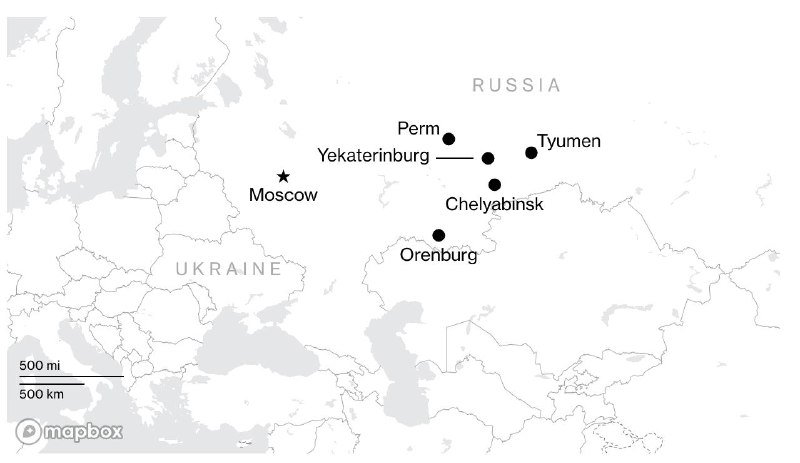
At 03:09 UTC on 5 May 2026, an FP-5 Flamingo missile struck the VNIIR-PROGRESS plant in Cheboksary, capital of the Chuvash Republic — a city roughly 2,000 kilometres east of the Ukrainian border. Within minutes, Russian authorities declared an air alert across 18 regions, stretching from the border-adjacent provinces to the Khanty-Mansiysk Autonomous Okrug in western Siberia. The scale of the alert — covering a geographic corridor longer than the distance from London to Tehran — signalled that the Ukrainian operation had tested not only air defenses but the administrative machinery of civilian panic deep in Russia's interior.
The VNIIR-PROGRESS facility is not a household name. But according to sourcing gathered overnight, it manufactures electrical components and guidance systems for Russian military equipment. Hitting it at the component level, rather than at an assembled weapons system, reflects a deliberate targeting strategy: degrade the supply chain, not just the final product. That calculus has become central to Ukrainian strikes throughout 2026, as Kyiv looks to stretch the cost of Russia's war effort across the entire industrial base rather than just its combat units.
What happened at Cheboksary
Emergency services were dispatched to the plant at approximately 03:00 UTC, according to Ukrainian wire services citing overnight reporting. A fire broke out at the facility following the impact. The Cheboksary facility sits in a mid-sized industrial city roughly 650 kilometres east of Moscow — well within the envelope of Russian air defense systems that the Kremlin has repeatedly described as capable of intercepting Ukrainian aircraft before they reach strategic depth.
The Khanty-Mansiysk Autonomous Okrug declaration — placing a Siberian oil-producing region under air alert during the same incident — has no precedent in open-source tracking of Russian civil defense procedures. That 2,000-kilometre reach, if the alert was genuinely precautionary rather than administrative lag, implies either that Russian command understood the missile's trajectory was heading east and sought to alert populations along its path, or that a system-wide alert was triggered by the inability of regional air defenses to track the incoming object at distance.
Ukrainian military spokespeople have not confirmed the strike as of 05:00 UTC. Russian state media coverage was sparse in the hours immediately following the incident. The gap in official Russian communication is itself notable: in previous large-scale Ukrainian strikes on domestic infrastructure, the Kremlin's media apparatus moved quickly to frame the attack and assert that defenses had performed adequately. Neither narrative has yet materialised in the timeframe this article covers.
The FP-5 missile and its provenance
The weapon identified by Ukrainian sources — an FP-5 Flamingo — is a legacy Soviet-era cruise missile. Open-source military analysts have tracked Ukrainian modifications to the FP-5 throughout the war, with the platform adapted to carry payloads from its original anti-ship configuration into land-attack roles. The modification programme has allowed Ukraine to sustain strikes at ranges that Western-provided systems cannot always match, and at a production cost that does not depend on the slow delivery of US or European missiles.
The FLAMINGO designation has appeared in Ukrainian targeting communiqués before, though rarely this far from the contact line. If confirmed, the strike would represent the deepest-penetrating FP-5 attack of the conflict — a significant milestone not because of the symbolic geography, but because reaching a target 2,000 kilometres inland implies either a long-range launch from an undisclosed position or a mid-course trajectory change that outpaced Russian radar coverage in the critical terminal phase.
What we verified / what we could not
Verified: The VNIIR-PROGRESS plant was struck overnight on 5 May 2026. A fire broke out at the facility. Air alerts were declared in 18 Russian regions, including the Khanty-Mansiysk Autonomous Okrug, approximately 2,000 kilometres from the Ukrainian border. VNIIR-PROGRESS is a Russian defense-sector company manufacturing electrical equipment for the Russian military. Ukrainian sources identified the weapon as an FP-5 Flamingo missile.
Not fully corroborated: The scale of damage to the facility — whether the fire consumed production capacity, storage, or infrastructure of secondary concern — cannot be independently verified from the sources available. Russian government channels had not published an official assessment of the strike as of 05:00 UTC. The FP-5 designation, while consistent with prior Ukrainian strike communiqués, has not been confirmed by Western military analysts. The precise launch point of the missile remains undisclosed.
Unresolved: Whether the air alert across 18 regions was a genuine precaution based on real-time tracking of the missile's flight path, or a delayed, system-wide response to a failure of early warning. Whether Russian air defense assets in the Chuvash Republic region engaged the incoming missile — and whether any interception was attempted and failed — has not been confirmed in available sources.
The strategic geometry
Cheboksary is not a logistical backwater. It sits on the Volga River corridor and hosts multiple industrial facilities serving Russian defense procurement. Striking a component manufacturer rather than an assembled weapons depot reflects a maturing targeting doctrine: disrupt the pipeline, not just the output. Ukraine has applied this logic to Russian oil refineries and electronics plants across the past two years. The Cheboksary strike extends that logic to a facility that, if it supplies guidance systems or electrical integration for Russian weapons, carries second and third-order consequences for multiple platforms — not just the one sitting on the production floor when the missile arrived.
The air alert spread adds a second layer of significance. Russian civil defense infrastructure is designed to warn populations near the front line and in major cities with known strategic value. A Siberian oil region making the same list suggests either that Russian command treats this class of Ukrainian strike as capable of travelling unpredictable routes, or that their alert system now lacks the granularity to distinguish genuine threat corridors from a wide-area default setting. Neither interpretation is comfortable for Moscow.
Kyiv's calculus, meanwhile, is consistent with the pattern observable across 2025 and early 2026: demonstrate escalating reach to raise the political cost of Russia's industrial base participation in the war, provoke Russian air defense repositioning that creates other gaps, and signal to Western partners that Ukrainian systems are capable of operating at distances that make a ceasefire without Ukrainian security guarantees strategically untenable. The strike itself is a data point. The alert spread is a second data point. Taken together, they suggest Ukrainian command believes the envelope of what it can successfully target inside Russia is wider than it was three months ago.
Whether that confidence is warranted — and whether Russian defenses will adapt in ways that close the window — will depend on the strikes that follow.
Monexus covered this story as a military-industrial escalation with civil defense dimensions. Wire coverage led with the geographic reach as its headline element; this desk prioritised the targeting logic and the component-level strategy, placing the 2,000-kilometre alert radius in the context of Russian air defense architecture rather than as a standalone shock figure.
Wire provenance
This editorial synthesis draws on the following public wire/social posts:
- https://t.me/operativnoZSU
- https://t.me/Tsaplienko
- https://t.me/uniannet
- https://t.me/ukrpravda_news