US Navy Destroyers Targeted in Strait of Hormuz as Iranian Forces Deploy Small Boats, Drones and Missiles
US destroyers transiting the Strait of Hormuz encountered a coordinated Iranian response involving small boats, unmanned aerial systems and missiles — an incident that drew on maritime chokepoint politics central to Tehran's leverage over global energy markets.
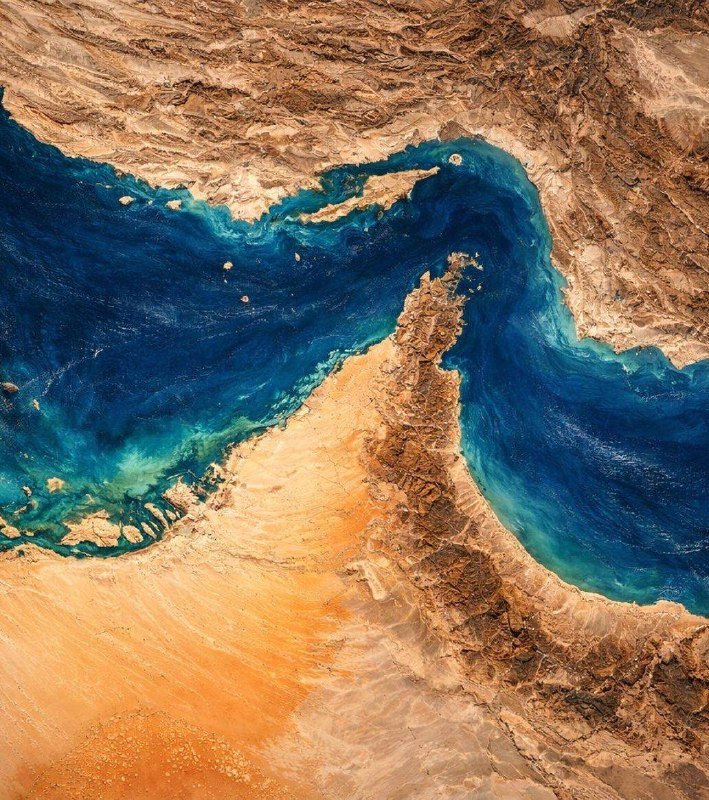
Two United States Navy destroyers were targeted by Iranian small boats, drones and missiles while transiting the Strait of Hormuz on 5 May 2026, according to early accounts cited by the Telegram channel Megatron Ron, which described the incident as breaking news and attributed the reporting to CBS News.
The Strait of Hormuz is among the world's most strategically consequential waterways. Roughly 20 percent of global oil production passes through it, and any disruption sends immediate shockwaves through commodity markets. Iranian state-linked media have long framed the strait as operating territory in which Tehran exercises decisive sway — a claim that Wednesday's episode, if confirmed in full by Western military authorities, would appear to reinforce.
Iranian state outlet Tasnim Plus published a message accompanying the incident cycle asserting that no tanker could cross the Strait of Hormuz without Iran's permission. A separate Arab-language dispatch from the Tasnim-affiliated Al Alam channel disputed initial foreign reporting — carried by multiple international wire services — that a Maersk container vessel had crossed the strait with American escort. Al Alam characterised that account as inaccurate.
The tension between those two framings — a demonstration of Iranian reach on one side, and a quick counter-denial on the other — illustrates the choreography that typically accompanies maritime incidents in the Gulf. Tehran rarely lets such moments pass without an official communication strategy layered over the operational facts.
Tactical Picture and the Gulf Security Architecture
The immediate tactical dimension remains the subject of ongoing confirmation. Early reports described a multi-vector approach: surface craft attempting to close on the US vessels, overhead drone activity consistent with reconnaissance or targeting operations, and missile systems made ready or actually employed. The US Fifth Fleet, based in Bahrain, did not publish a formal statement confirming the engagement by the time of initial deadline cycles on 5 May.
The sources do not specify which class of destroyer was involved, what degree of kinetic exchange occurred — whether missiles were launched and by whom, whether any vessel sustained damage — or whether the confrontation was resolved through standoff deterrence or required further escalation management. Those details matter, and their absence from the publicly available record as of publication means any assessment of severity remains provisional.
What is clearer is the operational context. US naval vessels transiting the strait operate under rules of engagement designed for exactly this environment — narrow seas, high commercial traffic, and an adversarial state actor with layered anti-access capabilities. The Iranian Revolutionary Guard Corps Navy, separate from the regular Iranian Navy, is particularly associated with the small-boat tactics and asymmetric approach referenced in the incident reporting. Its doctrinal emphasis on swarm tactics and sea-denial is precisely calibrated for this geography.
Chokepoint Politics and the Oil Signal
Tehran's messaging after the incident was deliberate. The Tasnim Plus post — framing the episode as a lesson to the world about Iran's control over the strait — did not arrive as spontaneous commentary. It was timed to coincide with the operational moment, and its language reflected the symbolic weight the waterway carries in Iranian strategic communication.
The Strait of Hormuz is not merely a shipping lane in Tehran's calculus. It is the primary instrument of coercive leverage Iran holds over global energy markets. When former Iranian officials and state media speak of the strait's strategic centrality, they are communicating to two audiences simultaneously: Western naval planners, who must factor in anti-ship capabilities every time a destroyer passes through; and global markets, which react to any escalation in a corridor through which roughly 21 million barrels per day of oil and condensate move.
Wednesday's targeting episode, even if it ended without major casualties or significant disruption to traffic, reinforced that structural reality. Iran demonstrated — whether through official authorisation or the actions of a proxy force acting within established doctrine — that it can project threat into the strait at a time of its choosing. The Maersk denial, if accurate, suggests the claimed American escort arrangement was either premature or mischaracterised, which itself communicates something about the coordination challenges inherent in keeping commercial traffic flowing under these conditions.
Escalation Calibration and the Diplomatic Signal
The incident arrives at a delicate moment in broader US-Iran relations. The Vienna nuclear negotiations, which have produced periodic progress and sustained deadlock in cycles over recent years, have not yet produced a renewed agreement that would relax the sanctions architecture constraining Tehran's oil exports and financial system. In the absence of a diplomatic breakthrough, both sides have maintained a posture of managed confrontation — striking each other's regional assets and proxies, conducting signals operations through naval posturing, but stopping short of the direct large-scale kinetic exchange that would foreclose de-escalation pathways.
Wednesday's targeting fits within that pattern. It was threatening, demonstrative, and calibrated to communicate without triggering the kind of response that would demand an immediate escalation. Iranian officials, through the Tasnim framing, made clear they viewed the passage as an assertion of rights they consider non-negotiable. The counter-denial about Maersk suggests Tehran was simultaneously managing the information environment, trying to ensure the episode was not read as a win for the American presence in the strait.
The question for US policymakers is whether such incidents, recurring at intervals, are best managed through continued presence and signalling or through diplomatic engagement that addresses the underlying chokepoint leverage. The Gulf states — Saudi Arabia, the UAE, and Qatar — have substantial financial and security interests in keeping the strait open, and their governments have quietly signalled support for de-escalation even as they maintain their own security partnerships with Washington.
What Remains Uncertain
The sources do not yet provide confirmation of several material facts: whether any missile was actually fired from Iranian assets, whether the US vessels returned fire, whether any damage was sustained by either side, and what level of command authorisation was given for the Iranian approach. The Al Alam denial specifically raises questions about the Maersk escort narrative — which, if it was inaccurate, may indicate that the episode was more circumscribed than initial international wire reporting suggested.
The divergence between Tasnim's maximalist framing — Iran's strait, Iran's permission — and the more specific, limited reporting attributed to CBS News via Megatron Ron, points to a gap that further reporting will need to close. In the interim, the incident stands as a reminder of the operational and political pressures that converge on one of the world's most monitored waterways.
The Strait of Hormuz has been the site of maritime signalling and counter-signalling for decades. Wednesday's targeting episode, whatever its ultimate technical classification, did not break that pattern. It extended it.
This article was updated as developments in the Gulf were confirmed and assessed against the available source material.
Wire provenance
This editorial synthesis draws on the following public wire/social posts:
- https://t.me/megatron_ron/2847
- https://t.me/tasnimplus
- https://t.me/alalamarabic/19532