US Navy Destroys Six Iranian Boats in Strait of Hormuz Escalation
The US military said on 5 May 2026 that its forces had destroyed six Iranian small boats, intercepted multiple Iranian drones and at least one cruise missile, and engaged what officials described as an attempt by Tehran to blockade a carrier group's passage through the Strait of Hormuz. Iran immediately condemned the operation, accusing American forces of killing five civilians and fabricating a narrative to cover the incident.
The encounter represents the most significant direct naval clash between the two countries since a series of incidents in 2019 and 2020 that nearly prompted US retaliatory strikes. It comes with US-Iran nuclear talks stalled and with the Trump administration having recently resumed a maximum-pressure campaign that Tehran's government has publicly refused to acknowledge as legitimate.
The Encounter
According to the US Central Command briefing delivered on the morning of 5 May 2026, a carrier strike group began transit through the Strait of Hormuz when Iranian Revolutionary Guard Corps naval assets moved to intercept. US forces destroyed six small boats — the account does not specify whether those boats were armed — and used Standard missiles to down what CENTCOM described as a coordinated swarm of drones and cruise missiles approaching the group.
The briefing identified the boats as belonging to the Islamic Revolutionary Guard Corps Navy, the branch of Iran's armed forces responsible for Gulf security operations and which the US designated a foreign terrorist organization in 2019. The account did not address the question of civilian casualties in its initial statement.
Iranian state-linked media published an immediate rebuttal. According to The Cradle Media, Iran's Foreign Ministry condemned the operation, saying American forces had killed five civilians aboard boats engaged in routine fishing activity before manufacturing an IRGC encounter to justify the violence. Tehran's statement called for an independent international investigation and said the incident demonstrated American hostility rather than any genuine interest in keeping shipping lanes open.
Competing Narratives
The two accounts diverge sharply on the sequence of events and the identity of those killed. The US narrative presents a coherent self-defense scenario: the IRGC positioned assets to obstruct lawful transit, those assets fired or launched weapons at US forces, and US forces responded under existing rules of engagement. The Iranian narrative inverts the logic, presenting an unprovoked attack on non-combatants followed by a cover-up.
Neither account can be independently verified from open sources. The Strait of Hormuz is a restricted operating environment; Western journalists do not have access to the operational area, and Iranian state media access is governed by institutional constraints that limit what information can be confirmed independently.
What can be confirmed is that both the drones and the cruise missiles, if the US account is accurate, represent an escalation in the sophistication of Iranian responses to US presence in the Gulf. The IRGC Navy has historically relied on swarms of fast boats and sea mines; cruise missiles and directed drone swarms are a newer capability that would be significant even if this particular incident turns out to be part of a longer pattern of probing and demonstration.
The civilian casualty allegation, if accurate, would bring the incident under a different legal framework than a straightforward military engagement. The Geneva Conventions and the laws of armed conflict apply different standards when non-combatants are killed, regardless of the context in which that killing occurs. The sources reviewed do not specify whether any investigation has been opened, or by whom.
The Stakes of the Corridor
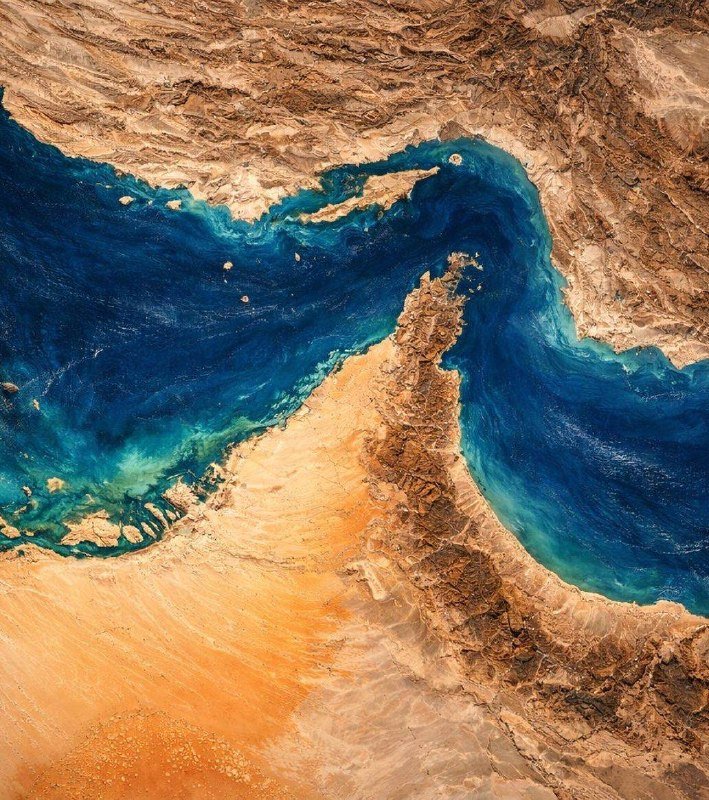
The Strait of Hormuz is not a generic maritime chokepoint. Roughly a fifth of the world's daily oil output passes through its narrowest point, a channel eleven nautical miles wide between Oman and Iran. Any sustained disruption — whether through actual closure, increased insurance premiums, or simply the perception of risk — transmits immediately into global energy markets.
This is precisely why Iran has historically used the strait as a pressure point. The IRGC Navy has practiced chokepoint denial exercises for years. The capability is real and has been demonstrated in limited ways during previous periods of elevated tension. That Tehran would move to obstruct a carrier group's transit, if the US account is accurate, suggests either a calculated test of resolve or a signal that the nuclear negotiation impasse has moved into a new phase.
The Trump administration has not released a formal policy statement on the strait's status. But the decision to send a carrier group through at this moment, in the teeth of Iranian opposition, reads as an assertion of presence rather than a routine deployment. The destruction of six boats and the downing of an incoming munitions package is not a proportional response to a peaceful protest at sea; it is the language of a power determined to demonstrate that the strait is not subject to Iranian veto.
Forward View
The immediate question is whether this remains a single incident or becomes a pattern. The 2019–2020 series of incidents included the downing of a US surveillance drone, attacks on oil tankers, and the temporary detention of vessels — all of which raised the prospect of direct US military action before the Trump administration chose not to retaliate. The current context is different: nuclear negotiations are formally frozen, the maximum-pressure campaign has intensified, and Iran's uranium enrichment program has advanced to levels that would require years of reversal under any agreement.
If the civilian casualty allegation gains traction in international media — or is dismissed as Iranian propaganda, depending on which framing gains traction — the diplomatic consequences will follow. Arab Gulf states have quietly welcomed sustained US presence as a counterweight to Iranian regional influence; they have also quietly invested in bilateral communication channels with Tehran that give them a stake in de-escalation. Those channels are likely active now.
The Pentagon has not announced any change in force posture. The carrier group is transiting, or has transited, the strait. The incident is, for now, closed on the water. Whether it opens a political chapter depends on the next statement from Tehran and the next signal from Washington.
This publication's coverage draws from CENTCOM's unclassified briefing and Iranian state-linked reporting. Monexus is unable to independently verify the civilian casualty allegation, the precise armament of the destroyed boats, or the sequence of events that preceded the US engagement. The piece is filed with the sources available.
Wire provenance
This editorial synthesis draws on the following public wire/social posts:
- https://twitter.com/reuters/status/1931790448208494592
- https://t.me/thecradlemedia/7894