US Navy Opens Fire on Civilian Vessels in Persian Gulf, Iranian State Media Reports
Iranian state media cites a military source accusing US forces of shooting at two small boats carrying civilians, describing the act as an 'obvious crime' — a claim the US military has yet to address publicly.
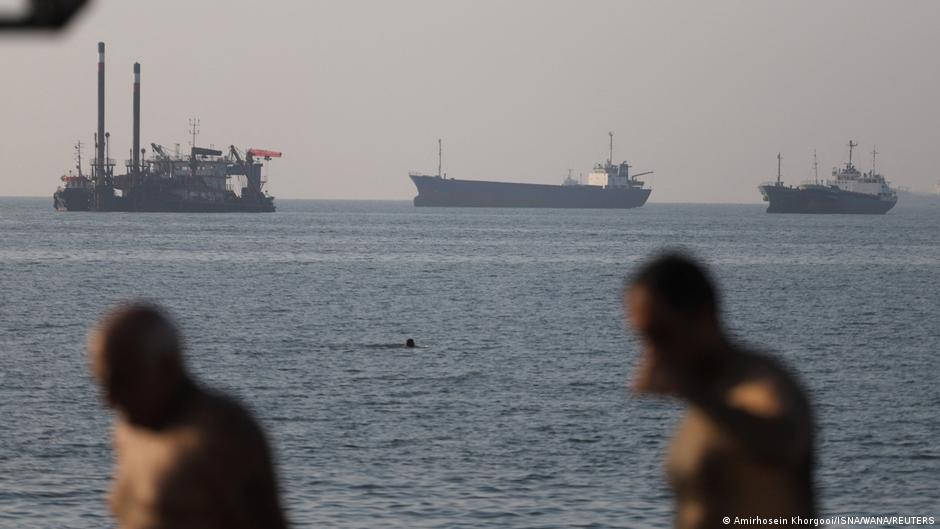
A military source cited by Iran's Tasnim News agency said on 5 May 2026 that United States naval forces opened fire on two small boats in the Persian Gulf, describing the incident as an "obvious crime." The source, whose identity was not disclosed, said the vessels were carrying people and that the US action came instead of targeting Iranian Islamic Revolutionary Guard Corps speedboats — a framing that casts the incident as a departure from the expected confrontational dynamic in contested Gulf waters.
The accounts, published in both the Persian-language Tasnim News and its English-language Telegram channel early on 5 May 2026, made no reference to casualties or injuries. Iranian state media did not independently confirm the location of the incident, the identity of the boat operators, or the legal basis — if any — cited by the US side. The US military's Central Command (CENTCOM) has not issued a public statement on the matter as of the time of this report.
Conflicting Narratives in Contested Waters
The Persian Gulf has long been a theatre for tit-for-tat confrontations between US naval forces and Iranian vessels. The US Fifth Fleet, based in Bahrain, operates routinely in the Strait of Hormuz and adjacent waters where Iranian patrol boats — including those run by the IRGC — are a persistent presence. Rules of engagement in these encounters vary; in several documented incidents over the past decade, US vessels have fired warning shots at approach craft, and in at least one case in 2019 an Iranian surface-to-air missile was struck down by US forces. What makes this report unusual is the framing: a direct strike on small civilian-type boats rather than the IRGC speedboats that typically occupy the confrontational space.
Western and regional reporting on Gulf incidents historically relies on US military statements, allied naval briefings, or commercial maritime tracking data. No independent corroboration of the reported firing had emerged by the time of publication. The absence of a CENTCOM comment leaves the Iranian version unsubstantiated — but the incident, if confirmed, would represent a significant departure from the established pattern of US-Iranian naval brinkmanship in which warnings, not direct engagements, have been the norm.
The Legal Grey Zone of Small Boat Encounters
Maritime law provides different frameworks depending on the classification of the vessels involved. Civilian boats operating near military exclusion zones, or in areas of contested sovereignty, are subject to approach-and-verify protocols that US naval doctrine has formalised over years of Gulf operations. The practical threshold for opening fire is high — it requires a credible threat assessment that the vessel poses imminent danger. Whether that threshold was met here cannot be determined from the available sources.
Iranian state media's characterisation of the act as a "crime" is a framing that carries legal and political weight domestically and within the wider Gulf region. It positions the US as the aggressor against non-combatants — a narrative that has resonance in parts of the Arab world and beyond. Whether that framing holds depends entirely on the status of the boats and the nature of the engagement, facts not yet available.
Why the Silence From Washington Matters
The absence of a CENTCOM statement — now several hours into 5 May — is itself a data point. When US naval forces are involved in an incident in the Gulf, the Pentagon's standard practice is to confirm or deny the basic facts within hours, particularly when civilian casualties are alleged. A sustained silence can mean several things: the incident is still being assessed, the US considers it a non-story, or the facts are potentially embarrassing enough to require careful internal review before public comment. None of those readings is flattering.
The broader context matters here. Talks between the United States and Iran over the nuclear file have been intermittently active in recent months, and any incident that inflames domestic Iranian hardliners or complicates the diplomatic track in Washington would be unwelcome on both sides. That neither has spoken publicly may reflect an attempt to manage the episode quietly — or it may simply reflect that the facts are still being established.
What Remains Unknown
The sources available for this report do not establish the location of the incident with any precision, the affiliation of the boats' operators, the number of people aboard, whether anyone was injured, or whether the US military has a different account of events. The Iranian characterisation is the only publicly available version. Monexus will update this report as information becomes available.
This publication initially covered the Tasnim reports in the context of an ongoing Gulf naval confrontation, noting that the US military had not issued a statement. Western wire services had not published on the incident by the time of going live.
Wire provenance
This editorial synthesis draws on the following public wire/social posts:
- https://t.me/JahanTasnim/37481
- https://t.me/tasnimnews_en/37482