AI Oversight and the Surveillance Hangover: Two Moments, One Trajectory
Two news items from the same week — an administration debating AI model review and an FBI director publicly accusing his own agency of misleading a secret court — expose a deeper tension between state power and the tools that enable it.
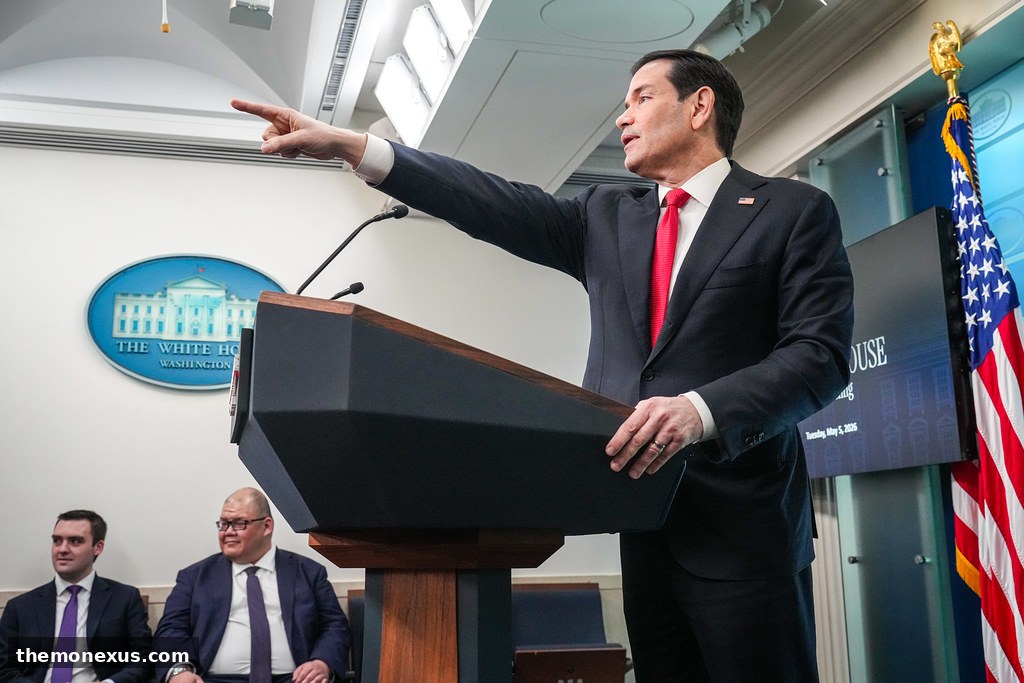
The week of 6 May 2026 delivered two news items that, on the surface, concern different institutions and different technologies. The New York Times reported that the Trump administration was debating whether to subject artificial intelligence models to formal review before public deployment. Separately, and with less algorithmic fanfare, FBI Director Kash Patel told a conference audience that the bureau had misled a secret surveillance court to obtain warrants targeting Donald Trump and his associates during the 2016 presidential campaign. Read together — as a culture desk article must — these stories form a single argument about the relationship between state power and the computational tools that extend it.
The AI governance debate is not new. Governments in Brussels, London, and Beijing have spent three years iterating through mandatory compute thresholds, pre-deployment audits, and liability frameworks for frontier models. The Trump administration's contribution, as reported on 6 May 2026, is a distinctive one: it is considering review not primarily on safety grounds but on national security grounds — the notion that sufficiently powerful AI models constitute a class of dual-use infrastructure that the state must vet before it reaches the public. Critics immediately labelled this an export-control measure dressed as safety policy. That critique is not wrong, but it undersells the genuine governance puzzle underneath.
Dual-use technology is not a category that emerged with large language models. Aircraft, cryptography, advanced materials, and biological research have all passed through export-control regimes at various points. The question is whether AI models — which are software, diffusible, and increasingly embeddable in consumer applications — fit that framework or whether they represent something categorically different. The administration's apparent instinct is to treat them as the former: infrastructure with national security implications that warrants prior restraint. Opponents — including significant factions within the tech industry — argue that pre-deployment review creates chokepoints that will concentrate power in the hands of whichever agency administers the process, and that such concentration is itself a threat to competitive dynamism and, ultimately, to the kind of open innovation that has historically produced American AI leadership.
The Patel testimony lands in a different register but addresses a structurally similar question: what constraints exist on the state's use of powerful surveillance tools, and are those constraints functional or cosmetic? The Foreign Intelligence Surveillance Act court, which operates in near-total secrecy, was designed as a check on executive branch surveillance authority. Its decisions are not published. Its respondents have no knowledge that they are targets. Its existence is known, but its operations are largely opaque. Patel, now heading the bureau he once criticized as a politically weaponized institution, has publicly declared that the FISA court was misled in connection with the Crossfire Hurricane investigation. Whether this represents a genuine reckoning with institutional abuse or a calculated effort to delegitimize the surveillance infrastructure that subsequent administrations — including Trump's own — have relied upon is a question the sources do not resolve.
What the sources do establish is that the question of oversight — who watches the watchers, and on what legal and technical basis — is no longer confined to civil liberties advocacy circles. It has migrated to the center of mainstream political discourse. The administration debating AI model review is not doing so in a vacuum. It is doing so in an environment where the FBI's own director has publicly acknowledged that the surveillance court system, which was supposed to provide independent oversight of intelligence community activities, was bypassed or deceived in a politically salient investigation. The two stories are not merely contemporaneous. They are thematically conjugate.
Both stories ultimately raise the question of what institutions can be trusted to exercise expanded state power responsibly. In the case of AI governance, the proposed answer — an executive-branch review process before public deployment — assumes that the reviewing body is both technically capable and politically neutral. In the case of FISA reform, the proposed answers currently on the table range from structural reform of the surveillance court to its abolition, from warrantless surveillance backstopping to mandatory adversarial proceedings. None of these answers are trivial, and none are clearly wrong.
The cultural dimension of this convergence deserves acknowledgment. Algorithmic surveillance and algorithmic governance are not parallel concerns that happen to arrive simultaneously. They are two expressions of the same underlying fact: states increasingly understand that computational infrastructure is both a target of regulation and a tool of regulation. The administration that wants to review AI models before release is the same administration that has, through Patel, opened a political dispute over whether the surveillance infrastructure that preceded it was ever properly authorized. The through-line is not technology. The through-line is power — specifically, the question of who controls the computational substrate through which state power is exercised, and on what institutional basis that control rests.
The irony, if it can be called that, is that both positions — the case for AI pre-review and the case against FISA court overreach — can be stated in terms of the same principle. Oversight is necessary. The disagreement is about who should be overseen, and by whom. An AI model that has not been reviewed before deployment is, in this framing, analogous to a surveillance warrant that was obtained through misrepresentation: both represent a failure of the institutional checks that stand between state power and the people subject to it. Whether those checks are strengthened by requiring technical review of AI models, or by reforming the secret court system through which surveillance authority is exercised, or by some combination of both, is the unfinished argument. The week of 6 May 2026 did not resolve it. It did, however, ensure that it will not be easy to dismiss.