Australia's $10 Billion Fuel Security Gambit as Hormuz Chokepoint Tightens
Prime Minister Anthony Albanese has unveiled a $10 billion package to fortify Australia's fuel reserves and domestic refining capacity, responding to mounting concerns about supply disruptions through the Strait of Hormuz — a waterway that carries roughly a fifth of the world's oil.
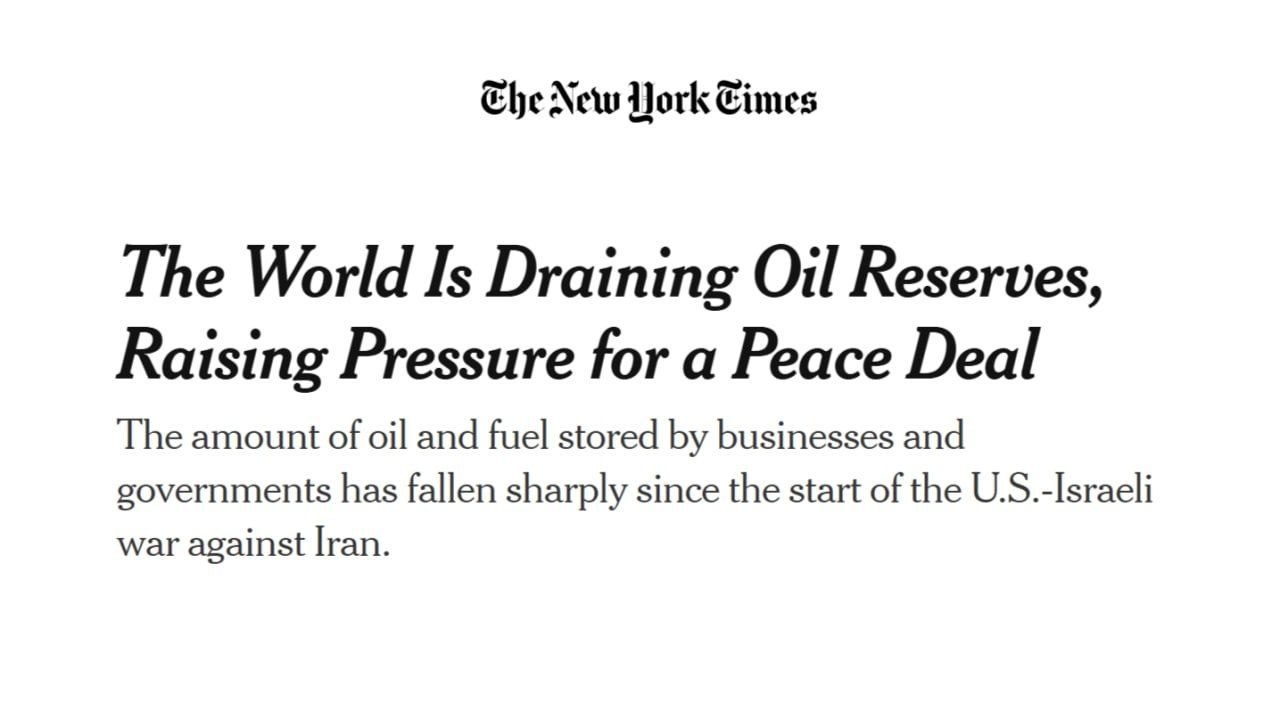
Australian Prime Minister Anthony Albanese announced on 6 May 2026 a 10 billion dollar package designed to fortify the country's fuel reserves and expand domestic refining capacity, a move triggered by escalating risks to the Strait of Hormuz — the narrow passage through which a significant portion of global oil shipments transit. The investment represents Canberra's most direct response yet to the prospect of disruption in a corridor that, per the International Energy Agency's baseline assessments, matters disproportionately to energy-importing nations with limited strategic stockpiles.
Australia falls squarely into that category. Despite being a major liquefied natural gas exporter, the country depends on imported crude for roughly half its transport fuel needs. That import dependence — concentrated through a handful of refineries, several of which have closed or scaled back in the past decade — leaves Australia's domestic market exposed to price spikes and supply gaps when major transit routes come under pressure. The Hormuz, flanked by Iran to the north and the UAE to the south, sits at the intersection of that exposure and the current volatility in Middle Eastern geopolitics.
The Hormuz exposure, quantified
The Strait of Hormuz is the world's most critical oil chokepoint. Roughly 21 million barrels per day of crude and condensate passed through it in recent years, according to shipping intelligence tracked by Lloyd's List and referenced in Australian government energy assessments. That figure represents around a fifth of global oil consumption. For Australia, the exposure is structural rather than incidental: even if Australian crude cargoes do not directly transit the strait, the wider market disruptions that would follow a partial or complete blockade would ripple through benchmark pricing — Brent crude underpins Australian fuel import contracts — and through the refined-products markets from which Australia draws during supply squeezes.
The political conditions that have renewed concern about Hormuz transit are not new, but they have sharpened. Tensions between Iran and Western powers over the nuclear programme, coupled with the broader destabilisation of Middle Eastern shipping lanes, have been flagged in Australian defence and energy assessments for several years. The difference now, according to officials cited in Canberra briefings, is that scenario-planning assumptions have moved from theoretical disruption to near-term contingency. The Albanese package, a senior energy ministry official indicated, is calibrated against those revised assumptions.
A question of scale and timing
The 10 billion dollar figure has attracted scrutiny from opposition benches and energy economists. Australia already holds around 90 days of crude oil stocks under International Energy Agency obligations, a commitment that places it among the better-prepared importing nations in the Pacific region. Some analysts have asked whether a package of this scale represents a genuine step-change in resilience or a political commitment that will be spread thinly across a decade of capital programmes with limited near-term impact on supply security.
The counterargument, advanced by the Energy Policy Institute within the government's own advisory structure, is that static stockpile obligations are insufficient when the disruption scenarios have shifted. Iran's stated position — that it controls transit enforcement in its territorial waters adjacent to the strait — combined with a demonstrated willingness to seize or shadow commercial vessels, means that a political decision in Tehran could translate into a physical reduction of tanker traffic within days. In that environment, more days of inventory buys time for alternative supply arrangements, but only if the additional stocks are physically located where they can be distributed quickly to domestic markets. The package includes funding for infrastructure at Port Kembla and the Townsville fuel terminal, both selected for their import-offtake and domestic distribution geometry.
The structural frame: energy security as national security
The Australia announcement sits inside a broader recalibration of energy security definitions across the Indo-Pacific. Japan, South Korea, and India have all expanded strategic petroleum reserves and deepened commercial relationships with Gulf suppliers outside the Hormuz corridor — shipping routes via the Cape of Good Hope that add cost but bypass the strait. Australia's package is notable because it targets not just stockpiles but the domestic refining architecture that converts crude into the fuels the Australian market actually consumes. The Lytton and Kwinana refineries — both still operating but under commercial pressure — are central to the government's logic: a nation that cannot process crude cannot fully convert stockpiles into usable fuel during a crisis.
The structural logic points to a tension that runs through Western-aligned energy policy more broadly. The post-1970s liberalisation of oil markets, which encouraged nations to rely on spot purchases and international trade rather than domestic capacity, reduced costs and improved allocation efficiency. It also hollowed out redundancy. The facilities that were closed — in Australia, in the United Kingdom, in the United States — performed a function that most economic models undervalued: they provided optionality during disruptions that spot markets do not offer until prices have already spiked. Rebuilding that optionality costs money and takes years. The Albanese package is an admission that the efficiency bet did not fully account for geopolitical tail risk.
Who wins and loses if the trajectory holds
If the package is implemented on schedule, Australia's fuel-supply resilience improves materially over five to seven years. Domestic refining capacity, strategic storage infrastructure, and distribution logistics all benefit from the capital commitment. For Australian households, the payoff — in the form of reduced exposure to price spikes during Middle Eastern disruptions — is plausible but years away.
The domestic refining sector is a direct beneficiary. ExxonMobil and Viva Energy, both operating Australian refineries, have in recent years faced political pressure over capacity maintenance obligations. A government co-investment framework changes that calculus. The less obvious winners are the commercial storage operators and logistics firms contracted under the infrastructure arms of the programme. The less obvious losers are the LNG export industries, which have not faced domestic fuel-supply competition for capital and may find energy policy attention, and a portion of available engineering capacity, redirected away from export-terminal expansion.
The nuance that remains unsettled is whether 10 billion dollars across a ten-year horizon represents an accurate accounting of the risk. If Hormuz disruptions are episodic rather than prolonged — as they have been in every prior episode since the Iran-Iraq tanker war of the 1980s — then the investment may never be fully tested. If they are not, and alternative Cape-route supply chains prove more expensive and less reliable than anticipated, Australia's revised posture may still find itself outpaced by the severity of the disruption. The sources consulted for this report do not include Australian Treasury modelling on the cost-scenario comparisons, and that gap matters for a full assessment of the package's proportionality.
Monexus covered this as an energy-security and geopolitics story, weighted toward the structural vulnerability of import-dependent nations rather than the political dynamics of the Hormuz dispute itself.
Wire provenance
This editorial synthesis draws on the following public wire/social posts:
- https://t.me/thecradlemedia/12451
- https://t.me/thecradlemedia/12452