Beijing's Diplomatic Double Game on Iran Reveals the Limits of Western Pressure
China's public declaration that the US-Israel campaign against Iran is 'illegal' while quietly maintaining trade ties exposes the contradictions at the heart of Beijing's Middle East strategy.
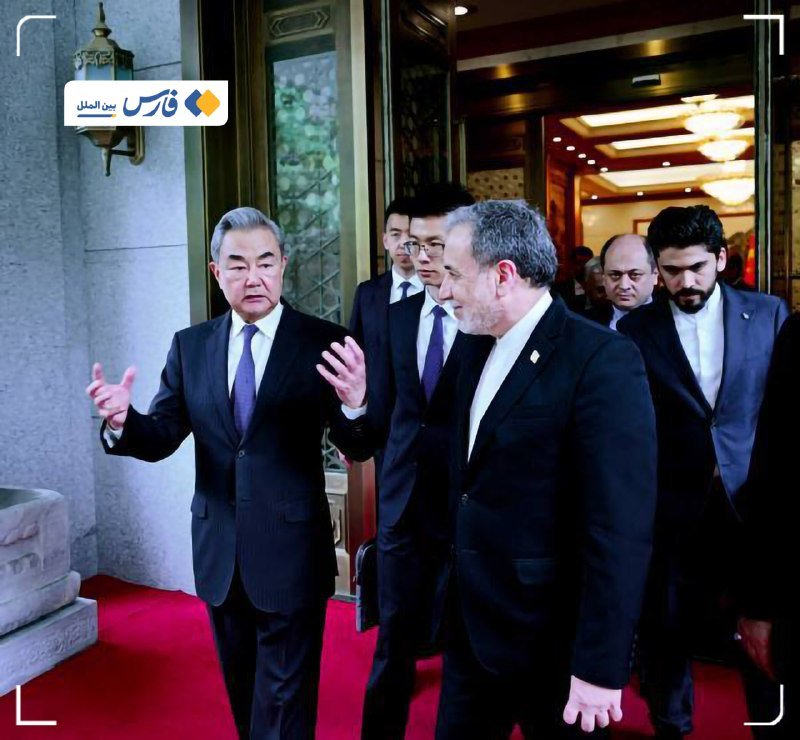
When Iran's Foreign Minister Abbas Araghchi stepped off the plane in Beijing on the morning of May 6, 2026, he knew exactly what message the welcome would send. China's state media captured the arrival. Chinese diplomats arranged the bilateral agenda. Within hours, Chinese Foreign Minister Wang Yi delivered something Tehran had been shopping for across multiple capitals: a public declaration that the American and Israeli campaign against Iran is "illegal" and "illegitimate" — language Washington has spent considerable diplomatic energy trying to isolate.
The optics were deliberate. The substance, as always with Beijing, is more complicated.
The Performance Beijing Wanted to Stage
China's public declaration was unvarnished in its framing. According to Iranian state-aligned outlets covering the meeting, Wang Yi told Araghchi that the war between America and Israel against Iran was both illegal and illegitimate. The same readout added that Beijing was ready to continue its efforts to reduce tensions. The phrasing matters. Beijing did not call for de-escalation on terms the West would recognize. It did not invoke international legal frameworks in ways that would constrain Iran's nuclear program. It positioned itself as a sympathetic power on the right side of a sovereignty dispute — which, for Chinese domestic audiences and the broader Global South, plays as a principled stand against hegemonic overreach.
This is the Beijing playbook: speak the language of multipolarity, provide diplomatic air cover for regimes under Western pressure, and leave the actual implementation deliberately ambiguous.
Trade Flows Tell a Different Story
Here is the tension Beijing never acknowledges publicly. While Wang Yi was delivering his condemnation of American and Israeli policy, Chinese companies continued purchasing Iranian oil — the very commodity at the center of the US maximum pressure campaign. Sanctions waivers,灰色 markets, and convoluted supply chains have kept the Iranian crude flowing eastward. China remains Iran's largest trading partner by a significant margin.
Beijing benefits from the contradiction. The more Washington ratchets up secondary sanctions against entities doing business with Tehran, the more leverage China gains over both parties. Iran, cut off from Western markets, has fewer alternatives than ever. The United States, watching its sanctions regime erode in practice while being publicly challenged in principle, finds its credibility on both fronts degraded.
This is not a coincidence. It is the architecture of a relationship designed to maximize options for Beijing while minimizing obligations to anyone else.
What the Visit Actually Secures for Tehran
For Iran, Araghchi's Beijing trip accomplishes something more immediate than diplomatic validation, though that validation has real value. It maintains access to a diplomatic back-channel that circumvents the Western-led order Iran has spent years trying to circumvent. It signals to Washington that maximum pressure has not achieved its stated goal of behavioral change. And it gives Tehran a talking point for domestic audiences: even as the bombs fall, the Islamic Republic has friends at the table.
Whether those friends would pick up the phone if the situation genuinely escalated is a different question — one the sources do not answer. Beijing's red lines, when tested, tend to involve trade interests rather than alliance commitments. But for now, the appearance of solidarity is itself a product Tehran finds worth purchasing.
The Stakes for the Order Washington Built
What Beijing's public declaration reveals is not merely a bilateral gesture toward Iran. It is a test case for the proposition that American economic and diplomatic leverage can be openly defied without consequence — or rather, with the consequence of strengthened relationships on the other side. Every statement like Wang Yi's chips away at the normative architecture Washington has spent decades constructing around sanctions legitimacy.
The question is whether that architecture matters anymore in a world where the largest trading nation by volume treats its enforcement as optional. Monexus finds that the answer is increasingly uncomfortable for Washington: the norms persist in Western diplomatic communiqués, but their enforcement has become a matter of bilateral pressure rather than multilateral consensus. Beijing knows this. Tehran knows this. The gap between declared order and operational reality is the actual story here — and it keeps getting wider.
This piece was drafted from Iranian state-affiliated wire reports covering the Araghchi-Wang Yi meeting in Beijing. Western government readouts of the same exchange were not present in this cycle's source material; readers seeking the US and Israeli framing should consult State Department and IDF Spokesperson briefings for the corresponding statements.
Wire provenance
This editorial synthesis draws on the following public wire/social posts:
- https://t.me/FarsNewsInt/11402
- https://t.me/tasnimnews_en/45107
- https://t.me/JahanTasnim/8921
- https://t.me/FarsNewsInt/11405