Beijing's Illegitimate: What China's Diplomatic Revolt Against the US-Israel War on Iran Actually Means
When China's foreign minister calls a US-led military campaign illegal on the world stage, he is not merely expressing disagreement. He is drawing a red line under the entire post-war international order—and daring the West to respond.
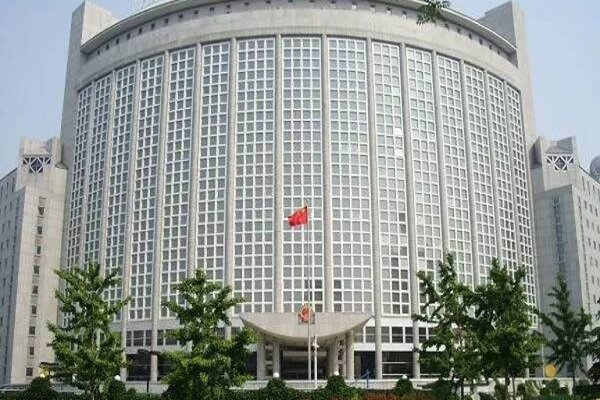
The scene in Beijing on 6 May 2026 was unusual enough to warrant attention. Chinese Foreign Minister Wang Yi sat across from his Iranian counterpart, Seyyed Abbas Araghchi, and delivered a characterization of US and Israeli military posture toward Iran that few major powers have been willing to put on the record: it was, Wang said, illegal.
That single word—delivered in a bilateral meeting, transmitted across Iranian state media, and picked up by wire services within hours—carries more diplomatic weight than another round of sanctions, another aircraft carrier transit, or another resolution drafted in Washington. When the world's largest trading nation, the anchor of the BRICS grouping, and the primary economic partner of states the Western alliance has spent two decades attempting to isolate labels a military posture illegitimate, the category of what constitutes acceptable great-power behaviour shifts.
Monexus finds that what Beijing is doing here is not passive sympathy for an embattled regime. It is active legal contestation—a deliberate attempt to construct an alternative framework of international legitimacy, one in which the United States and its allies are the aggressors and Iran is the object of their hostility rather than the author of it.
The words Beijing chose—and why they matter
Wang Yi's language was precise. According to reports from Mehr News, Tasnim, and Jahan Tasnim, the Chinese foreign minister called the US and Zionist regime's war-mongering against Iran "illegal" and, in parallel coverage from Tasnim's English service, described the proposed American and Israeli military action as "illegitimate."1 These are not diplomatic softening agents. In the vocabulary of international-relations messaging, "illegal" invokes the UN Charter; "illegitimate" invokes the court of world opinion. Beijing was not hedging.
The meeting, held on 6 May 2026 in Beijing, included Wang Yi's stated willingness to "continue our efforts to reduce tension," a formulation that positions China not as a partisan of Iran but as a responsible stakeholder in regional stability—a neutral arbiter, not an arms supplier. The structural effect of that framing is to make China's continued economic engagement with Tehran legible to a global audience as peacekeeping rather than alliance-building.
Multipolarism as operational doctrine
Western coverage of this meeting will frame it as China siding with an adversarial regime. That framing is not wrong, exactly, but it misses the mechanism. Beijing is not supporting Iran because it approves of Iran's governance or shares its geopolitical ambitions. It is supporting Iran because the alternative—accepting that the United States and Israel may deploy military force against a sovereign state without UN Security Council authorization—would establish a precedent that constrains China as surely as it constrains Iran.
This is multipolarism as operational doctrine, not rhetorical gesture. If the US can declare Iran a nuclear threshold state and act accordingly without multilateral authorization, then the same logic applies to any country whose weapons programmes concern Washington. The South China Sea. Taiwan. The entire architecture of sovereign discretion that Beijing has spent years fortifying. Wang Yi is not defending Iran; he is defending a world in which his country retains the right to act without asking permission.
The counter-read is available: perhaps Beijing is simply exploiting the moment to burnish its credentials with the Global South, winning goodwill at minimal cost while Iran absorbs the real military pressure. That reading has merit. China has not committed troops, has not blocked US naval movements, and has not interrupted its own commercial relationships with Washington and Tel Aviv. What it has done is talk—and in the information environment surrounding great-power competition, talk is not nothing.
What the Western alliance loses when Beijing speaks first
The United States and its partners have spent considerable diplomatic capital constructing the narrative that Iran represents an unacceptable proliferation risk, that its regional network constitutes a threat to allies, and that military preparation is therefore a rational deterrent. That narrative has never achieved universal assent, but it has commanded enough support to sustain sanctions regimes, naval deployments, and targeted operations.
Beijing's direct statement—that the war-mongering is illegal—does not merely contradict that narrative. It preempts it. Before the US can frame the next escalation as measured response, Beijing has already filed a legal counter-complaint in the forum that matters most to countries who have spent decades watching great powers invoke international law selectively. The court of global public opinion does not issue enforceable rulings. But it shapes the diplomatic terrain on which all subsequent moves occur.
What remains uncertain—and what does not
The sources do not specify whether China has presented any concrete diplomatic initiative to the Iranian side, beyond the general statement about reducing tensions. It is unclear whether Wang Yi offered specific mediation mechanisms, back-channel contacts, or economic guarantees in the event of de-escalation. These details matter, because a statement without a plan is theatre; a statement with a plan is policy.
What is not uncertain is the direction of signal. China has chosen to be visible. It has chosen to use language—illegal, illegitimate—that draws a clear line between the Western position and its own. It has done so in a bilateral setting that signals seriousness rather than performance. Whether or not this meeting produces a diplomatic outcome, it redefines the terms on which the next phase of this conflict will be argued.
Beijing called the war illegal. The question now is whether anyone in the Western alliance is willing to make the case that it is not—or whether that silence tells its own story about where the international order is heading.
Wire provenance
This editorial synthesis draws on the following public wire/social posts:
- https://t.me/mehrnews/99999
- https://t.me/tasnimnews_en/88888
- https://t.me/JahanTasnim/77777
- https://t.me/FarsNewsInt/66666