The Language of Civilian Harm Has a Byline: How Israeli Military Actions in Lebanon Expose the Selectivity of International Humanitarian Law Coverage
Israeli strikes on relief workers in southern Lebanon on 6 May 2026 mark the latest in a pattern of civilian harm that, when attributed to Western-backed actors, receives categorically different coverage than equivalent harm elsewhere.
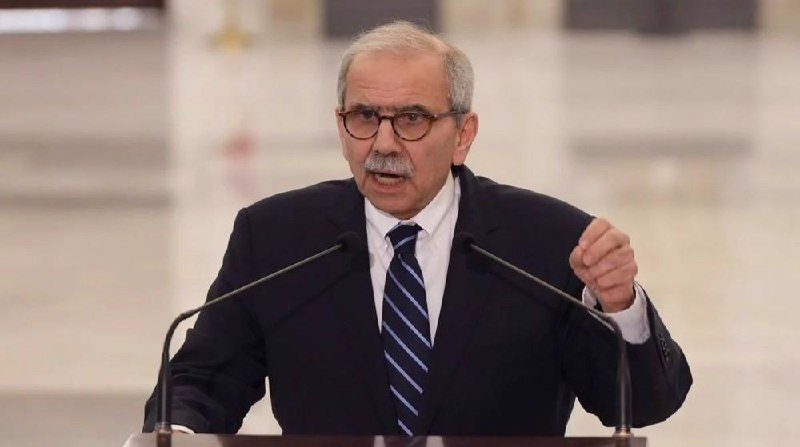
Three health workers were injured on 6 May 2026 when Israeli forces struck the town of Deir Kafa in southern Lebanon, according to Lebanese sources cited by Iranian state-adjacent Telegram channels. The same morning, the Israeli army publicly acknowledged that its forces had come under a Hezbollah missile, drone, and mortar attack along the border. Israeli strikes over the preceding 24 hours had hit approximately 25 targets in southern Lebanon, including military structures, and eliminated multiple Hezbollah operatives, according to open-source intelligence reporting. These are not isolated events. They are part of a sustained pattern of civilian harm that, when attributed to a Western-aligned military, receives categorically different editorial treatment than equivalent harm attributed to other actors.
The disparity is not incidental. It is structural. Coverage of civilian harm in conflict zones is mediated by institutional affiliations, geopolitical alignment, and the vocabulary editors reach for when airstrikes produce bodies. The same footage of a damaged ambulance, the same statements from local health officials, the same UN warnings about obstructed aid corridors — filtered through different editorial frameworks, they become different stories. One is contextualised within military necessity and escalating threats. The other is headline-territory for violations of international humanitarian law. The facts on the ground do not change. The language does.
The Pattern on the Ground
Hezbollah's coordinated attack on 6 May — missiles, drones, and mortars targeting Israeli border forces — represented a significant escalation from weeks of lower-intensity exchanges that have persisted despite ongoing ceasefire negotiations. The Israeli acknowledgment of the attack came alongside announcements that roughly 25 targets had been struck in the preceding 24 hours, including weapons depots and military structures. Multiple Hezbollah operatives were confirmed eliminated in the strikes. The IDF confirmed rocket alerts activated in northern Israel in response to the Hezbollah barrage. Israeli forces simultaneously struck relief workers in Deir Kafa, an action that, in other contexts, would generate international condemnation and emergency Security Council discussion.
That discussion did not happen. The injured health workers — three of them, according to initial Lebanese reporting — received neither a statement from the Israeli military spokesperson explaining the strike's intended target nor a formal investigation announcement. The language that typically accompanies civilian harm from Israeli operations in Gaza or the West Bank — 'tragic', 'unintended', 'under review' — was absent. In its place: silence, or silence-adjacent framing that embedded the incident within a broader narrative of Hezbollah aggression rather than examining it as a discrete violation of the laws of armed conflict. Healthcare workers operating in conflict zones are protected persons under the Geneva Conventions. Their injury in an airstrike is not a tactical footnote. It is a war crime in formation, unless investigated and prosecuted. The selectivity of which incidents receive that classification tells you everything about how the system works.
The Coverage Architecture
The standard frame for Israeli operations producing civilian harm runs through a familiar architecture: initial reporting of the incident, followed by a denial or caveat from the Israeli military, followed by contextualisation that emphasises the threat environment, followed by a gradual absorption into the background static of ongoing conflict. The same architecture does not apply symmetrically. When Iranian-backed forces struck Israeli territory, the Israeli acknowledgment was immediate and unhedged — 'we were targeted' — because the facts on the ground demanded it and because the political and military logic of acknowledgement served a purpose. When Israeli strikes injured three health workers in southern Lebanon, the operational acknowledgement served a different purpose: it was embedded in a communication about Hezbollah aggression, not a communication about civilian protection obligations.
This is not a failure of individual journalists. It is the predictable output of an information environment in which certain actors are narratively pre-framed as legitimate users of force and others are pre-framed as violators. An Israeli strike on health workers becomes a story about battlefield dynamics and Hezbollah's escalation. An Iranian-aligned strike on Israeli forces becomes a story about Iranian aggression and proxy warfare. Both are stories about armed conflict. Only one routinely invokes international humanitarian law as its primary lens. The other invokes security calculus as its primary lens. The same body of law governs both incidents. The coverage architecture does not reflect that equivalence.
What This System Produces
The effect of asymmetric coverage is not merely rhetorical. It shapes the threshold at which international accountability mechanisms activate. War crimes investigations, Security Council resolutions, arms export reviews, and domestic legal proceedings all respond to public framing. When the coverage architecture consistently contextualises harm caused by Western-aligned actors within military necessity and consistently frames equivalent harm caused by other actors as violations, it creates differential pressure on those mechanisms. Accountability becomes a tool of geopolitical competition rather than a universal legal standard.
The injured health workers in Deir Kafa did not appear in any major Western wire story on the morning of 6 May 2026. The Israeli acknowledgment of the Hezbollah attack did. This is not a reflection of which event was more operationally significant. It is a reflection of which event fit the dominant editorial frame. The frame could have accommodated both. It did not. That choice — made daily, across newsrooms, across wire services, across editorial meetings — is not politically neutral. It has consequences for the coherence of international humanitarian law as a universal standard. If the protection of healthcare workers is contingent on the geopolitical alignment of the actor who struck them, the protection has been hollowed out. The law still exists on paper. The enforcement architecture has become a selective instrument.
That is the stakes. Not a single morning's coverage, but the cumulative effect of thousands of such mornings on the credibility of the institutions that are supposed to enforce the rules of armed conflict. Healthcare workers in southern Lebanon, in Gaza, in Sudan, in Myanmar — they are not served by an accountability system that activates selectively. They are made less safe by it. The three injured in Deir Kafa are the latest evidence that the selectivity is not a bug in the system. It is the system, operating as designed, and the design has a byline.
Wire provenance
This editorial synthesis draws on the following public wire/social posts:
- https://t.me/JahanTasnim/11234
- https://t.me/osintlive/9912
- https://t.me/tasnimnews_en/8841
- https://t.me/AMK_Mapping/6623