DeChambeau's Contingency Plan Exposes Golf's Fragile Ecosystem
As a rival league's future remains uncertain, DeChambeau's stated pivot to YouTube raises questions about where professional golf's center of gravity actually lies.
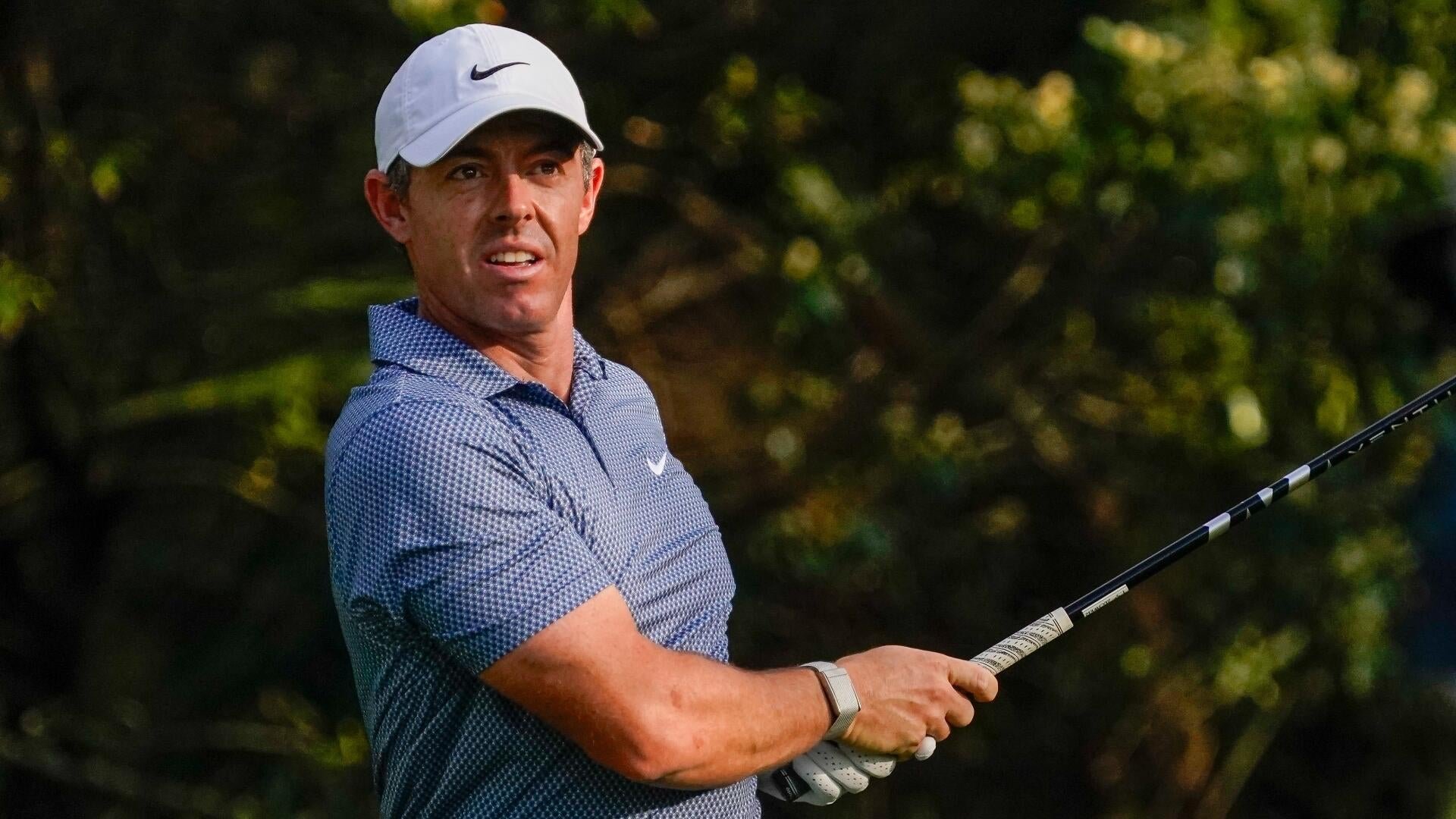
The news arrived late on 5 May 2026: Bryson DeChambeau, the two-time major champion whose power game reshaped what elite golf could look like, told ESPN that he would shift his focus to YouTube content creation if LIV Golf ceases operations. The statement landed with the weight of someone who has clearly thought it through. It was not idle speculation from a disgruntled athlete—it was a contingency plan from a man who has already built one audience and knows where the exit door is.
What makes that exit door interesting is not DeChambeau himself, but what his readiness to walk through it reveals about the sport he would be leaving. Professional golf is fracturing in real time, and the fractures run deeper than any single league or tour.
The Structural Problem LIV Never Solved
LIV Golf launched with Saudi Arabia's Public Investment Fund as its financial backbone, offering purses that dwarfed anything the PGA Tour could match and signing marquee names whose defections made headlines worldwide. The model was straightforward: guarantee money, reduce the schedule, remove the cut, present golf as entertainment rather than meritocracy. It was an audacious challenge to an institution that had operated, with minor interruptions, since 1968.
What the rival league never solved was the integration problem. The majors—Augusta National, the USGA, the R&A, the PGA of America—declined to create a separate pathway for LIV players. Rankings bodies adjusted their methodologies. Sponsorships flowed, but the ecosystem of competitive legitimacy remained anchored to the established tours. A player could earn more per event and still find himself watching the Masters from his couch.
DeChambeau has navigated that tension for years. His YouTube channel, which has grown into one of the largest in golf content, gave him something neither tour nor league could provide: a direct relationship with an audience that did not require institutional approval. He could produce long-form content, experiment with formats, and build a following that existed independently of whatever the governing bodies decided about his competitive status.
The pivot he has described is not a retreat. It is a migration—carrying an audience with him to a platform where institutional gatekeepers matter less.
What YouTube Has Already Changed About Professional Golf
DeChambeau is not the first pro golfer to treat content creation as a serious career track, but he is among the most deliberate about it. His channel has featured course vlogs, equipment deep-dives, and collaborations that read less like branded content and more like an extended pitch for a particular vision of what golf can be. The numbers have rewarded that approach.
The implications extend beyond one athlete's portfolio. YouTube has created a parallel economic model for sports personalities—one where relevance is measured in subscriber counts and watch time rather than world ranking points. For a sport like golf, which has always depended on star power to drive viewership, this is not a neutral development. It means that the athletes themselves have an alternative to the institutional structures that historically controlled their exposure and income.
That alternative is not available to every professional golfer. Building a YouTube audience at DeChambeau's scale requires consistency, production quality, and a personality that translates to screen. But the option exists in a way it did not fifteen years ago. The platform has quietly converted athlete brand equity into direct-to-consumer media inventory.
The Unresolved Tension Between Tours
The PGA Tour and LIV Golf reached a framework agreement in 2023 that was supposed to unify professional golf, but that agreement has not produced a deal. Negotiations have continued without resolution. The rival league continues to operate; the PGA Tour continues to suspend players who defected; the majors continue to set their own eligibility criteria. The stalemate has become the background condition of the sport.
For DeChambeau, that background condition has a specific consequence: he cannot count on being inside the tent when the tent finally gets reorganized. A two-time major winner should be a fixture at the game's biggest events. The reality is more complicated. He has been present, but the path back to full integration has not been cleared.
His stated contingency is a reminder that professional athletes increasingly see their careers as portfolios rather than single-employer relationships. The athlete who builds an independent audience is not dependent on any league surviving. That independence has value—particularly in a sport where the major circuits have demonstrated a willingness to exclude players they dislike.
What DeChambeau's Statement Actually Means
The simplest reading is that DeChambeau is making noise to signal displeasure with his current position. That reading has merit. Athletes use media to communicate with their employers, and a public statement about exit options is a negotiation tactic.
But the statement is also specific enough to take at face value. He has built a YouTube channel. He has stated he would focus on it if LIV closes. Those are concrete words with concrete implications. If LIV does dissolve—and the league's long-term financial sustainability outside of sovereign wealth backing remains an open question—DeChambeau is not starting from zero on an alternative path.
The broader lesson is about leverage. In an era when platforms like YouTube allow athletes to circumvent traditional gatekeepers, the balance of power between individual competitors and institutional structures is shifting. A player with an audience has a fallback that does not require the goodwill of tour commissioners or major championships committees. That fallback is not equivalent to competing for a green jacket. But it is not nothing either.
DeChambeau is keeping his exit open. The sport's governing institutions should be paying attention to why.
This publication covered DeChambeau's stated contingency and the structural conditions that make it plausible rather than focusing on the competitive results of individual LIV events.