The Deregulator's Calculus: How Trump's Tariff Gambit, the SEC Reform, and the Hormuz Blockade Form One Industrial Playbook
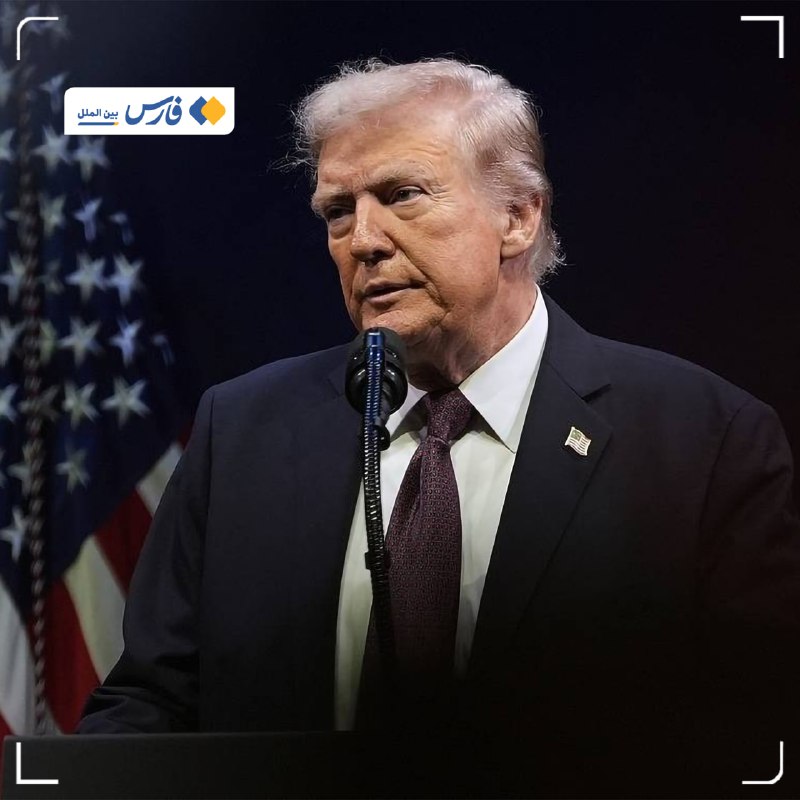
A Rule Change That Flew Below the Radar
Late on 5 May 2026, the Securities and Exchange Commission formally proposed a rule change that would allow publicly traded companies to file semiannual reports on a new form — the 10-S — in place of the traditional quarterly 10-Qs that have defined the cadence of American corporate disclosure for decades. The move, confirmed by a finance-sector source reporting on the SEC's filing, represents the most significant structural shift in how Wall Street receives information about the companies it trades since Regulation FD in 2000. Quarterly earnings calls are not merely ritual; they are the heartbeat of market monitoring, forcing executives to account for performance every thirteen weeks. The SEC's proposed rule would stretch that interval to twenty-six. Trump had publicly called for this change. The formal proposal, according to the reporting, was designed to implement it.
The proposal arrived without a press conference, a presidential tweet storm, or a cable news panel. The quiet delivery was, perhaps, the point. Corporate America has spent years lobbying for relief from the quarterly reporting treadmill — arguing that short-term earnings pressure distorts investment decisions and forces executives to manage the clock rather than the business. The SEC's staff, under the new regulatory philosophy that has defined the administration's approach to financial governance, appears to have agreed. Whether the reform genuinely benefits long-term capital formation, or simply reduces the frequency with which investors learn uncomfortable truths, is a question the proposal itself leaves open. Public companies would gain more time between disclosures. Institutional investors, pension funds, and retail traders who rely on quarterly filings to calibrate their positions would lose some of that certainty.
The Price of Maximum Pressure
On the morning of 5 May, Trump addressed the question of fuel prices directly. "The increase in fuel price is a small price to pay," he said, according to a post by political data tracker Unusual Whales quoting the President's remarks. The framing matters because it clarifies the operating assumption behind the administration's energy posture: cost increases at the pump are a manageable externality, not a policy failure. Maximum pressure on Iran — the stated purpose of the Hormuz Strait naval posture — carries a predictable consequence in higher crude prices. Trump was willing to absorb it.
The Hormuz Strait, which separates the Persian Gulf from the Gulf of Oman, carries approximately 20-25 percent of global oil trade. A blockade or heightened military posture in those waters does not require a formal declaration to produce an effect on tanker premiums, spot prices, and refinery margin calculations. Prediction market Polymarket reflected this uncertainty on 5 May: the market gave a 25 percent probability that Trump would lift the Hormuz blockade within the current month. That is not a prediction that it will lift. It is a prediction that the market assigns meaningful probability to a policy reversal — the kind of uncertainty that itself moves freight rates and insurance premiums. The administration's energy posture, whatever its strategic rationale, sits uneasily alongside the President's own acknowledgment that it imposes a cost on American consumers and industries that depend on refined petroleum.
Tariffs on Capacity: Who Wins, Who Loses
Trump's tariff probe on what his administration terms "excess factory capacity" — a probe reported by Reuters on 6 May 2026 — is the third point of the same geometric shape. The specific target of the investigation, according to the reporting, is industrial overcapacity that the administration argues depresses global prices and harms domestic producers. US industries and trade groups, Reuters reported the same day, are split on the initiative. Some sectors see protection in the framing; others fear retaliation against their own export-dependent supply chains, input cost inflation from tariffs on intermediate goods, and the uncertainty that a tariff investigation injects into capital budgeting decisions.
The split within American industry over the excess capacity probe mirrors a broader division that has defined the administration's trade posture since the first term. Sectors that compete directly with subsidized foreign production — steel, aluminum, semiconductors — have consistently advocated for aggressive enforcement. Sectors that depend on imported components for manufactured goods — consumer electronics, automotive, aerospace — have consistently argued that tariffs are a tax on their own competitiveness. The Reuters reporting captures this fault line precisely: the same administration that promises to rebuild American manufacturing is also, via the SEC reform, signaling that the quarterly accountability cycle that disciplines capital allocation may be relaxed. These are not obviously compatible promises.
The International Dimension: Lula, and the Signal to the Global South
Brazil's President Luiz Inácio Lula da Silva arrives for bilateral talks with Trump this week with a specific agenda item: organized crime. Lula intends to raise the issue directly, Reuters reported on 6 May, in a conversation that will take place against a backdrop of broader bilateral economic tension. The inclusion of organized crime as a formal agenda item is itself a concession to the administration — a signal that Brazil is willing to frame its engagement with Washington on terms Washington has set.
The broader context is that Brazil, like much of the Global South, has watched the Trump administration's posture on tariffs, energy, and financial regulation and drawn its own conclusions about the reliability of the American policy framework. Maximum pressure on adversaries — Iran above all — carries consequences for oil-importing nations across the developing world. The SEC's move toward semiannual reporting changes the information environment for investors in Brazilian assets as much as American ones; less frequent quarterly filings from US-listed companies and their foreign counterparts means less transparency for the global fund managers who allocate capital across borders. Lula's decision to attend the meeting, and to put organized crime on the agenda, reflects a pragmatic recognition that bilateral talks with Washington remain necessary regardless of the policy direction coming from the White House. What Brazil extracts in return — market access concessions, tariff relief on agriculture, diplomatic cover on multilateral forums — will be the measure of whether the engagement is worth the cost of the framing.
What This Adds Up To
Taken individually, each of these developments is reportable. The SEC rule change is a significant regulatory shift. Trump's tariff probe on excess capacity is a trade enforcement signal. The President's dismissal of fuel price increases is a political calculation about what the electorate will absorb. The Polymarket probability on Hormuz is a market-derived measure of policy uncertainty. Lula's agenda item is a diplomatic detail.
Taken together, they describe an administration that is comfortable imposing costs — on consumers, on investors, on trading partners — as the price of a coherent strategic posture toward what it defines as its core objectives: industrial revival at home, maximum pressure on Iran and its customer states, and a regulatory environment that gives corporate management more latitude and less outside scrutiny. The costs are real and unevenly distributed. The beneficiaries — domestic manufacturers shielded from foreign competition, energy exporters who benefit from higher crude prices, corporate executives who face a less demanding disclosure cycle — are identifiable and, in most cases, are the constituencies the administration has most consistently served.
The Polymarket probability on Hormuz — 25 percent that the blockade lifts this month — is a useful reminder that the policy is not fixed. Maximum pressure is a negotiating posture, not a permanent state. If the talks with Iran produce an agreement that the administration can frame as a success, the strait reopens, fuel prices moderate, and the "small price" calculus shifts. If they do not, the price compounds. The one constant is that the costs and the benefits are calculated by the same actor, and the asymmetry of that calculation — who pays, who profits — is determined before the policy is announced, not after. The SEC reform, the tariff probe, the energy posture, and the Lula meeting are each, in their domain, a version of the same decision: define the objectives, absorb the externalities, and let the market sort out who absorbs them.
What the sources do not yet tell us is how the SEC's proposal will fare in the public comment period, whether the excess capacity tariff probe will produce actual duties, and whether the Hormuz posture is a prelude to a deal or a permanent condition. Those questions remain open. The direction of travel, however, is legible from the moves already made.
Wire provenance
This editorial synthesis draws on the following public wire/social posts:
- http://reut.rs/4cT6tIU
- http://reut.rs/42d89qv