The Displacement Playbook: Twelve Villages and a Signal to the World
On a single day in May 2026, Israel ordered twelve villages in southern Lebanon evacuated while strikes killed six. The pattern is not new — but the silence surrounding it is becoming more deafening by the week.
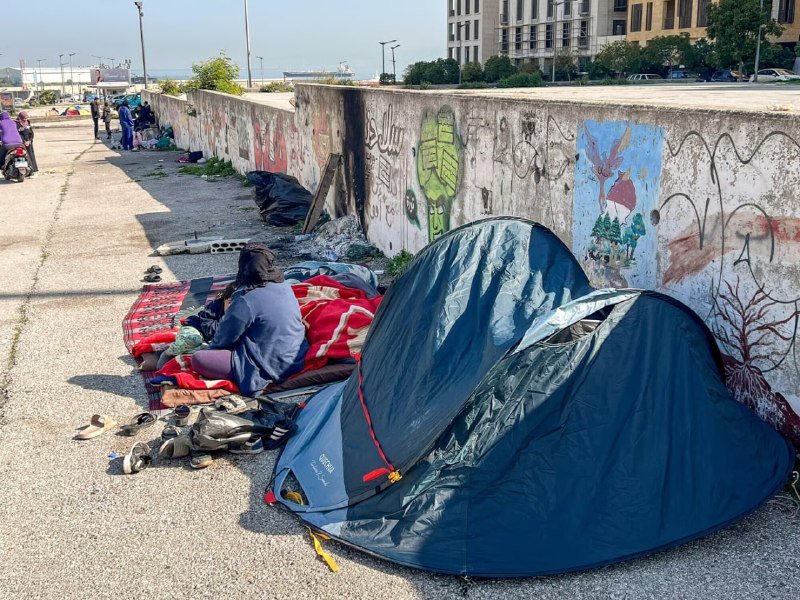
On 6 May 2026, the Israeli military issued forced displacement orders covering twelve villages in southern Lebanon. Within hours, Israeli warplanes struck Jabal al-Rihan. At least six people were killed in strikes across southern and eastern Lebanon. Two Israeli soldiers were injured when drones exploded near their position in the same area.
That sequence — orders circulated, villages struck — was not incidental. It reflects a pattern that has become the defining feature of the current phase of conflict: the systematic use of forced displacement as a preliminary stage of military operations. The six dead are not collateral. They are part of a design.
The Mechanism of Displacement
The structure is consistent across the region. A military command issues an evacuation notice. Residents have hours, sometimes minutes, to leave. The area is struck — sometimes while civilians are still in transit. The international response is muted. The next round of orders comes faster.
On 6 May 2026, twelve villages received orders in a single sweep. That volume is not a reactive measure. It is an architectural one. Israel's framing is that these are security zones — areas too close to the border to remain inhabited. But security zones do not typically require twelve villages to be emptied simultaneously, on a single day, as a prerequisite to continued strikes.
Forced displacement of civilian populations is a grave breach of international humanitarian law. It is categorised alongside attacks on civilians and destruction of property as a violation that carries individual criminal responsibility under the Rome Statute. The language of "security" has become the mechanism by which that categorisation is sidestepped in public communication. Coverage that accepts that language without interrogation accepts the legal framework being imposed by the party doing the displacing.
The Silence Problem
International reaction to the twelve villages has been largely absent — not because the facts are disputed, but because the twelve villages have not received sustained attention in Western newsrooms. The Gaza ceasefire negotiations in Cairo have dominated the regional frame. The attention economy has a geography, and southern Lebanon sits outside it.
The consequences of that geography are not neutral. Israel's ability to displace twelve villages in one day without a coordinated international response reflects not only military capacity but the informational architecture surrounding the operation. When six people die in southern Lebanon and twelve villages receive forced orders on the same day, and the response is silence, that silence functions as permission.
Coverage patterns in the past eighteen months have reflected a hierarchy: Israeli operations in Gaza receive global attention; Israeli operations in Lebanon receive significantly less. The mechanism of forced displacement — the legal order, the strike, the population movement — is identical across both contexts. The information environment around them is not.
The Regional Calculation
Israel's operations in Lebanon do not exist in a vacuum. The ceasefire talks in Cairo are underway. The shadow conflict with Iran is a persistent background condition. The timing of a large-scale displacement sweep is not arbitrary — it tends to occur when international attention is focused elsewhere and when regional diplomatic processes might constrain future options.
Israeli forces have repeatedly used forced displacement as a deliberate policy instrument in the current phase of the conflict. What has shifted is the theatre — from Gaza to southern Lebanon — and the willingness of the international system to respond at scale.
Lebanese civilians have no agency in the decisions being made about their homes. The drone incidents near Israeli positions in southern Lebanon reflect a tactical environment that makes the displacement orders more, not less, likely to be enforced. The presence of Israeli drones near Lebanese villages is not a neutral security measure — it is a persistent threat that makes ordinary life untenable even for those who choose not to leave.
What This Means Going Forward
The stakes are specific and they are serious. If the displacement orders are enforced, twelve villages in southern Lebanon will be depopulated. The demographic and political consequences of that depopulation — for Lebanon's already fragile structure, for the people displaced, for the regional balance — will not be easily reversed. The ceasefire talks in Cairo, if they produce agreement, will likely focus on Gaza. Southern Lebanon is not on that negotiating table.
Israel has signalled that it will continue to use forced displacement as a preliminary stage of military operations unless there is a coordinated response that treats it as a first-order violation rather than a logistical complication. The silence of the past eighteen months has established that no such response is coming. That is the signal the international community sent. Israel received it. The twelve villages confirm it.
This pattern does not stop by itself. That is the only honest assessment the available evidence supports.
This publication covered the twelve-village displacement orders in southern Lebanon on 6 May 2026 primarily via regional and independent outlets — The Cradle and Al Jazeera English — which reported the legal orders and casualty figures before they appeared in Western wire copy. The gap between the severity of what was ordered and the volume of Western coverage it received is the story's most significant structural feature.
Wire provenance
This editorial synthesis draws on the following public wire/social posts:
- https://t.me/thecradlemedia/28456
- https://t.me/gazaalanpa/28451