Explosions Reported Near Qeshm Island as Regional Tensions Simmer
At least two explosions were reported near Qeshm Island in the Strait of Hormuz on the evening of 5 May 2026, according to multiple independent Telegram channels monitoring the region. The cause of the blasts remains unknown as of publication.
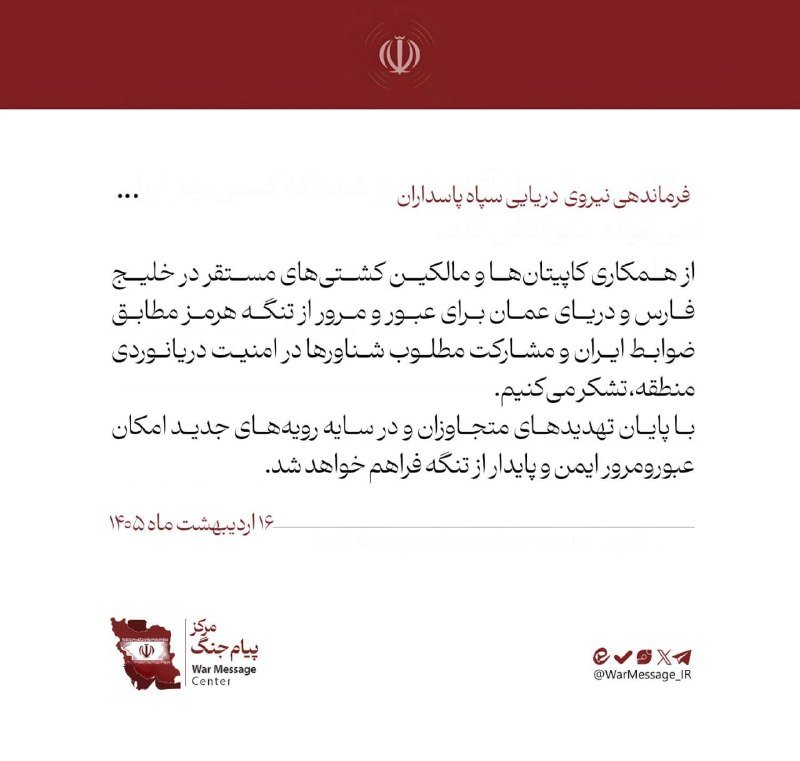
At least two explosions were reported near Qeshm Island in the Strait of Hormuz on the evening of 5 May 2026, according to multiple independent Telegram channels monitoring the region. The cause of the blasts remains unknown as of publication.
The reports emerged within a narrow window on the night of 5 May. The intelligence-focused channel rnintel first flagged the incident at 22:09 UTC, noting that the island sits directly in the Strait of Hormuz and constitutes the largest single landmass in the narrow waterway. BellumActaNews and GeoPWatch circulated corroborating reports within minutes, both citing at least two blasts heard in the area.
Simultaneously, footage circulated via the Farsna Telegram channel depicting residents of Hormoz Island — a separate, nearby island — marching in what the channel described as defense of Iran's authority. That footage was posted at 22:55 UTC, shortly after the explosion reports. The relationship between the two events remains unclear from available sources.
What is known — and what is not
Qeshm Island is a territory of Iran, located in the Persian Gulf at the mouth of the Strait of Hormuz. The strait is the world's most critical chokepoint for oil shipments: roughly 20 percent of global crude oil exports transit its narrow waters. Any incident near the island carries immediate implications for energy markets and maritime insurance, even before its cause is established.
The sources reporting the explosions do not identify the cause. No party has claimed responsibility, and no government — Iranian or otherwise — has issued an official statement attributing the blasts to any actor as of 23:00 UTC on 5 May. The absence of a claim or official characterization is itself a notable feature of the reporting landscape: in a region where incidents are often immediately contested, the silence around attribution is conspicuous.
No casualty figures, damage assessments, or details about the nature of the ordnance involved have been reported through the channels monitoring the situation. This publication has been unable to independently verify the scale or precise location of the blasts.
The Hormoz context: a waterway under permanent pressure
The Strait of Hormuz has not required a casus belli to be a flashpoint. It has operated under latent strategic pressure for decades — a corridor whose geography makes it simultaneously vital to the global economy and inherently vulnerable to disruption. Naval forces from multiple countries maintain presence in or near the strait, and incidents involving drones, seizures, or exchanges have recurred throughout recent years without escalating to declared conflict.
In this environment, any explosion near Qeshm — whether accidental, technical, or deliberate — enters a political and informational space where multiple actors have interests in how the narrative unfolds. Iranian state-adjacent sources may or may not characterize the event depending on how it aligns with ongoing political messaging. Western intelligence and defense sources will assess whether the incident fits patterns of Iranian military activity or proxy posturing. The ambiguity around the cause, at least initially, leaves that interpretive space open.
The footage from Hormoz Island complicates any simple reading. The channel framing it as a demonstration of local support for Iranian authority suggests an effort to pre-empt or counter a narrative in which Iran itself might be cast as destabilizing. Whether that framing is reactive — a response to the explosions — or coincidental cannot be determined from the material currently available.
Energy and insurance implications
The timing of the incident matters commercially even if its cause remains opaque. Oil markets are sensitive to perceived risk in the Gulf. A disruption affecting transit through the strait, or a heightened alert state leading to insurance surcharges on vessel premiums, can translate into real price effects within hours. Markets will watch for official Iranian statements and for any visible repositioning of naval assets in the coming days.
The available sources do not indicate whether the explosions affected shipping lanes or triggered any navigational warnings. That gap in reporting may close as the morning unfolds in the Gulf time zones, or it may indicate that the incident, while real, was limited in scope.
What to watch in the next 24 hours
Three developments will determine how this incident is understood and framed. First, any Iranian official statement: Tehran's characterization of what happened, and whether it attributes the blasts to external action, an internal accident, or some other cause, will shape the subsequent information environment. Second, satellite imagery or commercial shipping data that might corroborate the location and scale of the blasts — this publication will monitor available open-source intelligence feeds. Third, the reaction from Gulf Cooperation Council states and from the United States' Fifth Fleet, whose public affairs offices routinely issue statements on significant incidents in the strait.
Until those data points materialize, the episode remains a reported event without an established cause — notable enough to cover, uncertain enough to require restraint in framing. The Strait of Hormuz has a long history of incidents that arrive with confusion and resolve into clarity over days or weeks. This one will be tracked accordingly.
This publication will update as verified information becomes available. Readers with operational knowledge of the Strait of Hormuz or access to local contacts in Qeshm Province are encouraged to reach the desk via verified tip-line channels.
Wire provenance
This editorial synthesis draws on the following public wire/social posts:
- https://t.me/Farsna
- https://t.me/BellumActaNews
- https://t.me/rnintel
- https://t.me/GeoPWatch