FIFA's Prestianni ban throws Argentina World Cup squad into doubt ahead of key qualifiers
FIFA has extended a disciplinary ban to cover the World Cup, potentially ruling out Argentine midfielder Prestianni from his nation's campaign — a decision that exposes the tension between player conduct enforcement and sporting stakes at the highest level.
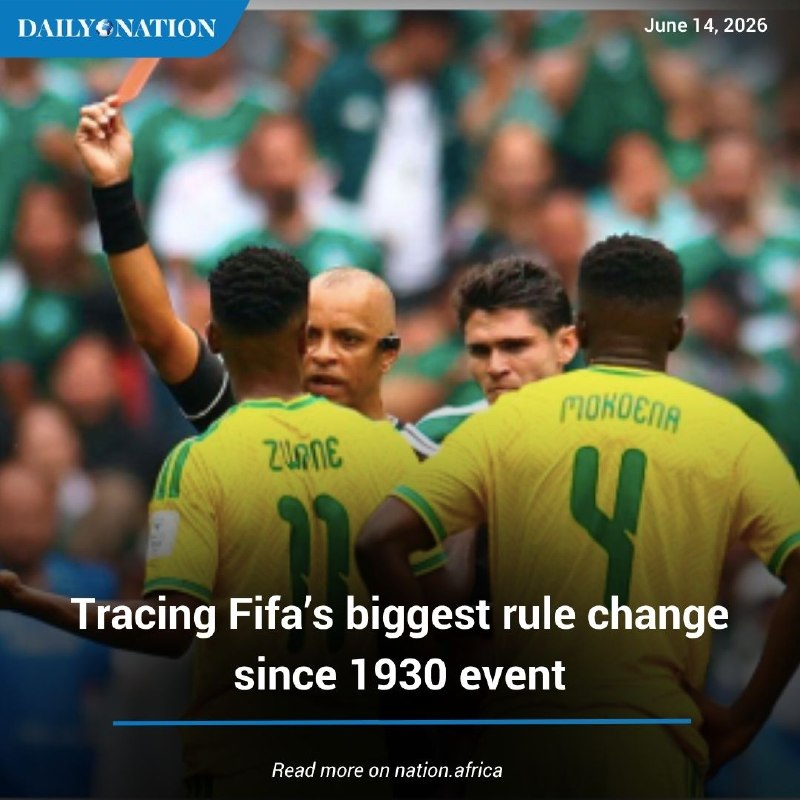
Maximum Prestianni, the 22-year-old midfielder who has become a fixture in Argentina's first-team setup since his debut in 2024, could miss the upcoming World Cup after FIFA formally extended a pre-existing ban to cover the global tournament, according to Al Jazeera English reporting on 6 May 2026. The decision, which Argentina's national federation was notified of on the same day, leaves the player ineligible for any matches under FIFA's jurisdiction — including friendlies, qualifiers, and the tournament itself — until the ban is lifted or reduced on appeal.
The case is not straightforward. FIFA's disciplinary committee issued the extension after reviewing Prestianni's conduct during a competitive fixture in March, when the player was shown a red card and subsequently sanctioned under the body's disciplinary code. The ban would ordinarily apply only to domestic and club-level competitions governed by the Argentine Football Association. FIFA's decision to extend it to international fixtures — including the World Cup — draws on a regulation that allows the committee to escalate sanctions when conduct is deemed to carry "reputational consequences" for the global game. That reasoning, however, is contested. Argentina's federation has formally requested the documentation underpinning the reputational-harm finding, arguing that a single red card in a competitive match cannot meet that threshold without additional procedural steps.
What the ban covers and why it matters
FIFA sanctions of this kind operate under a two-track system: the national association adjudicates domestic competitions, while FIFA retains jurisdiction over matches played under its own statutes — including qualifiers, friendlies arranged through the global calendar, and the World Cup itself. When a national sanction is issued, FIFA has the authority to "internationalise" it, effectively blocking the player from any fixture under the world body's umbrella. This power is rarely exercised for a single incident. The precedent, sources familiar with the process indicate, is typically reserved for repeated misconduct, doping violations, or cases where a player's actions have drawn wide public attention in a way that FIFA's commercial partners consider damaging to the tournament's brand. Whether a red card in a qualifying match qualifies is precisely the question Argentina's federation is contesting.
The practical consequence for Argentina's head coach is immediate: Prestianni cannot be selected for any FIFA-governed fixture until the ban is lifted. That rules him out of the upcoming friendly matches scheduled for June, the remaining qualifiers in the qualification cycle, and — unless the appeal succeeds — the World Cup squad itself. The timing is significant. Argentina sits in a tight qualification position, and Prestianni has featured in every match since his debut eighteen months ago. Removing him from the squad requires recalibrating a midfield that has been built around his distribution and pressing work. The coaching staff has been briefed but has not publicly named a replacement, indicating that the federation's appeal is expected to resolve before the squad announcement deadline.
The governance tension at the heart of the case
FIFA's power to block national team selections is one of the most concentrated institutional authorities in professional sport. No other global sports body exercises equivalent control over which athletes can represent their countries in flagship events. The mechanism was designed to enforce consistent disciplinary standards across all member associations — a footballer who commits a serious offence in a domestic league cannot simply escape sanction by joining an international squad. That purpose is legitimate. But the same mechanism creates a situation where a relatively minor incident — a red card in a single match — can disqualify a player from the most important tournament in the sport, without the player having had the opportunity to challenge the jurisdictional extension before it was applied.
Argentina's federation has pointed to this procedural gap as the core of its objection. The reputational-harm provision, it argues, was designed for cases involving violence, discrimination, or corruption — not for a standard red card in a competitive match. The federation's legal team is preparing a submission that argues the extension was disproportionate and that the committee failed to apply its own internal guidelines on when escalation is warranted. FIFA's disciplinary rules require that the player and the member association receive notification before any extension is formalised; Argentina's federation claims the notification was issued simultaneously with the decision, leaving no opportunity for pre-decision representations.
What happens next and what it means for the tournament
The appeal process through FIFA's own structures is the first available avenue. If that fails, the case can be referred to the Court of Arbitration for Sport, which has jurisdiction over FIFA disputes and has previously overturned or reduced FIFA sanctions in cases where procedural irregularities were found. The timeline is tight: Argentina's World Cup campaign begins within weeks of the qualification window closing, and any squad submitted before a final ruling would have to exclude Prestianni regardless of the appeal's merits. FIFA's own procedural rules allow for expedited proceedings in time-sensitive cases, but the body has not confirmed whether it will invoke that mechanism for Prestianni's appeal.
The broader implication is about institutional accountability in global sport governance. FIFA's ability to intervene in national team selection is extraordinary and largely unconstrained by external oversight. The organisation's own statutes create a layered appeals process, but the initial decision rests with a committee whose deliberations are not public and whose reasoning in individual cases is rarely disclosed in full. For national federations — and the players they represent — the practical effect is that their World Cup participation hinges on a governance process that operates largely behind closed doors. Whether the Prestianni case results in a successful appeal or not, it will sharpen the debate about how FIFA exercises its disciplinary jurisdiction and whether the reputational-harm standard is being applied consistently or selectively.
This publication covered FIFA's sanctioning authority and its application to national team footballers. The Al Jazeera wire framed the story as a player-focused setback; this analysis situates it within the broader governance architecture that makes such decisions possible.
Wire provenance
This editorial synthesis draws on the following public wire/social posts:
- https://t.me/aljazeeraglobal