Ghalibaf's Dismissal of 'Operation Trust Me Bro' Signals Tehran's Shifting Posture on US Engagement
Iran's Parliament Speaker Mohammad-Bagher Ghalibaf has publicly dismissed what he termed 'Operation Trust Me Bro' as a failure, signaling a hardening in Tehran's rhetorical posture toward Washington even as indirect negotiations persist. The comment, posted to social media on 6 May 2026, suggests Iran may be preparing to pivot back to a more confrontational baseline as nuclear talks stall.
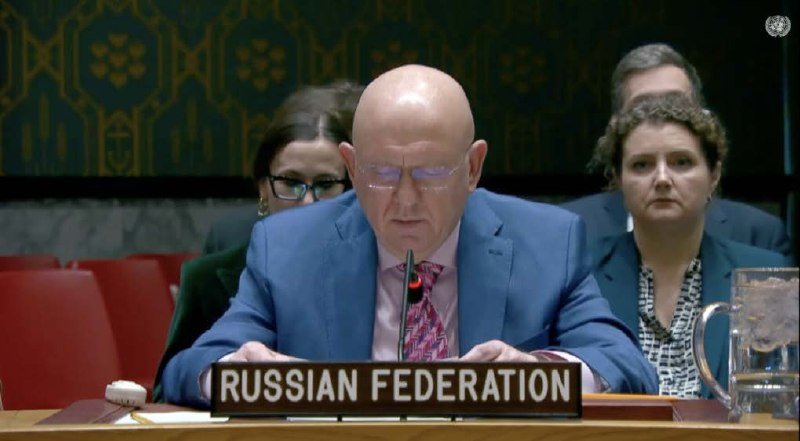
Iran's Parliament Speaker Mohammad-Bagher Ghalibaf posted to social media on 6 May 2026 that what he termed "Operation Trust Me Bro" had failed, adding that Tehran was now "back to routine" with what he called "Operation Fauxios." The remarks, carried by Iranian state-adjacent and independent geopolitical monitoring channels, amount to the most direct public repudiation of US diplomatic overtures by a senior Iranian official in months. Ghalibaf, who chairs Iran's Islamic Consultative Assembly, framed the dismissals as a verdict on American reliability rather than a negotiating position — a distinction that analysts say carries strategic weight.
The phrasing matters. "Operation Trust Me Bro" appears calibrated as ridicule rather than policy analysis — an attempt to recast Washington's overtures as either unserious or deliberately misleading. "Operation Fauxios," by contrast, suggests Tehran is now defaulting to a familiar script: controlled ambiguity, negotiated constraints, and the selective suspension of commitments. That Ghalibaf chose to announce the shift himself, rather than through a Foreign Ministry channel, signals the parliament's intention to be seen as coequal architects of Iranian nuclear strategy — a dynamic that complicates any future diplomatic architecture.
What Ghalibaf's Post Actually Said
The Telegram-sourced posts, timestamped between 21:29 and 21:44 UTC on 6 May 2026, consistently attribute to Ghalibaf the same formulation: that "Operation Trust Me Bro" had failed and that Tehran was reverting to what he called "Operation Fauxios." The posts were carried on geopolitical monitoring channels including ClashReport, rnintel, and GeoPWatch, all of which captured Ghalibaf's X post or closely paraphrased its contents.
The exact meaning of either "operation" — which terms of diplomatic process they reference, what specific US action they target, and whether they correspond to any named initiative in Washington — is not established by the available sources. What is established is that a senior Iranian official used deliberately flippant language to characterize a US diplomatic approach as fundamentally unserious. That register choice is itself a signal.
Ghalibaf, as Parliament Speaker, does not direct nuclear negotiations — that function rests formally with the Iranian Foreign Ministry and the nuclear negotiating team led by the Supreme National Security Council. But his public amplification of the dismissal normalizes a confrontational posture within the political establishment and may constrain whatever negotiating flexibility the executive branch retains. Iranian politics has a documented pattern of parliamentarians using public statements to box in diplomatic actors perceived as too accommodating.
The Broader Diplomatic Context
The post arrives at a moment of acute tension in US-Iran relations. Indirect negotiations mediated by Oman and supported by European parties have produced no publicly acknowledged framework as of early May 2026. The Trump administration has maintained maximum pressure through sanctions and secondary enforcement while signaling, through Axios reporting and off-record statements attributed to administration officials, a willingness to accept a constrained Iranian enrichment program in exchange for verified dismantlement of the weapons-dimension portions of the nuclear file.
Tehran has consistently rejected that framing. Iranian officials have insisted on the full restoration of the Joint Comprehensive Plan of Action as the only legitimate starting point, a position that has left the two sides structurally apart. Western intelligence assessments cited in wire reporting have suggested Iran is maintaining parallel tracks — engaging diplomatically while advancing its enrichment capacity — but those assessments remain contested and their specific conclusions are not independently verified.
Ghalibaf's post, in this context, is less a policy announcement than a political intervention. It signals to the Iranian domestic audience — and to hardliners within the parliament — that the current diplomatic track is being formally closed off. That has consequences for the negotiating team, which now operates under visible political pressure to demonstrate it has not made concessions.
What Remains Unresolved
The sources do not establish what specific US action or proposal Ghalibaf was targeting. "Operation Trust Me Bro" could refer to any of several diplomatic initiatives, public statements, or leaked negotiating positions from the US side over the preceding months. Without a verified reference point, the post reads primarily as a rhetorical posture rather than a response to a named grievance. That ambiguity is likely intentional.
Equally unclear is whether "Operation Fauxios" corresponds to any defined Iranian policy or is itself a rhetorical placeholder — a way of signaling a return to routine antagonism without specifying its contours. Iranian state media did not amplify the post as of the available sources, which could indicate it was not intended as an official statement, or that the regime is managing its exposure to a statement that complicates diplomatic lanes it has not formally closed.
The post's virality within geopolitical monitoring circles reflects the degree to which both sides in this relationship operate through calibrated signaling rather than formal communiqués. When a senior official posts mockery on social media rather than issuing a press statement, the communication is aimed as much at domestic audiences as at the adversary.
Stakes and Forward View
The short-term risk is clear: any diplomatic window that existed entering May 2026 has been substantially narrowed by Ghalibaf's intervention. The Trump administration's stated preference for a deal has been met not with a counterproposal but with public ridicule, which reduces the political room available in Washington to continue engagement. European mediators, who have invested significant diplomatic capital in maintaining the indirect channel, face the prospect of declaring a pause or losing their intermediary role.
The medium-term risk is more structural. Iran continues to advance its enrichment program, reportedly reaching higher assay levels in recent months. Without a diplomatic agreement — and with rhetoric hardening on both sides — the gap between Iran's declared civilian program and a weapons-capable capability continues to narrow. The International Atomic Energy Agency has reported reduced access to Iranian sites in recent inspection cycles, per wire reporting. That trend, combined with the formal collapse of the diplomatic track, points toward a scenario in which the only remaining constraint is self-restraint by Tehran.
Whether Ghalibaf intended that outcome or simply miscalculated the diplomatic cost of his post is unknowable from the available sources. What is knowable is that the post exists, that it was public, and that neither the Foreign Ministry nor the Supreme Leader's office has distanced themselves from it. In the absence of correction, silence reads as endorsement.
This publication covered Ghalibaf's post as a discrete diplomatic signal rather than as confirmation of a specific US diplomatic failure. The sources do not establish what specific US action the post referenced, and framing it as a proven indictment of Washington's approach would have required evidence the thread does not provide.
Wire provenance
This editorial synthesis draws on the following public wire/social posts:
- https://t.me/ClashReport/19432
- https://t.me/rnintel/11287
- https://t.me/GeoPWatch/5541