Iran and China Signal Strategic Alignment as Diplomatic Talks Resume in Beijing
Iranian Foreign Minister Seyed Abbas Araghchi held talks with his Chinese counterpart Wang Yi in Beijing on 6 May 2026, the first such bilateral meeting since February and a signal of deepening strategic coordination between two states navigating Western economic pressure.
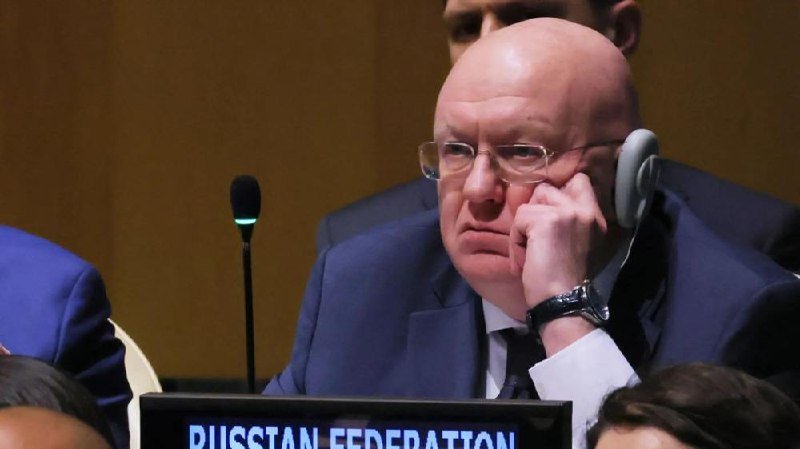
Iranian Foreign Minister Seyed Abbas Araghchi arrived in Beijing on the morning of 6 May 2026, leading a diplomatic delegation for consultations with his Chinese counterpart Wang Yi. The meeting, confirmed by Chinese state broadcaster CGTN and reported across Iranian state media, took place just hours after Araghchi's arrival in the Chinese capital. Both foreign ministries characterised the discussions as part of ongoing bilateral consultations, though neither side released a formal joint statement by deadline. The encounter marks the first publicly confirmed one-on-one meeting between the two senior diplomats since February 2026, and arrives at a moment when both Tehran and Beijing are managing significant external pressure from Western states.
The meeting's immediate backdrop is one of convergence between two governments that have, over the past five years, substantially deepened economic and diplomatic ties while explicitly positioning themselves as counterweights to what they describe as US unilateralism. For Iran, the relationship with China represents the single most significant external partnership it maintains: Chinese purchases of Iranian oil have provided a financial lifeline amid sweeping American and European sanctions. For China, Iran occupies a strategic position in the Western Asian theatre — a long-standing Belt and Road node, a significant energy exporter, and a potential partner in multilateral institutions that Beijing has championed as alternatives to Western-dominated frameworks. What makes Tuesday's meeting notable is less its novelty — such exchanges are now routine — and more its timing, coming as talks between Tehran and Washington over Iran's nuclear programme appear to have reached an impasse, and as Beijing navigates its own complex trade and technology dispute with Washington.
Immediate Context: Sanctions, Oil, and the Nuclear Question
The Araghchi-Wang meeting occurs against a deteriorating backdrop for Iran-US nuclear negotiations. After months of indirect talks mediated by Oman and Qatar, both sides acknowledged in April that significant gaps remained on core issues including Iran's uranium enrichment capacity, the timeline for sanctions relief, and the scope of International Atomic Energy Agency inspections. Iranian officials have insisted that any deal must include guarantees against future withdrawal — a direct reference to the United States' 2018 unilateral withdrawal from the JCPOA under the Trump administration. American negotiators, for their part, have signalled that full sanctions relief remains off the table absent verifiably irreversible concessions on enrichment. The collapse of any near-term breakthrough creates an opening for Tehran to signal that alternatives to Western engagement remain viable.
China's role in this picture is structural as much as diplomatic. Chinese crude oil imports from Iran, while down from their 2022 peak following informal US pressure on Beijing to cap purchases, remain substantial and continue to provide Tehran with hard-currency revenue outside the dollar-dominated financial system. The two countries have also expanded bilateral trade in non-dollar currencies, including through currency swap arrangements and yuan-denominated oil contracts. Araghchi's visit comes less than a month after China voted against a US-sponsored resolution at the International Atomic Energy Agency that would have censured Iran for its failure to cooperate fully with nuclear inspections — a vote that drew sharp criticism from Washington but was framed in Beijing as a defence of national sovereignty norms.
Counter-Narratives: Whose Frame Holds?
Western analysis of China-Iran diplomatic proximity tends to frame it through the lens of a bloc-building contest — an Iran increasingly isolated from the Western financial system finding refuge in a Chinese orbit defined primarily by opposition to US global leadership. This framing is not wrong, but it is incomplete. Beijing's calculations in its relationship with Tehran are transactional as much as ideological. China imports significant volumes of Iranian oil at prices below Brent benchmarks, a commercial advantage that incentivises continued engagement regardless of geopolitical signalling. Chinese state-linked firms have invested in Iranian infrastructure projects, from port development to railway upgrades, that serve Beijing's broader connectivity ambitions in Western Asia.
There is a counter-read: that Tehran's interest in Beijing is itself strategic, not merely the desperation of a sanctioned economy. Iranian officials have for years sought to diversify Iran's diplomatic relationships beyond the nuclear file's binary framing — to develop partnerships that provide leverage in negotiations with Western powers. The meeting with Wang Yi can be read as a signal to Washington that Iran has viable alternatives, a diplomatic gambit as much as a substantive policy discussion. Chinese state media, for its part, framed Tuesday's meeting in terms of "mutual respect" and "non-interference," language that signals Beijing's preferred framing of great-power relations as distinct from what it characterises as America's habit of conditional engagement.
Structural Frame: The Architecture of Non-Western Diplomatic Engagement
What Tuesday's meeting illuminates, in the broader structural sense, is the degree to which diplomatic engagement between China, Iran, and other BRICS-adjacent states has become institutionalised rather than episodic. These are no longer summit-diplomacy moments — carefully staged encounters that generate headlines before relations cool. They are now regular, working-level exchanges embedded in a dense web of economic agreements, currency arrangements, and multilateral coordination. The BRICS grouping itself, expanded in 2024 to include new members including Saudi Arabia, the UAE, and Iran, provides an institutional umbrella under which such consultations occur more frequently and with greater procedural regularity than at any prior point in the bloc's history.
This matters for a simple reason: it changes what "diplomatic pressure" from Western states can realistically accomplish. The architecture of dollar-denominated trade and SWIFT-based financial messaging that underpins much of the Western sanctions regime assumes that targeted states have nowhere else to turn for financial infrastructure, trade financing, or diplomatic cover. The development of alternative payment systems, bilateral currency swaps, and multilateral forums outside the G7 orbit erodes that assumption incrementally. The Araghchi-Wang meeting, understood in this structural context, is not an extraordinary event. It is the working operation of an alternative diplomatic infrastructure that has been built, deliberately and over years, precisely for this moment.
Stakes and Forward View
The stakes of Tuesday's talks play out across several timelines. In the near term, both governments will be watching whether the nuclear negotiations in Vienna produce any movement before the current negotiating window closes — widely expected to come ahead of the American mid-term political calendar. A breakdown in those talks would likely accelerate Iranian interest in deeper economic integration with China, and Beijing would face a decision about whether to expand its exposure to secondary US sanctions in response. Chinese officials have historically been cautious on this front, prioritising the broader US-China trade relationship over any single bilateral partnership. That calculus could shift as the technology-export restrictions imposed by the Biden and subsequent administrations have deepened, and as Beijing's own strategic autonomy drive has made the Iranian relationship more ideologically resonant domestically.
Over a longer horizon, the Iran-China relationship is likely to deepen regardless of nuclear talks' trajectory. The Belt and Road framework, revised and relabelled as the Global Development Initiative, has been systematically extended into Iran in ways that create institutional lock-in: once infrastructure projects are built and financing arrangements are in place, winding them down carries significant costs for both sides. The question for Western policymakers is not whether this relationship will continue, but whether the architecture of Western economic statecraft is equipped to address a world in which it no longer holds a monopoly on the financial and diplomatic infrastructure that sanctions require to bite.
What remains uncertain — and the available sources do not resolve — is the specific agenda Araghchi and Wang Yi discussed. Neither the Iranian nor the Chinese foreign ministry released a formal readout by the time of publication. Iranian state media carried images of the meeting and described it as a bilateral consultation on "relations and regional issues," but the substance of any agreements or understandings reached remains unspecified. The absence of a joint statement is itself informative: it suggests either that the talks were preliminary in nature, or that both governments preferred to communicate outcomes through quiet channels rather than public declaration. Western intelligence services will be reading Tuesday's meeting carefully. So, presumably, will Beijing.
This publication covered the Araghchi-Wang meeting through Iranian and Chinese state-media wire reports, supplemented by BRICS-aligned Telegram channels and CGTN's English-language reporting. The Western diplomatic angle is drawn from publicly reported timelines of the nuclear talks; we did not have access to independent reporting from Geneva or Muscat corroborating specific negotiating positions as of deadline.
Wire provenance
This editorial synthesis draws on the following public wire/social posts:
- https://t.me/JahanTasnim/
- https://t.me/tasnimnews_en/
- https://t.me/presstv/
- https://t.me/bricsnews
- https://t.me/farsna
- https://t.me/myLordBebo