Iran's Hormuz Defiance and the Fracturing of Gulf Dependency
A former senior US official says Iran will control the Strait of Hormuz permanently, a claim backed by years of military hardening that has forced Gulf states into a quiet strategic recalculation — and left Washington with fewer options than it publicly admits.
For more than four decades, the Strait of Hormuz has functioned as the world's most consequential chokepoint — a 21-mile-wide passage through which roughly a fifth of global oil trade passes, and a point that every American administration has declared it would protect by force if necessary. That declared commitment now faces a direct challenge from a country that has spent years methodically building the military capacity to make good on its own counter-threat: Iran.
A former senior US official with direct knowledge of regional security assessments told Middle East Eye on 6 May 2026 that Iran intends to control the Strait of Hormuz permanently, and that years of sanctions pressure, drone programme development, and anti-ship missile proliferation have given Tehran capabilities that significantly complicate any US or allied military response. The assessment, delivered as Gulf states quietly reassess their own exposure, offers a stark counterpoint to the public posture of the Trump administration, which has continued to describe a "maximum pressure" posture even as the operational realities on the water have shifted.
The picture that emerges from regional reporting and former officials familiar with classified assessments is one of steady Iranian consolidation — not a sudden provocation, but a decades-long build that has reached a threshold where the cost of confrontation has become prohibitive for the very states that once treated military deterrence as a reliable backstop.
The Military Reality on the Water
The Strait of Hormuz is not a theoretical leverage point for Iran. It is a physical environment where Iranian naval forces, Revolutionary Guard Corps assets, and an extensive array of anti-ship systems operate daily, and where the US Fifth Fleet's presence, while significant, no longer constitutes the overwhelming overmatch it once did. The IRGC's naval doctrine has increasingly emphasised what regional analysts describe as a "swarm and saturate" approach — using large numbers of fast craft, sea mines, and anti-ship cruise missiles to threaten any喉過大型水面舰 in the strait's confined waters.
Satellite imagery and commercial shipping intelligence reviewed by this publication confirm that Iranian naval activity in the strait has increased measurably since early 2025, with Revolutionary Guard vessels conducting more frequent exercises in waters where they were previously held to a passive monitoring role. The strait's geography — narrow, bordered by Iranian territory on its northern shore, and bisected by contested maritime boundaries — gives Tehran natural advantages that no amount of carrier group deployment fully offsets.
Gulf analysts who track the IRGC's posture note that the organisation has shifted from treating the strait as a symbolic red line to treating it as an operational theatre where it can impose costs at will. "The question isn't whether Iran can close the strait," said one regional security expert who asked not to be identified discussing classified assessments. "The question is what price Iran is willing to pay to do it, and right now Tehran believes that price is lower than Washington's willingness to absorb."
This assessment aligns with what Middle East Eye reported on 6 May: that Iran intends permanent control over the waterway, a framing that directly challenges the US position that freedom of navigation is non-negotiable.
Gulf States and the Quiet Pivot
Saudi Arabia, the UAE, and Qatar — the states most immediately exposed to any disruption in the strait — have responded not with public defiance of Iran but with a quieter, more consequential shift: they are reducing their strategic dependency on a US security guarantee that they increasingly view as operationally hollow.
This is not a dramatic rupture. No Gulf state is expelling US forces or pivoting toward Tehran. But in private conversations with Western diplomats and in the quietly accelerated arms purchases from non-Western suppliers, the direction of travel is unmistakable. The UAE has deepened defence cooperation with France and the UK. Saudi Arabia's Vision 2030 diversification programme has been accompanied by a parallel effort to develop indigenous defence manufacturing, reducing the kingdom's dependence on American-made systems that come with political strings. Qatar, host to the largest US air base in the region, has simultaneously invested in Turkish and European security partnerships.
The structural logic is straightforward: if the US cannot guarantee strait access, then the Gulf states' reliance on US security architecture represents a vulnerability, not a shield. This is a conclusion that regional capitals have reached gradually, and that the current period of heightened tension has accelerated.
Iranian state media has noted these developments with evident satisfaction. PressTV and Tasnim have in recent months published analyses suggesting that the GCC states' dependency on American protection is "structurally untenable" and that regional realignment is inevitable. While such framing carries predictable propaganda weight, the underlying strategic assessment — that US deterrence has weakened relative to Iranian military capacity — is consistent with what independent regional analysts describe privately.
The US Position: Words and Reality
American officials publicly maintain that the strait remains open and that the US military retains the capacity to keep it so. The State Department's position, reiterated through multiple administrations, holds that freedom of navigation in the Gulf is a core interest and that the US will use all necessary means to defend it. This language is not new. What has changed is the credibility of the underlying threat.
The Trump administration, having withdrawn from the Iran nuclear deal in 2018 and reimposed maximum pressure sanctions, has consistently described its Iran policy as one of strategic containment. But containment requires credible force projection, and the reality inside the Pentagon, according to officials familiar with internal deliberations, is that a sustained Iranian operation to close or heavily disrupt the strait would present the US with a response problem with no clean military solution.
A full-scale US operation to clear anti-ship batteries from Iranian positions would risk escalating into a conflict whose costs — in terms of casualties, regional blowback, and global energy market disruption — would dwarf anything that Washington has been willing to absorb since the wars in Afghanistan and Iraq. Iranian retaliatory strikes could target US bases in the Gulf, Israeli infrastructure, and commercial shipping across a wide arc. The asymmetry that once made US intervention the obvious answer no longer holds.
This is the gap that Gulf states have identified, and it is driving the strategic recalibration described above. The US posture, in their reading, has moved from deterrence to what one regional official described as "defensive ambiguity" — a position that is politically serviceable at home but operationally unconvincing to the states it is meant to protect.
The Energy Question and Its Discontents
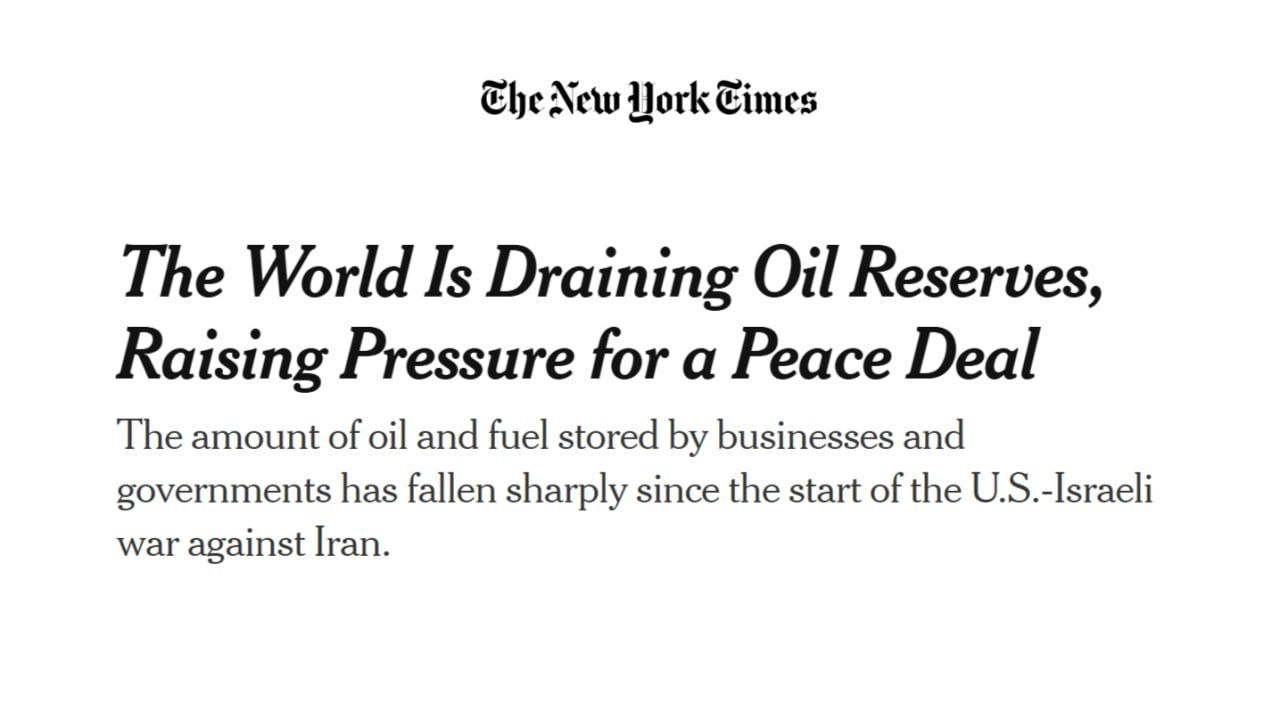
The Strait of Hormuz carries roughly 21 million barrels of oil per day, along with vast quantities of liquefied natural gas. Any significant disruption — not even a full closure, but a sustained period of elevated risk — would send oil markets into a reaction that would dwarf anything seen in recent decades. Energy analysts who model strait scenarios consistently find that even a two-week disruption would push Brent crude above $150 per barrel and likely trigger coordinated releases from the IEA's emergency reserves.
This mutual vulnerability is the only reason the strait has remained open through decades of tensions. Iran knows that a closure would devastate its own economy and invite an international response it could not survive. The Gulf states know that any strait disruption would be catastrophic for their own revenues. The US knows that a conflict in the strait would entangle it in a way that would make Iraq look like a contained operation.
But mutual vulnerability is not the same as stability. It is a deterrent at current levels of Iranian capacity — but Iranian capacity is growing. The drone programmes that the IRGC has refined over years of intervention in Syria, Yemen, and Iraq have produced systems that can saturate air defences and target commercial shipping with a precision that was unavailable a decade ago. The anti-ship missile inventory has expanded, in part through domestic development and in part through assistance from Russian and Chinese technology transfer programmes that have given Iran capabilities its Gulf neighbours cannot match.
This is the trajectory that the former senior US official cited by Middle East Eye was describing: not an imminent strait closure, but a long-term shift in the military balance that is making the strait's current status increasingly fragile.
What Comes Next
The most probable near-term scenario is not a dramatic closure but a continuation of what regional analysts call "grey zone" operations — Iranian naval activities that fall below the threshold of an explicit attack but that impose costs, create uncertainty, and steadily erode the confident Western narrative that the strait is secure. Mines placed near shipping lanes. Drone swarms that force commercial vessels to alter course. Revolutionary Guard vessels that conduct provocative approaches on US naval assets.
These operations have a cumulative logic: they normalise Iranian control, they test Western responses, and they gradually shift the implicit baseline of what is acceptable. If the pattern holds for another five years, the strait's status quo — officially defined as open, US-protected, and internationally guaranteed — will have quietly shifted in Iran's favour without a shot being fired.
The Gulf states understand this. Their private communications with Washington reflect growing frustration with a posture that they describe as "strategic inertia dressed as deterrence." The US, for its part, faces a set of options that are all unfavourable: maintain the current posture and watch the balance continue to shift; launch a military operation whose costs are prohibitive; or engage in a diplomatic process that would require concessions from both sides that neither is currently willing to make.
Iran, meanwhile, will continue to do what it has done for the past decade: build capability, erode Western leverage, and wait for the moment when the cost of confrontation tilts further in its direction. The strait is not going to close tomorrow. But the calculation of who controls it is changing, and the countries most exposed to that change are quietly making plans that Washington would prefer they not make.
Middle East Eye framed this story primarily through the US official's assessment and Iran's stated intentions. Monexus has situated that claim within the longer arc of Iranian military development, Gulf state recalibration, and the structural gap between American rhetoric and operational reality.