Iran's Hormuz Gambit: How a New Shipping Authority Could Redraw the World's Most Strategic Waterway
Tehran has launched a dedicated authority and website to collect fees from ships transiting the Strait of Hormuz — a move that exposes the fragility of the free-passage norm and forces the world's navies to choose between enforcement and escalation.
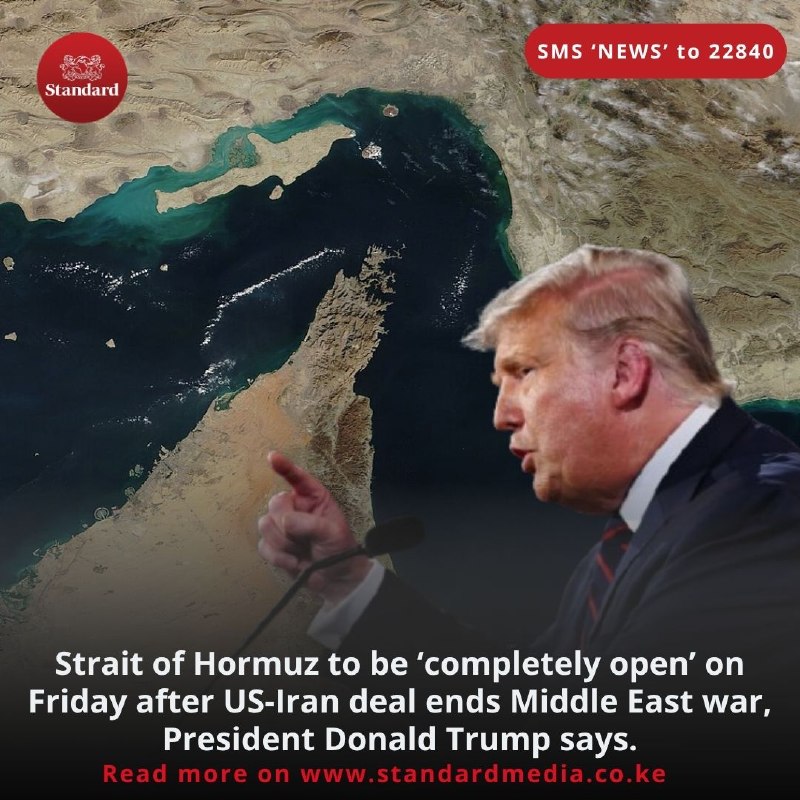
On a Tuesday in early May, Iran's government quietly published a website. It announced a new authority, staffed and operational, tasked with a single function: overseeing commercial traffic through the Strait of Hormuz and collecting fees for the privilege. The move drew the immediate attention of the New York Times, which reported on the new body and Tehran's apparent intent to charge vessels for safe passage. By evening, the announcement had rippled through trading floors, cryptocurrency dashboards, and at least one Polymarket market tracking the probability of a French naval intervention. The question hanging over all of it was straightforward: does this represent a genuine enforcement ambition, a negotiating posture, or something between the two?
The Strait of Hormuz is not a metaphor. It is a 21-mile-wide pinch-point between the Persian Gulf and the Gulf of Oman through which roughly 20 percent of the world's oil shipments pass on any given day. Tankers carrying Saudi, Iraqi, Emirati, and Kuwaiti crude converge there. So do vessels carrying Qatari LNG. When traffic slows or risks disruption, the global energy market lurches. When Iran conducts military exercises in the vicinity, Western naval commanders dispatch destroyers. The waterway's importance has made it a recurring site of tension since the Islamic Republic's founding — but the specific mechanism Tehran has now deployed is new. Rather than threatening to close the strait by force, Iran is building an administrative apparatus that asserts a right to collect fees for transit. That distinction matters, because it changes the character of the confrontation from a military flashpoint to a legal and economic argument — one the international shipping industry has no clear playbook for.
Al Jazeera English reported on 6 May 2026 that Iran had stated passage through the strait would be ensured, following the pause of a United States military operation in the region. The language from Tehran was carefully calibrated: sovereignty over the waterway is non-negotiable, but the strait itself will remain open. The new authority and its website are framed not as a blockade mechanism but as a formalisation of Iran's long-standing jurisdictional claim — a claim the Islamic Republic has made repeatedly since 1979 but never operationalised through a dedicated bureaucratic structure. The timing matters. The fee-collection authority emerges at a moment when the US has signalled a reduction in operational tempo, creating a gap in the enforcement architecture that Iran appears intent on filling.
The financial arithmetic is not the point. Transit fees imposed on ships passing through a chokepoint are economically insignificant compared to the insurance premiums, fuel costs, and port charges that already figure into every tanker operator's ledger. What matters is the precedent. If Iran establishes that passage through the strait requires compliance with its newly minted authority — and if shipping companies begin to factor that compliance into their route decisions — the informal norm of free passage that has governed the waterway since the end of the Iran-Iraq War will have been quietly disrupted. The norm does not disappear in a single day. It erodes, one cargo manifest at a time, until one day a Western naval commander discovers that the ships they expected to escort have already paid their dues to Tehran.
The counterargument has weight. Iranian military capabilities in the Persian Gulf have degraded relative to the 1990s, when the Revolutionary Guard's small-boat tactics and missile batteries genuinely threatened to choke the oil flow. America's regional posture — anchored by the US Fifth Fleet headquartered in Bahrain — remains substantial. And the fee itself, as described in initial reporting, appears modest enough that most major shipping companies would absorb it rather than risk confrontation. What Iran may be building is not a revenue mechanism but a legal test: one that forces Washington to either formally reject Tehran's jurisdiction and enforce rejection with ships, or tacitly accept the authority's legitimacy by failing to act. Neither outcome is comfortable.
The structural logic here is not about fees. It is about normalisation. Governments that assert control over international waterways without firing a shot do so because the alternative — open conflict — carries catastrophic downside for everyone. What they seek instead is a slow accretion of legitimacy: the first ship that pays, the first flag-state that registers compliance, the first insurance underwriter that builds the fee into standard risk calculations. Once those precedents exist, they are extraordinarily difficult to unwind. Iran's new authority is designed to create exactly those precedents. The fee itself is almost incidental. The website, the staff, the published procedures — these are instruments of institutionalisation, not extraction.
The precedent exists, and it is instructive. When pirates operated off the Horn of Africa, the international community responded with naval convoys, private armed security, and ultimately a formal coordination mechanism — the Shared Awareness and Deconfliction (SHADE) framework — that brought naval powers together to manage the threat. The Hormuz situation operates on the same structural logic but in reverse: rather than a threat to be suppressed, Iran is offering itself as an administrator of a service the market technically does not need. If the international community treats the fee as a fait accompli and adjusts accordingly, the normalisation will accelerate. If it treats the fee as an escalatory provocation requiring a military response, it risks exactly the confrontation Tehran has reason to want the US to avoid.
France's position illustrates the bind. Polymarket's odds on French warships transiting the strait by the end of May stood at approximately 7 percent as of 6 May 2026 — low, but not negligible, and framed against a backdrop of European states debating how to preserve their own energy security interests independently of Washington's posture. Paris has both the naval capacity and the strategic incentive to signal European resolve without triggering a direct US-Iran incident. But the calculus becomes harder with each passing week that the Iranian authority operates without challenge. France's choice, and by extension Europe's, is not whether to respond — it is when the cost of responding becomes higher than the cost of adapting.
What remains uncertain is the internal coherence of Iran's own position. The government has stated that passage will be ensured, yet the mechanism it has built implies a conditionality — payment in exchange for facilitation — that contradicts the assurance. Sources do not clearly indicate whether the fee applies to all vessels or only to those deemed non-compliant with existing sanctions regimes, or whether enforcement will be naval, administrative, or some combination. The gap between public messaging and institutional design is not unusual in Iranian governance, but it introduces a volatility that outside observers cannot price accurately. The authority could become a bureaucratic fixture with a modest revenue target, or it could become the framework through which Iran gradually extracts concessions from shipping states. The difference between those outcomes will depend on decisions made in Washington, London, Paris, and the capitals of the Gulf — decisions that, as of early May 2026, appear to be in the earliest and most exploratory phase.
The global energy market, for now, has treated the news as a signal rather than a shock. CryptoBriefing reported on 6 May that Bitcoin had risen to nearly $83,000 in apparent response to the US operational pause and Iran's cooperative signals — a connection that reflects how sensitive financial markets have become to geopolitical uncertainty in the Gulf. Oil markets, which move with slightly more lag than digital assets, have not yet priced a sustained disruption. That window — between the announcement of Iran's new authority and the moment shipping companies formally adjust their operating procedures — is the window in which the international response will be shaped. Whether navies sail, diplomats negotiate, or the market simply absorbs the fee and moves on will determine whether the Strait of Hormuz's half-century of informal free passage ends with a confrontation or a quiet bureaucratic reclassification. Both outcomes are plausible. Neither is desirable.
Monexus covered this story as a geopolitical structural question — the institutionalisation of a transit fee as a sovereignty claim — rather than leading with US-Iran diplomatic mechanics. The dominant wire framing centred on the operational pause; this article foregrounded the normalisation risk that the pause creates.
Wire provenance
This editorial synthesis draws on the following public wire/social posts:
- https://x.com/unusual_whales/status/1921456789019836673
- https://en.wikipedia.org/wiki/Strait_of_Hormuz
- https://en.wikipedia.org/wiki/SHADE_(Shared_Awareness_and_Deconfliction)
- https://www.iea.gov/topics/oil-security