The $6 Trillion Chokepoint: How Iran Turned a Standoff Into a Revenue Stream
When the Trump administration quietly shelved plans for a kinetic operation to reopen the Strait of Hormuz, Tehran did not celebrate. It legislated. The Islamic Republic has moved with cold precision to transform a moment of diplomatic thaw into a permanent revenue mechanism — and the markets barely noticed.
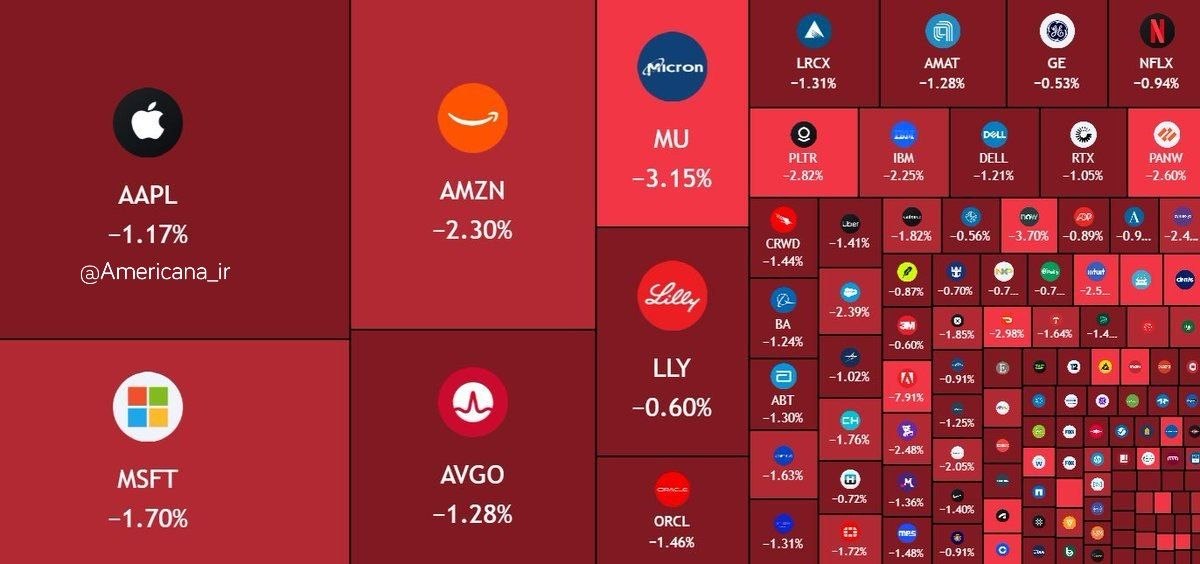
On the morning of 6 May 2026, a senior administration official confirmed what traders had priced in overnight: Project Freedom was dead. The covert plan to clear a path through the Strait of Hormuz by force — or at least the credible threat of it — had been shelved. By noon, Brent crude had shed more than three dollars a barrel. Global equity indices climbed. And somewhere in Tehran, the machinery of state was already moving on a different track entirely.
That same day, Iran unveiled a new website and a freshly minted authority tasked with overseeing all traffic through the world's most contested waterway. The Strait of Hormuz is not merely a geographic pinch-point. Roughly 20 percent of the world's oil passes through its narrow channels annually, along with liquefied natural gas cargoes worth hundreds of billions more. Whoever controls the paperwork controls the toll booth. And on 6 May, Iran made clear it intended to run the register.
The sequence matters. An administration that came to office pledging maximum pressure on Tehran had, by spring, concluded that a kinetic confrontation through the Strait would destabilise a global energy market already skittish about oversupply and demand uncertainty. The deal framework that emerged — details remain sparse as of publication — appears to offer Tehran partial sanctions relief in exchange for verifiable de-escalation and, critically, a guarantee that Hormuz remains open. What it did not anticipate was that Iran would use the diplomatic opening itself as an opportunity to formalise a revenue mechanism that may outlast any agreement Washington signs.
The Anatomy of a Chokepoint
The Strait of Hormuz is 21 miles wide at its narrowest. On either shore, the geography is unforgiving: Iranian territory on the northern flank, Oman and the UAE on the southern side, and the muscular presence of the US Fifth Fleet operating from Bahrain a few hundred miles to the west. Tankers transiting the waterway must pass through a shipping channel less than two miles wide at the closest approach. A single vessel, anchored deliberately, could slow global trade.
This is not a theoretical risk. In 2019, Iranian mines damaged two tankers near the strait. In 2022, a drone strike attributed to Iran hit a commercial vessel in the Gulf of Oman, just outside the chokepoint's formal boundaries. The asymmetry is structural: Iran cannot match the US Navy in open water, but it does not need to. A motley collection of fast-attack craft, naval mines, anti-ship missiles, and drone swarms is sufficient to make the approach costly — and expensive insurance is a tax on every barrel that moves.
For decades, the United States has underwritten free passage through Hormuz as a public good. The Fifth Fleet patrols, the sanctions architecture punishes actors who threaten shipping, and the implicit guarantee is that American naval power keeps the lanes open. This arrangement has served Asia's largest oil importers — China, Japan, South Korea, India — without those countries paying anything beyond the political cost of aligning with US secondary sanctions when pushed. Tehran has long resented this arrangement, viewing it as a foreign power extracting protection rents from a passage that sits in its own backyard.
The new Iranian authority, announced on 6 May, does not yet have a formal name that has been confirmed in English-language reporting. But its mandate is unambiguous: to register, inspect, and levy fees on vessels transiting Iranian-claimed jurisdictional waters — a category Tehran has been expanding in interpretation for years. The website is live. The authority is operational. And on a day when markets were celebrating a pause in tensions, Iran was laying the legislative groundwork for a permanent revenue line.
A Deal With Two Meanings
The framework reportedly under discussion between Washington and Tehran is not a grand bargain. It is, by most accounts, an interim arrangement: limited sanctions relief tied to verified commitments on nuclear activity and Hormuz passage, with a longer negotiation to follow. The Trump administration's calculus is partly economic — oil above eighty dollars complicates inflation metrics that the White House tracks closely — and partly diplomatic, as the deal calculus also intersects with ceasefire negotiations in Ukraine and the broader question of whether the United States can credibly deploy coercive leverage in multiple theatres simultaneously.
Iran's calculus is different. The Islamic Republic has survived maximum-pressure campaigns, assassinations of its most prominent general, and years of near-total exclusion from the Swift financial messaging system. It has watched Vladimir Putin navigate a full-scale sanctions regime by cutting alternative trade routes and denominating energy contracts in currencies other than the dollar. Tehran has taken notes.
The deal being negotiated in the spring of 2026 gives Iran something it could not buy at any price: normalisation of its status in the global energy trade without conceding the structural leverage that Hormuz provides. If fees are collected through the new authority, they represent a direct revenue stream in hard currency or its equivalent — collected at the point of passage, invisible to the SWIFT cutoff, impossible to sanctions-proof through secondary pressure because the transaction happens in territorial waters. Washington may succeed in getting Hormuz reopened. Tehran will then charge for the privilege.
The framing that emerged in Western wire coverage on 6 May was predominantly optimistic: oil prices dropped, markets rallied, and the headline narrative centred on diplomatic progress. That framing is not wrong. It is simply incomplete. The same day the deal signals were sending equity indices higher, Iran was doing something far more consequential for its long-term economic position than any temporary sanctions pause.
Bitcoin and the Premium on Peace
The cryptocurrency market reacted with unusual speed to the Hormuz de-escalation. Bitcoin climbed toward the $83,000 mark in afternoon trading on 6 May, according to market data tracked across major exchanges. The move was not driven by any single catalyst, but the timing — following confirmation that a US military operation had been paused and that Iran was signalling openness to negotiated passage guarantees — was too clean to ignore.
The logic is not difficult to follow. Energy markets and risk assets have a complicated relationship with strait geopolitics. A genuine confrontation through Hormuz would not merely spike oil prices; it would disrupt the entire logistics chain that underpins global trade finance, letter-of-credit arrangements, and insurance underwriting. Every major bank with exposure to commodity trade has exposure models that assign a non-trivial probability weight to Hormuz disruption. Reducing that probability — even temporarily — is worth something. The question is how much.
Bitcoin's presence in this calculation reflects a broader shift in how capital prices geopolitical risk. The cryptocurrency has matured from a retail-speculation vehicle into an institutional asset with a meaningful correlation to macro risk factors. When the probability of a global supply shock falls, the safe-haven premium embedded in many digital-asset positions evaporates — and the relief trade pushes prices higher. That $83,000 level, if sustained, would represent a new range for bitcoin and a signal that capital markets are placing some genuine weight on the idea that the Hormuz situation is moving toward a managed resolution rather than a confrontation.
Whether that confidence is warranted depends on a question that the sources reviewed for this article do not fully answer: what enforcement mechanism governs the arrangement Iran is proposing? The new website and the new authority are real. The fee schedule has not been publicly disclosed. The authority to collect those fees depends entirely on a political and military environment in which the United States still maintains overwhelming naval superiority in the Persian Gulf. If the deal unravels, so does the revenue mechanism. If it holds, Iran will have converted a geopolitical flashpoint into a line item on every tanker operator's cost sheet — and it will have done so with the tacit, perhaps explicit, consent of the administration that spent years trying to bring it to heel.
The Longer Game
What Iran announced on 6 May is not, by itself, a revolutionary act. The Islamic Republic has claimed jurisdiction over the Strait of Hormuz in various forms since the 1979 revolution. The difference is implementation. A website, a bureaucratic authority, and a published schedule of charges are different from a claim in the abstract. They create facts on the water. They create receipts. They create a constituency — shippers, insurers, flag-state operators — with a direct interest in the arrangement's survival.
This is what effective coercive diplomacy looks like when it works in reverse. The Trump administration pulled back from a kinetic option and opened a diplomatic channel. Iran used the diplomatic channel to institutionalise a revenue mechanism it could not otherwise have established without a fight. The fight has been avoided. The revenue stream is being built. And the administration that sought to extract maximum concessions from Tehran walks away with an oil price it can live with and a deal that does not resolve the underlying structural tension — only defers it.
The sources reviewed for this article do not yet disclose the terms of any formal agreement, the fee levels Iran intends to charge, or the specific verification mechanisms that would govern Hormuz passage. What is clear is the direction of travel. On a day when the headline was diplomatic thaw, Tehran was laying tile in a house it intends to live in for a long time.
This publication covered the Hormuz development primarily through regional and specialist wire channels on 6 May, with particular attention to the gap between the optimistic market narrative and the structural implications of Iran's institutional move. Mainstream financial coverage emphasised price action; this article examines the policy architecture underneath it.
Wire provenance
This editorial synthesis draws on the following public wire/social posts:
- https://t.me/presstv/8473
- https://x.com/MiddleEastEye/status/1920456789123456789
- https://x.com/unusual_whales/status/1920441234567890123
- https://t.me/CryptoBriefing/11234