Iran's Hormuz Stranglehold and the Slow Fracturing of Gulf State Alignment with Washington
A former senior US official told Middle East Eye that Iran intends to control the Strait of Hormuz permanently, forcing Gulf states to recalculate their security arrangements — a development that exposes the limits of Washington's regional architecture.
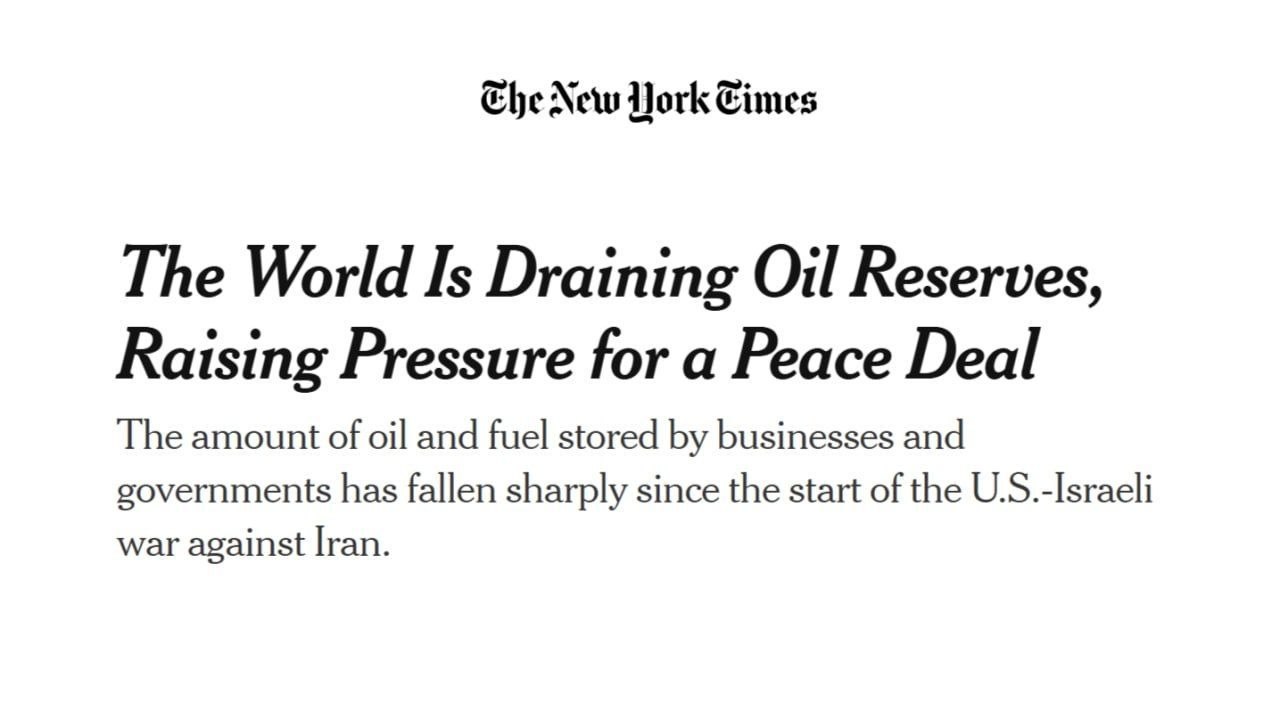
On 6 May 2026, a former senior US official speaking to Middle East Eye laid out a judgment that the American foreign-policy establishment has spent two decades resistively: Iran does not intend to negotiate its way around the Strait of Hormuz — it intends to control it. Permanently. The assessment, delivered without diplomatic hedging, carries weight precisely because it comes from someone who has sat on the inside of the architecture designed to prevent that outcome.
The strait, a 34-kilometre-wide sliver of water between Oman and Iran at the mouth of the Persian Gulf, handles roughly 21 million barrels of crude oil per day — roughly a fifth of global oil trade. It is the single most concentrated point of energy vulnerability in the world economy. For decades, the US Navy's Fifth Fleet, stationed in Bahrain, has operated on the assumption that this chokepoint must remain open and that Iran's capacity to threaten it is a negotiating chip, not a strategic objective.
That assumption is now under strain.
The Military Calculus That Never Quite Closed
Iran's capacity to disrupt Hormuz traffic is not theoretical. Its Islamic Revolutionary Guard Corps Navy operates a dense constellation of small fast-attack craft, naval mines, anti-ship missiles, and Iranian-built drone boats that have been tested in the Red Sea and Gulf of Oman over the past two years. What has changed is not the hardware — it is the permissive political environment.
Western intelligence assessments, as reported through multiple wire services since late 2025, indicate that Iran has accelerated the integration of these systems into a layered denial architecture. The goal, according to the former US official cited by Middle East Eye, is not a temporary blockade but a durable ability to control vessel passage — determining who transits, when, and on what terms. If true, this represents a qualitative shift from disruption to sovereignty assertion over an international waterway.
The US response framework has centered on freedom-of-navigation operations — the periodic sending of warships through the strait to assert the legal right of innocent passage. These operations have symbolic value. Their deterrent value is another question. Each FONOP is announced in advance, navigated deliberately, and generates a diplomatic protest from Tehran. The strait closes for no one on these days. The point is to demonstrate that it could, and that the demonstration itself is a form of pressure.
Saudi Arabia, the UAE, Kuwait, and Bahrain have watched this dynamic from uncomfortably close range. Their economies run on the assumption of uninterrupted Gulf access. Their partnership with Washington has been framed, for fifty years, as a security guarantee premised on exactly that continuity. What the Gulf monarchies are now quietly assessing — in bilateral conversations, in OPEC+ coordination rooms, and in the back-channel communications that rarely surface publicly — is whether that premise still holds.
The Gulf States Begin Their Adjustment
The framing of Gulf states as passive clients of American security architecture has always been somewhat misleading. Riyadh and Abu Dhabi have pursued hedging strategies for years — diversifying arms suppliers, investing in alternative pipeline routes, engaging in diplomatic outreach to powers outside the Western orbit. What the 6 May 2026 assessment suggests is that the hedging is accelerating and acquiring a new structural character.
The Gulf states are not preparing to abandon Washington. That would be premature and strategically reckless. They are preparing for a world in which Washington may no longer be the decisive security actor in the Gulf, and in which Tehran's capacity to impose costs on regional shipping is a first-order planning variable rather than a background risk.
This recalculation manifests in several patterns visible across the available reporting. First, Gulf sovereign wealth funds have increased investment in alternative energy and in shipping infrastructure outside the Persian Gulf — port facilities in the Indian Ocean, the Mediterranean, and the Red Sea corridor. Second, diplomatic engagement with Tehran has deepened quietly, through Omani mediation and bilateral back-channels that produce no communiqués. Third, the rhetoric of Gulf capitals toward Tehran has shifted — less public confrontation, more pragmatic acknowledgment of Iran's regional weight.
Iranian state media, in its framing of these dynamics, has been characteristically confident. PressTV and Tasnim have run reports emphasizing Gulf state recognition of Iran's "natural role" as a regional security actor — language that will read as propaganda in Washington but that reflects a genuine shift in how the Islamic Republic presents itself to its neighbors.
What Washington Gets Wrong — And What Tehran Gets Right
The dominant American analysis of Hormuz has treated it as a deterrence problem: can the US military guarantee that the strait stays open? This framing leads to a particular set of policy responses — more FONOPs, more arms sales to Gulf partners, more sanctions pressure on Iran — and a particular blindness. The question Washington is asking is "how do we keep the strait open?" The question Tehran is asking is "why should anyone assume we want to close it?"
The distinction matters enormously. Iran does not need to close Hormuz to achieve its objectives. It needs Gulf states and global markets to believe that closure is a real and permanent possibility — and that Iran's preferences about regional order will carry weight in determining whether it happens. That is a different kind of leverage, one that operates continuously rather than episodically, and one that is not targetable by military operations.
The US strategic community is not unaware of this dynamic, but its institutional structures make it difficult to act on. Sanctions policy, naval presence, and regional alliance management are administered by different agencies with different incentive structures. The Fifth Fleet optimizes for maritime dominance. The State Department optimizes for diplomatic relationships with Gulf partners. Treasury optimizes for sanctions enforcement. There is no single actor tasked with asking the question that matters: what does it mean for the US position in the Gulf if the core assumption of the last fifty years — that America's presence guarantees regional stability — is no longer valid?
Iran, by contrast, has a coherent theory of the case. It has invested heavily in asymmetric capabilities that neutralize US conventional superiority in the Gulf. It has used diplomatic engagement to drive wedges between Washington and Gulf partners on issues from Yemen to the nuclear deal. It has cultivated relationships with Russia and China that provide alternative security and economic partnerships — relationships that become more valuable as the US relationship grows more uncertain.
The Structural Pattern and Its Stakes
What is happening in the Gulf is a specific instance of a broader pattern: the slow, uneven, but increasingly visible erosion of American willingness to guarantee the terms of the international order that the US itself constructed. This is not unique to the Middle East. It is visible in NATO burden-sharing disputes over Ukraine, in the South China Sea's gradual normalization of Chinese maritime presence, and in the Global South's willingness to defy secondary sanctions in pursuit of relationships with sanctioned states.
The Gulf case is particularly acute because the stakes are so concentrated. No alternative route exists for Persian Gulf crude. The Suez Canal and the Cape of Good Hope are the options if Hormuz closes, and both add enormous cost and time to every barrel. Global energy markets would reprice sharply and quickly. The economic disruption would be felt from Singapore to Rotterdam.
That concentration of vulnerability is precisely what makes Iran's position so durable. The Gulf states know this. They are not preparing for a world in which Iran dominates the region by conventional military force — that is not the threat. They are preparing for a world in which Iran's preferences simply matter more than they did before, and in which Washington's ability to override those preferences has declined. The distinction between a world in which the US can control Hormuz and a world in which it cannot is the difference between a unipolar and a multipolar Gulf.
The question is not whether that transition is underway. It is. The question is whether it proceeds through managed adaptation — Gulf states accommodating a more complex regional order while retaining productive relationships with Washington — or through crisis, as it did in the Red Sea, where Houthi attacks on shipping forced a prolonged and costly US military response that failed to restore normal traffic. That crisis, still unresolved as of early 2026, is the template Gulf capitals are hoping to avoid.
What Remains Uncertain
The sources consulted for this article do not specify the exact military capabilities Iran has deployed in the strait, nor the timeline on which any permanent control architecture might be completed. The former US official's assessment carries significant weight but represents a single intelligence perspective, not a confirmed consensus. The Gulf states' recalculation is visible in pattern rather than in direct sourced quotation from named officials.
What can be said with confidence is that the logic of the situation points in one direction. Iran has built capabilities specifically designed to impose costs on any attempt to close Hormuz to its shipping. Those same capabilities make permanent disruption possible in a way that was not the case a decade ago. Gulf states have strong incentives to hedge against that possibility. Washington's leverage over the outcome is limited by the structural facts of geography, capability, and the declining willingness of regional partners to treat American guarantees as unconditional.
The 6 May 2026 assessment is one data point. It coheres with a pattern visible across multiple theaters, multiple years, and multiple dimensions of American regional influence. That pattern is the story.
This publication covered the Iran-Hormuz story differently from the wire. Most outlets framed it as a threat-and-response narrative — Iran builds capability, US responds with presence. This article foregrounds the structural shift in Gulf state behavior that the dominant framing misses: the adaptation is happening on the demand side, not just the supply side, and that changes the character of the problem entirely.