Iran's Hormuz Toll Gambit Exposes the Hollow Core of US Gulf Dominance
Tehran's announcement of a Strait of Hormuz toll-collection authority is more than a revenue play. It is a structured challenge to the legal architecture that has underwritten American maritime dominance in the Persian Gulf for four decades.
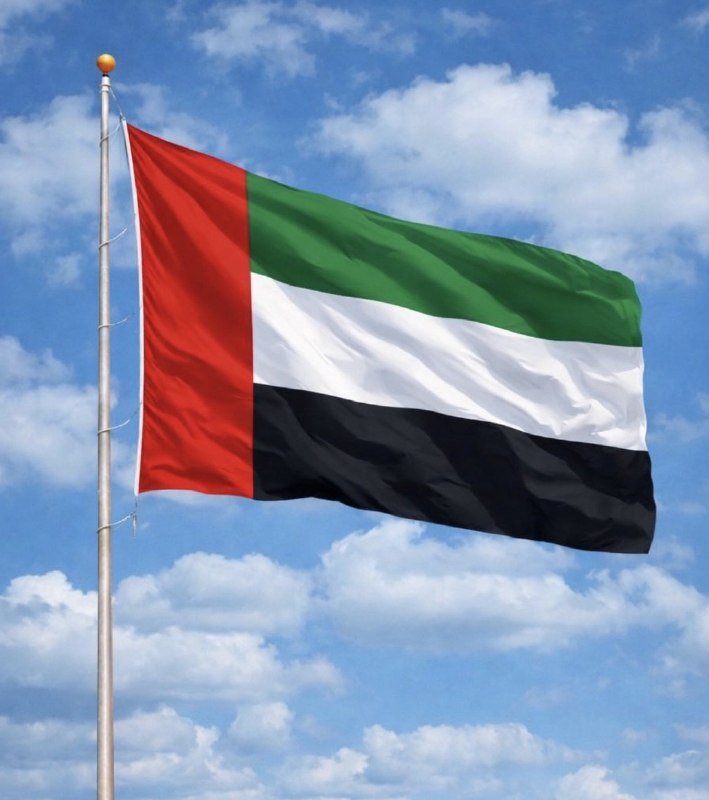
Iran has launched a website for what it calls the Persian Gulf Strait Authority — a body tasked with managing vessel traffic and, explicitly, levying tolls in the Strait of Hormuz. The announcement, confirmed by Polymarket's live tracker on 6 May 2026, represents the most concrete step Tehran has taken to formalize its claim of jurisdiction over the world's most consequential oil chokepoint. The move follows a cascade of statements from Mohsen Rezaei, a former Islamic Revolutionary Guard Corps commander and current senior official, who framed the initiative as a matter of sovereignty and historical grievance — and who argued that the United States has no viable exit from the confrontation it has engineered.
The geographic logic is not in dispute. The Strait of Hormuz is roughly 33 kilometres wide at its narrowest. Three of its four approach lanes run through Iranian territorial waters or exclusive economic zones; the fourth falls under Oman. Rezaei put it plainly, according to Al-Alam: the strait "crosses from within the borders of Iranian territory." That is a legal claim, not a military one — and it is a claim that grows more uncomfortable for Washington to dismiss as the machinery to back it up takes shape.
What Tehran is doing is translating geography into institutional fact. A toll-collection body with a public website and an operational mandate is a different category of provocation than a verbal threat to close the strait. It implies rules, procedures, and enforcement — a governance structure that other states will eventually have to engage with, even if only to push back against it. The question is not whether Iran can physically close the Strait of Hormuz; it cannot, not permanently. The question is whether it can establish a paying relationship with the international shipping that Washington has spent decades insisting must remain free.
The Economic Architecture Behind the Announcement
Iran's stated goal is to "bring security to Iran and the entire Persian Gulf region." Read between the lines, and the toll authority is less about security than revenue. The sanctions regime has strangled Iran's oil exports; a transit toll on vessels that cannot avoid the passage represents a form of income that制裁 cannot fully reach — every tanker crossing pays, regardless of flag or cargo destination. The volumes involved make even modest per-barrel fees significant. Roughly 20 million barrels of oil pass through the strait daily; disruption to that flow sends shockwaves through every commodity market on earth.
Tehran is not, on this occasion, threatening to close the waterway. It is offering to manage it — on terms Tehran sets. That is a different proposition, and a more sophisticated one. The language of "bringing security" to the entire region mirrors the language China has used in South China Sea disputes: asserting not just control but a kind of stewardship that the incumbent power cannot credibly claim to offer. Iran is positioning itself as the functional authority in its own maritime backyard, and daring the international system to respond with something other than economic coercion.
What Tehran Means by "The Americans Cannot Turn Back"
Rezaei's framing of American strategy — that Washington sought "a victory and escape," only to find "the road ahead... blocked" — is pointed rhetoric, but it describes a structural reality that is difficult to contest. The United States has pursued a dual-track policy of military containment and diplomatic isolation toward Iran for years, and that policy has produced a result: Iran has not collapsed, its missile programme has not been dismantled, its regional network remains operational, and its nuclear programme has continued. Containment has succeeded as a limit on expansion; it has failed as a mechanism for behavioral change.
The Americans came to the negotiating table in 2025 with leverage — oil reserves, sanctions architecture, regional allies — and sought an agreement they could call a victory. The talks collapsed. The leverage has not translated into a deal. Iran, in Rezaei's reading, has outmaneuvered Washington into a situation where escalation is too costly, diplomacy is politically blocked, and the default position is a continued presence that produces nothing. "Blocked" is not an Iranian invention; it is a plausible description of the current strategic impasse, and it explains why the Hormuz toll gambit is, in part, a bet on American paralysis.
The Framework Problem: "International Controls and Rules"
Rezaei's statement that Iran is "trying not to deviate from the framework of international controls and rules while the enemy will emerge from them" contains a sophisticated normative argument. Iran is not claiming to be operating outside international law; it is claiming to be operating within it more faithfully than its adversaries. The language of sovereignty, territorial waters, and EEZ rights is not Iran's invention — it is the language of the United Nations Convention on the Law of the Sea, to which the United States is not a signatory. That fact has long been a minor irritant in American diplomatic circles; it becomes a significant rhetorical asset when Tehran invokes it to justify a toll-collection authority.
The framework argument matters because it shifts the terrain. If Iran were simply threatening to close the strait by force, the response would be straightforward: military deterrence, international condemnation, insurance market disruption. But if Iran is saying that it has legal authority to charge for the use of its waters — authority that UNCLOS arguably supports, even if the US rejects the convention — then the confrontation becomes a legal and diplomatic problem before it becomes a military one. Tehran is inviting the international shipping industry and its insurers to make their own calculations about the cost of compliance versus the cost of confrontation.
The Stakes: What This Means for the Remaining Architecture of US Regional Dominance
Freedom of navigation in the Persian Gulf has never been a neutral concept. It has been the operational guarantee of a sanctions regime, a containment strategy, and a regional alliance structure that has kept Iran isolated without requiring direct American military occupation of Arab monarchies. The moment a functioning Iranian toll authority exists — even an illegitimate one, even one that most states refuse to recognize — the architecture of that arrangement begins to degrade. Shipping companies will seek clarity; states will hedge; the binary between American oversight and Iranian blockade will blur into something messier and more negotiable.
This is not merely a Gulf problem. If Iran's claims gain any purchase — if they become a subject of diplomatic discussion rather than immediate rejection — the precedent transfers to every contested maritime chokepoint from the Malacca Strait to the Bosporus. The legal argument Tehran is making is not unique to the Hormuz; it is a general argument about sovereign jurisdiction over strategic waterways. Other states are watching. Some are taking notes.
The immediate risk is escalation. A toll authority backed by explicit threats — Rezaei's reminder that the strait was "used against" Iran in the 12-day war and "the last war" — is a form of economic leverage that can be dialled up or down. Washington has limited good options: a military response risks the very disruption Iran is signalling, diplomatic engagement looks like concession given the current dead end, and inaction cedes leverage while signalling that the toll regime is survivable. This is a situation with no clean exit for either side — which is precisely why it is likely to get noisier before it gets resolved.
Wire provenance
This editorial synthesis draws on the following public wire/social posts:
- https://x.com/polymarket/status/1920642851234567890
- https://t.me/alalamarabic/123456
- https://t.me/alalamarabic/123457
- https://t.me/alalamarabic/123458