Israel Intercepts Aerial Target from Lebanon as Northern Border Tensions Spike
The Israeli Air Force intercepted a suspicious aerial target launched from Lebanon toward northern Israel on 6 May 2026, drawing sirens in multiple border communities and underscoring the fragility of an already volatile frontier.
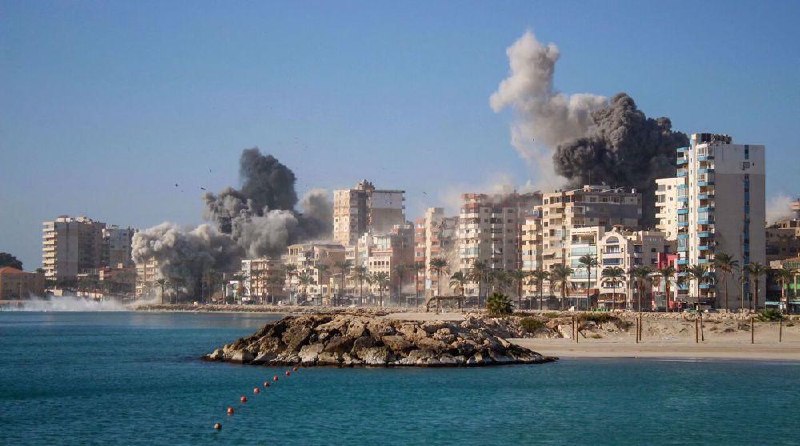
On the evening of 6 May 2026, the Israeli Air Force intercepted a suspicious aerial target launched from Lebanon toward northern Israeli territory. The incident triggered sirens in Kiryat Shmona, Manara, and Margaliot — communities strung along a frontier that has absorbed mounting cross-border fire over the preceding months. IDF Spokesperson confirmed the interception at 22:35 UTC, describing the object as an "aerial target" without immediately specifying whether it was a drone, rocket, or loitering munition. The Israeli Home Front Command had earlier reported detecting what it characterised as an "infiltration march" from southern Lebanon, though subsequent IDF statements reframed the threat as aerial in nature. No injuries were reported.
The episode landed against a backdrop of sharply elevated cross-border hostility. Since the Hamas-led attack of 7 October 2023 and Israel's subsequent ground and air campaign in Gaza, exchanges of fire across the Lebanon frontier have become near-daily occurrences. The IDF has struck what it designates as Hezbollah infrastructure deep inside Lebanon; Lebanese factions have launched drones, rockets, and anti-tank missiles at Israeli communities in the north. For residents of Kiryat Shmona — a city of roughly 23,000 that sits within rocket range of Lebanese positions — the sirens have become a persistent fact of daily life. The city was largely evacuated in late 2023, with mandatory restrictions on return imposed by the Home Front Command through much of 2024 and 2025.
What distinguishes Tuesday's incident is the detection architecture it exposed. The sirens activated in two waves — first at 21:49 UTC according to open-source monitoring feeds, then again after the IDF confirmed an active interception at 22:35. The Home Front Command's public alerts described the threat as an infiltration march, a phrasing that initially suggested a ground incursion rather than an aerial one. The IDF's subsequent framing corrected that characterization, classifying the object as aerial and confirming it had been intercepted before reaching Israeli airspace. That sequence — a public alert, a correction, and an interception — illustrates the compressed decision-making timelines that define modern air defence at the border.
The IDF's multi-layered air defence architecture is central to understanding why the episode ended without casualties. Israeli air defence operates as an integrated system spanning short-, medium-, and long-range interceptors: the Iron Dome handles rockets and mortar shells at ranges up to roughly 70 kilometres; David's Sling addresses larger rockets and cruise missiles at medium range; the Arrow system intercepts ballistic missiles outside the atmosphere. Drones — particularly smaller, slower platforms — occupy a grey zone between these systems, often requiring coordination between radar units, electronic warfare assets, and manned interceptors. Whether the Lebanese-launched object was a quadcopter-style surveillance drone, a one-way attack drone, or a larger munitions platform has not been publicly specified by the IDF. The ambiguity matters operationally: each category demands a different response posture.
The Lebanese angle presents a structural challenge for attribution. No Lebanese faction had formally claimed the launch as of the time of reporting. Hezbollah, the dominant armed group in southern Lebanon, has historically avoided claiming individual cross-border incidents while maintaining a steady tempo of operations. Smaller Palestinian factions based in Lebanon have also conducted periodic fire from the frontier. Without a claim of responsibility, analysts and military planners must rely on signature analysis — radar cross-section, flight profile, launch geometry — to determine the object's origin and type. That process takes time, and the IDF's public statements are calibrated to the threat they can confirm, not the one they are still assessing.
From a technology perspective, the episode highlights the growing sophistication of low-end aerial threats confronting Israeli air defence. Commercial-grade drones, once a niche concern, have become a routine challenge across multiple conflict zones. Their low radar signature, slow speed, and flexibility make them difficult to classify quickly. The IDF has invested heavily in counter-drone capabilities — including electronic jamming, dedicated anti-drone interceptors, and upgraded radar processing — but no system is designed to handle an unlimited volume of simultaneous launches. If Tuesday's object was one of a coordinated pair or batch, the evening's outcome could have looked very different.
The broader strategic picture is equally opaque. US-mediated negotiations aimed at reducing frontier tensions have produced intermittent ceasefire frameworks, but neither side has implemented a durable cessation. Israel has conditioned any diplomatic normalization on Hezbollah's withdrawal from the border zone as stipulated under UN Security Resolution 1701, which ended the 2006 Lebanon war. Hezbollah maintains that its forces remain in place pending a broader Gaza ceasefire, effectively tying the two fronts together. The result is a frontier with no diplomatic off-ramp visible in the near term — and an air defence system that must perform correctly every single time, while an adversary need succeed only once.
What remains unclear from Tuesday's reporting: the precise classification of the intercepted object, the identity of the actor responsible, and whether additional objects were launched and escaped detection. The IDF confirmed one interception; the public record does not indicate how many objects entered Israeli airspace or whether any reached their intended target. Until those details are clarified by official briefing or leaked to Israeli media, the episode will sit in a buffer zone between confirmed fact and open question.
The stakes are straightforward. If the aerial threat from Lebanon continues to escalate — both in frequency and in the sophistication of the platforms employed — Israel will face mounting pressure to either expand its air defence inventory, conduct deeper strikes inside Lebanese territory, or accept a degree of chronic attrition along the northern frontier. For the residents of Kiryat Shmona and surrounding communities, the sirens will continue until one of those calculations resolves. Tuesday's interception bought another night of quiet; it did nothing to change the underlying arithmetic.
This publication's coverage of the Israel-Lebanon frontier differs from the wire in its emphasis on the detection-and-interception sequence as a window into the operational pressures on Israeli air defence, rather than treating the incident primarily as a diplomatic signal. The IDF Spokesperson's confirmed interception and the Home Front Command's alert timeline provide the factual spine; the framing foregrounds what the technical response reveals about a system under sustained stress.
Wire provenance
This editorial synthesis draws on the following public wire/social posts:
- https://t.me/idfofficial/12345
- https://t.me/idfofficial/12346
- https://t.me/GeoPWatch/9876
- https://t.me/GeoPWatch/9877
- https://t.me/alalamarabic/5555
- https://t.me/GeoPWatch/9878