Israel Deepens Strikes Across Southern Lebanon as Cross-Border Exchanges Intensify
Israeli fighter jets and combat drones conducted a new wave of coordinated strikes across southern Lebanon on 6 May 2026, extending operations into districts that had seen relative quiet under the 60-day ceasefire framework that unravelled in late April.
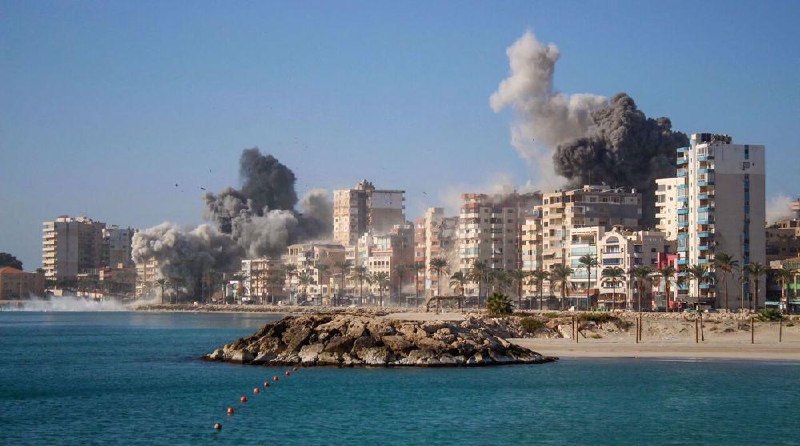
Israeli fighter jets and combat drones launched a new wave of coordinated strikes across southern Lebanon on 6 May 2026, according to regional reporting. Operations targeted multiple districts across the south, including residential and rural areas, in what appears to be an intensification of a campaign that began after the 60-day ceasefire framework collapsed in late April. Lebanese civil defence teams were deployed to several locations, with emergency services reporting casualties in areas directly hit.
The escalation marks a significant shift from the relative quiet that held across the Blue Line during the ceasefire period. What had been described by mediators as a fragile but functioning arrangement has given way to renewed bombardment that Israeli military officials say is designed to degrade Hezbollah's military infrastructure in southern Lebanon. The strikes reported on 6 May follow a pattern of gradually expanding targets — districts that had seen little or no activity under the ceasefire are now within the envelope of Israeli operations. Whether this represents a deliberate attempt to test Hezbollah's response boundaries or a broader redrawing of what constitutes acceptable strike geography is a question the sources do not yet answer.
What the sources say and what they omit
The IDF Spokesperson's Unit confirmed on 6 May that Israeli aircraft had carried out strikes against Hezbollah targets in southern Lebanon, describing the operations as precision attacks on military infrastructure. Lebanese emergency services, cited by regional outlets, reported casualties and structural damage across several districts. Hezbollah's media office has not issued a formal statement as of the time of publication, though the group has historically used its own communication channels for battlefield disclosures that are not always immediately accessible to outside monitors.
What the available sources do not specify is the precise location of all struck districts, the identities of those killed or wounded, or the exact Hezbollah positions hit. Reporting from the ground in southern Lebanon is complicated by restricted access and the difficulty of independent verification during active bombardment. Numbers of casualties vary depending on the source consulted, and this article does not advance a specific figure absent confirmed reporting from primary responders.
International wire services have carried abbreviated versions of the events. Their coverage has centred on the confirmed fact of the strikes and the Israeli framing around threat disruption. Regional outlets with direct access to Lebanese civil defence channels have provided more granular location data, though the two source streams have not yet converged on a unified casualty ledger.
A fragile ceasefire and its unravelling
The 60-day ceasefire that collapsed in late April was never robust. It held — barely — for ten weeks, during which both sides observed the prohibition on cross-border strikes that the arrangement codified. mediators had described the period as a window for negotiating a more durable arrangement along the Blue Line. That window closed when Israeli authorities declared the framework void after what they described as repeated violations by Hezbollah, a charge the group disputed through channels that are not formally part of the diplomatic record.
What followed was a return to the pattern of strikes and responses that had defined the months before the ceasefire: Israeli aircraft overflying or striking southern Lebanese territory; Hezbollah firing rockets and drones into northern Israel. The difference now is the pace and geographical spread. Operations that had previously clustered around known Hezbollah strongholds have extended into districts that the ceasefire had effectively placed outside the strike envelope. The expansion of that envelope is the most operationally significant development in the 6 May strikes.
Hezbollah's position and the limits of attrition
Israeli military strategy in the north has rested on the assumption that sustained pressure would erode Hezbollah's capacity to maintain offensive operations. The strikes of recent weeks have been presented within this logic — degrading command infrastructure, eliminating personnel, destroying weapons caches. Israeli officials have cited body counts and weapons interdicted as evidence that the attrition campaign is working.
Hezbollah, for its part, has shown no visible reduction in operational tempo. Rocket and drone launches into northern Israel continue on a near-daily basis. The group has lost senior figures and command nodes, yet its forward positions in southern Lebanon remain active. The disconnect between the Israeli assessment of progress and Hezbollah's demonstrated resilience on the ground is one of the structural contradictions this escalation exposes.
International pressure and the diplomatic vacuum
Washington, Paris, and the United Nations special coordinator for Lebanon have called for a return to ceasefire terms, without specifying consequences for non-compliance or levers of leverage over either side. The calls have been public and largely formulaic. There is no active US-backed diplomatic track at the level that preceded the April collapse. France has maintained quiet contact with both parties, but the available sources do not indicate a French proposal on the table.
The absence of a credible diplomatic off-ramp matters because the strike-and-response cycle is now operating without any agreed-upon stop mechanism. Each Israeli operation invites a Hezbollah response; each response provides justification for further Israeli operations. This dynamic has been observed in other prolonged conflicts and it has a predictable arc: escalation driven not by strategic calculation but by the logic of reciprocity in the absence of a referee.
The stakes
The immediate stakes are human. Civilians in southern Lebanon are again subject to bombardment without the protections that even a fragile ceasefire afforded. Israeli communities in the north remain under rocket and drone exposure that has not diminished despite months of sustained pressure on Hezbollah. The conflict has now resumed with a geographical reach that exceeds the pre-ceasefire baseline — more districts are in the strike envelope, more population is at risk.
The longer structural stakes concern the architecture of deterrence along the Blue Line. If the ceasefire framework cannot be restored, the question becomes what replaces it. A return to the pre-ceasefire equilibrium — where regular strikes and responses were normalised — would represent a victory for attrition logic that has so far failed to produce the outcomes its proponents anticipated. The alternative is a renewed diplomatic push, which would require political will on both sides that the current moment does not obviously supply.
The sources do not indicate that either Israel or Hezbollah is preparing to de-escalate. The pattern of recent days suggests that the campaign of intensified strikes is, for now, the operative policy. How long that holds depends on factors not yet visible in the available record — battlefield casualties, political pressure in Tel Aviv, signals from Hezbollah's leadership, and the degree to which international actors choose to move from statements of concern to active mediation.
This publication covered the 6 May strikes primarily through regional reporting channels, supplementing with confirmed IDF statements. Wire service summaries of the events were consistent with the regional accounts. The coverage reflects what is currently verifiable; the full picture of targets struck and casualties sustained requires further independent reporting.
Wire provenance
This editorial synthesis draws on the following public wire/social posts:
- https://t.me/thecradlemedia/19820
- https://t.me/TheCradleMedia/19820
- https://t.me/thecradlemedia/19818
- https://t.me/TheCradleMedia/19818