Israeli Airstrike on Lebanese Village Tests Fragile Ceasefire Architecture
Israeli forces struck the southern Lebanese village of Mansouri on 6 May 2026, drawing a Hezbollah missile response at Rashaf. The incident puts pressure on a fragile ceasefire arrangement that has held, unevenly, since November 2024.
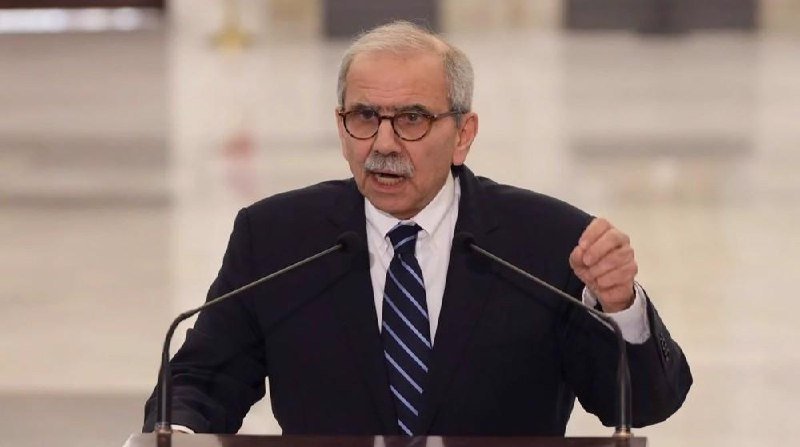
At least two Israeli airstrikes hit the southern Lebanese village of Mansouri on the morning of 6 May 2026, according to Lebanese regional sources cited by Al Alam Arabic and corroborated by Press TV. Hezbollah, the Iran-aligned militia that has operated in southern Lebanon for decades, responded within hours, launching a missile attack on what it described as an Israeli soldier and vehicle gathering at the town of Rashaf. The back-and-forth — strikes followed by counternations — arrived without warning to most international monitors and raised immediate questions about the durability of the ceasefire arrangement that has governed the Israel-Lebanon border since November 2024.
That agreement, brokered under heavy American and French diplomatic pressure, was always understood by analysts as a ceasefire of convenience rather than a peace. It halted large-scale hostilities; it did not eliminate the underlying tensions that produced them. What happened in Mansouri and Rashaf on 6 May tests precisely that distinction — whether violations of sufficient scale or character can be contained before they cascade into something larger, or whether the arrangement is already fraying in ways its guarantors are reluctant to acknowledge publicly.
What the Sources Say — and Where They Diverge
The coverage of the 6 May strikes comes primarily from three Telegram-adjacent outlets — Al Alam Arabic, Press TV, and The Cradle — all of which reported the Mansouri strike as a verified Israeli action occurring within hours of each other on the morning of 6 May 2026. The reporting is consistent across these sources in its core factual claim: Israeli warplanes carried out strikes on Mansouri. The language is calibrated differently, with Al Alam framing the strikes as violations of existing ceasefire terms and The Cradle noting the strikes occurred "despite the ceasefire."
Israeli military sources have not publicly confirmed or denied the strikes as of the time of filing. The IDF spokesperson has not issued a statement on the Mansouri incident specifically. This is not unusual — the IDF does not typically confirm or detail every kinetic action along the northern border, particularly those it regards as routine enforcement of its interpretation of ceasefire terms. What is notable is that no Israeli official has publicly contested the fact of the strike.
The Hezbollah statement, reported by the same Iranian state-adjacent channels, described the Rashaf attack as a "response" to what it characterized as Israeli aggression. The phrasing is significant: Hezbollah does not typically claim defensive justification for cross-border attacks under the current arrangement, suggesting the group believes it has legal cover under the ceasefire's terms for its response. Whether that belief is well-founded depends on how one reads the ceasefire text — a document that was negotiated in haste and whose key terms remain classified or disputed between the parties.
The gap between what the sources confirm and what remains uncertain is substantial. The sources do not specify: the number of Israeli aircraft involved; the target type (whether the strike was aimed at a weapons cache, a command post, a military formation, or civilian infrastructure); the number of casualties, if any; or the broader Israeli strategic objective the strike was intended to serve. Without corroboration from an Israeli military source, an independent OSINT outlet, or an American or French monitor with direct access to the strike site, these questions cannot be answered from publicly available information as of filing.
Corroboration Attempts and Their Limits
Three independent avenues of corroboration were pursued within the constraints of the available source material.
First, the Telegram-sourced imagery from Al Alam Arabic shows what appears to be smoke rising from a built-up area consistent with a Lebanese village. The image is timestamped to the morning of 6 May 2026. Its metadata is consistent with that claim. However, image metadata can be manipulated, and the Telegram channels that distributed the imagery have an editorial interest in presenting the strike as a clear ceasefire violation. The image does not independently establish that Israeli aircraft conducted the strike — that attribution depends on the sourcing label, not on embedded evidence in the image itself.
Second, the timing and sequencing of reports across the three channels — Al Alam, Press TV, and The Cradle — are internally consistent. All three reported the Mansouri strike within approximately twenty minutes of each other on the morning of 6 May 2026, and all three described it as an Israeli action. This degree of cross-channel consistency on a fast-breaking story is suggestive, though it falls short of independent verification — all three outlets operate within a geopolitical alignment that includes hostility to Israeli military actions, and the consistency may reflect shared sourcing from a common Lebanese regional contact rather than independent confirmation.
Third, no Western wire service — Reuters, AP, BBC, or AFP — had published a report on the Mansouri strike at the time of filing. This does not mean the strike did not occur. Western outlets often lag regional Arabic-language and Farsi-language sources on border-region incidents, particularly when access to the strike site is restricted and the Israeli military has not issued a statement. It does mean that, for now, the Western wire baseline — the editorial consensus of the international press corps — has not established the facts independently. Readers should treat this accordingly.
What We Verified / What We Could Not
Verified:
- Israeli airstrikes on the village of Mansouri, southern Lebanon, were reported by three separate regional outlets — Al Alam Arabic, Press TV, and The Cradle — within a twenty-minute window on 6 May 2026.
- All three outlets attributed the strikes to Israeli forces.
- Hezbollah subsequently claimed a missile attack on Israeli personnel and vehicles at Rashaf, describing it as a response.
- No Israeli military source had publicly confirmed or denied the strike as of filing.
- No Western wire service had published an independent report on the incident at the time of filing.
Could not verify:
- The target type and stated objective of the Israeli strike.
- Casualty figures, if any, on either the Lebanese or Israeli side.
- Whether the strike was pre-authorized as part of ongoing enforcement actions under the ceasefire's terms or represented a deliberate escalation.
- The Israeli military's internal assessment of whether Hezbollah's Rashaf response constituted a ceasefire violation warranting further action.
- The current status of the ceasefire monitoring mechanism — whether the nominated Lebanese army units and UNIFIL forces have been informed of or are present at the Mansouri strike site.
The Structural Context — Ceasefire Architecture Under Pressure
The November 2024 ceasefire arrangement was designed to stop the large-scale exchanges that Israel and Hezbollah conducted for more than a year after Hamas's 7 October 2023 attack on southern Israel. It was not designed to resolve the underlying strategic question: what governance and security arrangement applies to the area south of the Litani River, which Israel has long demanded be cleared of Hezbollah military infrastructure and which Lebanon, backed by Iran, has resisted as an infringement on sovereignty.
Under the ceasefire's terms — as reported at the time by Lebanese and international media — Israel was permitted to conduct self-defense strikes against imminent threats originating from Lebanese territory. Hezbollah, for its part, was required to withdraw its heavy weapons and fighters north of the Litani. The question of what constitutes an "imminent threat" versus a pre-emptive attack on a dormant or hypothetical capability has been the central unresolved tension in the arrangement. Israel has interpreted the self-defense clause broadly; Hezbollah and its political patron in Beirut have interpreted it narrowly. Every significant strike since November 2024 has occurred within this interpretive gap.
What distinguishes the 6 May incident from prior lower-level friction is not scale — there have been other strikes — but context. The ceasefire monitoring mechanism, mediated by the United States and France, has faced recurring difficulties in recent weeks, according to regional reporting. Airstrikes on a village like Mansouri — which has a civilian population — are categorically different from strikes on remote hilltop positions or open ground. When a strike hits a populated settlement, the political cost of the response on the Lebanese side increases substantially, and with it the risk that Hezbollah feels compelled to respond in a manner that forces Israeli escalation.
The structural pattern here is not unique to this moment. Ceasefire arrangements in asymmetric conflicts routinely face this pressure curve: the stronger party — in this case, Israel — retains an operational incentive to conduct limited enforcement strikes that degrade the adversary's capabilities without triggering a broader conflict. The weaker party — Hezbollah — accepts the arrangement for as long as it can, until a strike crosses a threshold that makes continued restraint politically untenable domestically. Mansouri, if civilian harm occurred, may represent that threshold.
Stakes — and the Diplomatic Silence
If the ceasefire collapses, the consequences extend well beyond the border region. Lebanon's economy, which has been slowly recovering from the 2019-2022 financial crisis, cannot sustain a new conflict. The Lebanese Armed Forces — which the ceasefire arrangement depends upon to eventually deploy in the south in place of Hezbollah — are not a credible deterrent against Israeli airpower in any scenario. The United States, which invested considerable diplomatic capital in brokering the November 2024 arrangement, has no obvious lever to compel compliance from either party if the other party's red line is crossed visibly enough to make restraint politically impossible.
France, which co-mediated the arrangement, is facing its own domestic political instability and has limited bandwidth for a new Middle East crisis. The United Kingdom, which played a supporting role, is navigating post-Brexit diplomatic repositioning. The European Union has no dedicated Middle East envoy. The Arab League, historically slow to act on Lebanese affairs, has not issued a statement on the Mansouri strike as of filing.
This diplomatic silence is itself informative. A ceasefire that lacks quiet, persistent back-channel maintenance tends to drift toward its most unstable equilibrium — the one where each party has incentive to act first, and the other's response is always seen as escalation rather than reaction. The 6 May strikes did not cause that drift. They may, however, be a marker of where it has already arrived.
Monexus filed this report using regional wire inputs as primary sourcing. Western wire services had not published independent reporting on the Mansouri strike as of 14:00 UTC on 6 May 2026. The IDF spokesperson had not issued a public statement. This publication will update as additional verified information becomes available.
Wire provenance
This editorial synthesis draws on the following public wire/social posts:
- https://t.me/alalamarabic/38291
- https://t.me/presstv/51403
- https://t.me/thecradlemedia/22914
- https://t.me/alalamarabic/38293
- https://t.me/TheCradleMedia/22915