Israeli Airstrikes Hit Lebanese Internal Security Forces Facility in Kfar Joz
Israeli warplanes struck the Internal Security Forces complex in Kfar Joz on 6 May 2026 — a Lebanese state institution, not a militia headquarters. The distinction matters, and the diplomatic silence from Washington suggests it has been noticed.
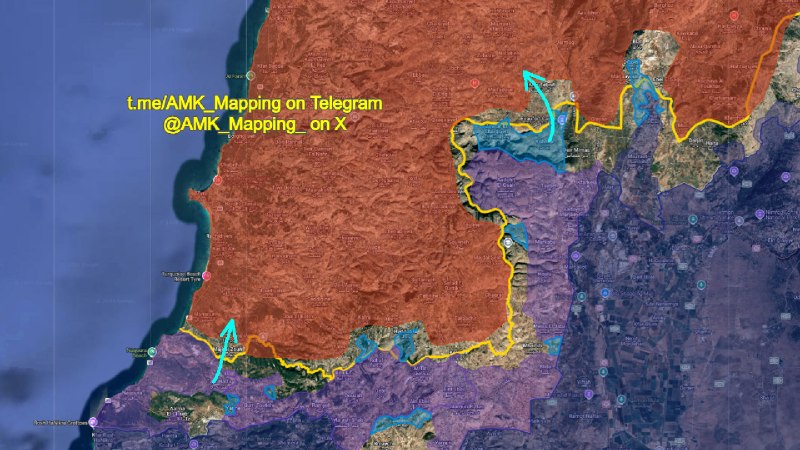
On the morning of 6 May 2026, Israeli warplanes struck the Internal Security Forces complex in the southern Lebanese town of Kfar Joz. Two separate airstrikes hit the facility, according to reporting from The Cradle Media — an Iran-aligned news organisation whose Telegram channels were the first to carry the alert. The Internal Security Forces are a Lebanese state institution, formally under the Interior Ministry's authority. The strike was not targeting a militia command post or a weapons depot. It was targeting the state.
The distinction is not semantic. Israel's previous operations in southern Lebanon — sustained, deadly, and widely condemned — targeted Hezbollah infrastructure or militant positions. Kfar Joz is different. The facility struck hosts Internal Security Forces personnel, the same force that mans checkpoints and conducts civilian law-enforcement operations across Lebanese territory. That distinction signals something the international community appears reluctant to name: Israel has moved a red line, and the diplomatic silence that followed suggests the move has been registered, if not yet contested.
Immediate Context: The Attack and Its Aftermath
The strikes were reported at approximately 10:34 UTC on 6 May via The Cradle Media's Telegram channels, with an updated report at 10:42 confirming two direct hits on the Internal Security Forces complex. Lebanese state media confirmed the attack and the targeting of the security installation. The Lebanese Internal Security Forces directorate issued no immediate public statement, a silence consistent with an institution under direct military pressure.
Israeli military spokespersons declined to provide specific details beyond the standard acknowledgment of ongoing operations in the area. Hezbollah, whose fighters operate across southern Lebanon and whose infrastructure has been an explicit target of Israeli operations since October 2023, did not comment on the strikes at time of publication. The absence of a Hezbollah statement is itself notable — it suggests either deconfliction with its ally Iran, or a calculation that a response on this specific target is not strategically optimal.
The escalation pattern, however, is difficult to ignore. Israeli operations in southern Lebanon have progressively widened their target set over the past eighteen months. Each incident has pushed the threshold for what constitutes a legitimate target upward. Kfar Joz represents a structural shift: formal state architecture, not militant infrastructure, was hit.
Counter-Narrative: Israel's Security Case
Israel's core justification for strikes inside Lebanon rests on the right to self-defence and the persistent threat posed by armed groups operating in proximity to the border. The 2006 Resolution 1701 framework, which established the operational logic of the current rules of engagement, has repeatedly been cited by Israeli officials as insufficiently enforced against Hezbollah's military presence in southern Lebanon. Israel's campaign, in this framing, is a response to a documented and persistent violation of an international agreement that the international community has failed to enforce.
That framing has genuine structural weight. The resolution required Hezbollah's disarmament and the deployment of Lebanese Armed Forces to the south — neither fully occurred. Israeli analysts have argued for months that the escalation corridor is the only tool available when diplomatic channels are blocked. The strike on the Internal Security Forces compound, however, sits awkwardly within that argument. The Internal Security Forces are not a paramilitary formation. They are, by design and mandate, a civilian law-enforcement body. Attacking them does not degrade Hezbollah's military capacity. It degrades the Lebanese state's capacity to govern its own territory.
Structural Frame: What the Escalation Pattern Reveals
Escalation in military conflicts follows recognisable logic. Each step upward establishes a new floor — a level of destruction or target selection that becomes the new baseline from which the next step is measured. What happened in Kfar Joz fits that pattern precisely. Israeli operations have moved from targeting Hezbollah fighters and infrastructure, to targeting border villages, to targeting a formal state security institution. The floor has risen.
The structural logic operating beneath this is not purely military. It is also diplomatic. Israel, by widening its target set in Lebanon, is simultaneously applying pressure to Iran — the principal external backer of both Hezbollah and, to a degree, the Lebanese state apparatus under its current political configuration. Iran is engaged in ongoing nuclear negotiations in which concessions carry significant domestic political costs. Israeli strikes that visibly weaken Lebanon's state institutions — institutions Tehran has worked to cultivate influence within — are not politically neutral. They are a signal, calibrated to make concessions appear more costly to Iranian decision-makers.
Whether the signal was deliberate or a product of reflexive escalation under domestic political pressure in Tel Aviv is unclear. The effect, structurally, is similar in either case: military action is operating as a tool of diplomatic coercion, and the escalation ratchet turns in only one direction.
Stakes: What the Silence from Washington Means
The most consequential fact may be what did not happen. Washington did not issue a condemnation. Briefings from the State Department acknowledged the strikes without characterising them as violations of established norms. That silence is not neutral. It signals a level of tolerance — or at minimum, a decision not to expend diplomatic capital on contesting the targeting of a Lebanese state institution.
The practical stakes are concrete. A Lebanese state that cannot protect its own security infrastructure from Israeli strikes is a state whose sovereignty is effectively conditional. The Internal Security Forces, already stretched thin by economic crisis, political paralysis, and the competing authority of armed non-state actors, now face the prospect of operating under direct aerial threat from their nominal ally's principal adversary. This is not a recipe for state-building.
The longer-term stakes are larger. If Israel's targeting doctrine continues to expand to encompass state institutions — not because they host militants, but because their existence complicates the security architecture Israel prefers — then the question of Lebanese sovereignty is not a matter of political philosophy but of operational fact. A state that cannot field security forces in its own territory is a state in name only.
The counter-argument, which has historically sustained Western support for Israeli operations, is that the alternative is worse — that Israeli security requires the freedom to act, and that constraints produce the conditions for the next conflict. That argument has not been tested against the specific scenario of state-institution targeting. It will be, if the pattern from Kfar Joz becomes the template.
What remains genuinely unclear is whether the strike was deliberate — a calibrated message to Tehran — or a product of the operational momentum that carries its own logic once escalation begins. The sources do not establish intent. What they establish is effect: a Lebanese state institution has been struck, the threshold has moved, and the international response has been silence. The combination of those three facts will shape what happens next. Whether it shapes it toward de-escalation or toward the next step up the ratchet is the open question that Washington, by its silence, has declined to answer.
Wire provenance
This editorial synthesis draws on the following public wire/social posts:
- https://t.me/TheCradleMedia/4821
- https://t.me/TheCradleMedia/4822
- https://t.me/thecradlemedia/4821
- https://t.me/thecradlemedia/4822