Kyiv declares ceasefire, reports 1,820 Russian violations within hours
Ukraine declared a unilateral ceasefire on the night of May 5–6, but by mid-morning Ukrainian officials had documented 1,820 Russian violations — assault operations, aerial strikes, and rear-area attacks continuing as if no agreement existed.
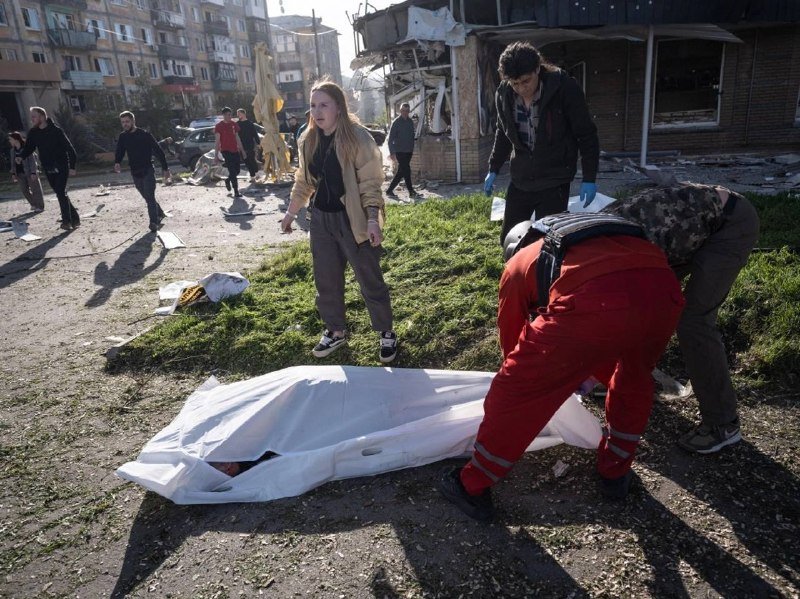
At approximately midnight on the night of May 5–6, 2026, Ukraine declared a ceasefire, according to President Volodymyr Zelenskyy's office, with Kyiv stating it would mirror any Russian actions in kind. By 10:00 AM that morning, Ukrainian officials had documented 1,820 Russian violations of the declared cessation of hostilities. Russian Armed Forces, as of that hour, continued assault operations, deployed aerial strikes, and struck Ukrainian rear-area positions — treating the ceasefire as if it had not been announced.
The episode is a sharp illustration of the gap between diplomatic theatre and battlefield reality. Kyiv framed the move as a test of Moscow's willingness to de-escalate: a unilateral signal, in essence, daring the Kremlin to reciprocate. Russia did not. Within hours, the proposal was buried under footage of continued bombardment.
What happened on the ground
Zelenskyy's office announced the ceasefire took effect at 00:00 on the night of May 5–6, 2026. The Ukrainian position was explicit: any ceasefire regime would need to be mutual, and any Russian breach would be met with a symmetrical response. Within ten hours, that threshold had been crossed — Ukrainian officials logged 1,820 violations. Russian military operations did not pause: assault formations continued advancing along existing axes, and aerial bombardment of rear positions persisted through the morning hours. Russia's defence ministry and foreign ministry had not issued public responses by the time this publication went to press. Russian state media, where coverage existed, framed the announcement as an internal Ukrainian political signal rather than a genuine diplomatic overture.
The asymmetry matters. Ukraine offered a ceasefire it could not unilaterally enforce; Russia ignored it and continued operations as planned. The sequence — announcement, violation, counter-escalation posturing — follows a pattern Kyiv has encountered repeatedly across three years of war: diplomatic proposals that collapse on contact with the actual military situation on the ground.
The diplomatic logic — and its limits
Kyiv's decision to declare a unilateral ceasefire, and to do so publicly and with a symmetric-response caveat, appears designed to achieve several things simultaneously. It puts Russia in the position of being the explicit party that breaks any pause in hostilities — a framing advantage in the ongoing effort to maintain Western military and financial support. It also signals to partners, including Washington, that Ukraine remains willing to explore off-ramps and is not monolithic in its refusal to consider negotiation. Whether that signal was intended for domestic Ukrainian politics, for European capitals, or for the current U.S. administration — or all three — is not specified in the public communications from Zelenskyy's office.
Western partners had been briefed on the proposal, according to sources familiar with the matter, but no joint statement endorsing the ceasefire was issued. The absence is notable: previous ceasefire proposals, including those brokered through intermediaries, have received at minimum rhetorical support from the United States. That silence this time suggests either disagreement with the approach, reluctance to endorse a move that could be read as pressure on Kyiv, or a calculation that the proposal was unlikely to hold and endorsement would carry reputational cost.
Why the ceasefire collapsed so quickly
Three explanations deserve consideration. First, Russia may have viewed the ceasefire announcement as a propaganda manoeuvre and responded in kind — refusing to engage with a public-relations tool rather than a genuine offer. Second, Russian field commanders may have been instructed to continue operations regardless, reflecting a decision made at a level above the operational commanders who would be responsible for implementing any genuine cessation. Third — and this is the most structurally significant possibility — Russia may have been waiting for exactly this kind of signal so that it could use Ukraine's own declaration against it: publicly demonstrating that ceasefire proposals from Kyiv are not serious by virtue of being unilateral and unenforceable.
The 1,820 violations reported within ten hours are a striking number. The sources do not include a methodology note explaining how those violations were counted, what constitutes a violation, or how the figure was cross-checked. For context, prior partial ceasefire arrangements — the grain corridor understandings, local truces around specific population centres — involved verification mechanisms that this unilateral declaration lacked. A ceasefire without a monitoring framework, without reciprocal notification, and without a communications channel for de-confliction is not a ceasefire in any operational sense. It is a political posture.
The structural picture
What the ceasefire episode reveals is the continuing absence of any framework both sides accept as legitimate. Russia's position — that it will continue operations regardless of Ukrainian announcements — is not new. But the scale of reported violations within hours suggests either a decision at the command level to ignore the ceasefire entirely, or a capacity for sustained offensive operations that the Russian military has apparently maintained even after years of casualties and attrition.
Ukraine's position — that it will respond symmetrically — signals it does not intend to absorb the violations without a response. That raises the immediate prospect of an escalation cycle: ceasefire announced, ceasefire violated, Ukrainian response, Russian response to the response. The diplomatic window, however narrow, may have closed before it fully opened.
The broader context is Western support, which remains the essential precondition for Ukraine's ability to sustain military operations. U.S. military assistance — the single largest component of international support — has faced ongoing political uncertainty. If the ceasefire was partially designed to signal to Washington that Kyiv is a willing negotiating partner, the Russian response may complicate that signal rather than reinforce it: the violations demonstrate bad faith on Moscow's part, but they also demonstrate that Kyiv cannot compel Russian compliance through unilateral gestures.
The 1,820 violations reported in the first ten hours of the ceasefire are a number that will be cited in Kyiv's communications with Western partners. Whether that citation changes anything in the calculus of continued support is the question neither side has answered yet.
Wire provenance
This editorial synthesis draws on the following public wire/social posts:
- https://t.me/wartranslated
- https://t.me/osintlive
- https://t.me/Kyivpost_official
- https://t.me/myLordBebo