Musk's xAI Dissolution Is a Test of Who Actually Governs AI
When a single individual can dissolve a major AI entity and fold it into an existing corporate structure without meaningful external review, the gap between Silicon Valley power and public accountability becomes impossible to ignore.
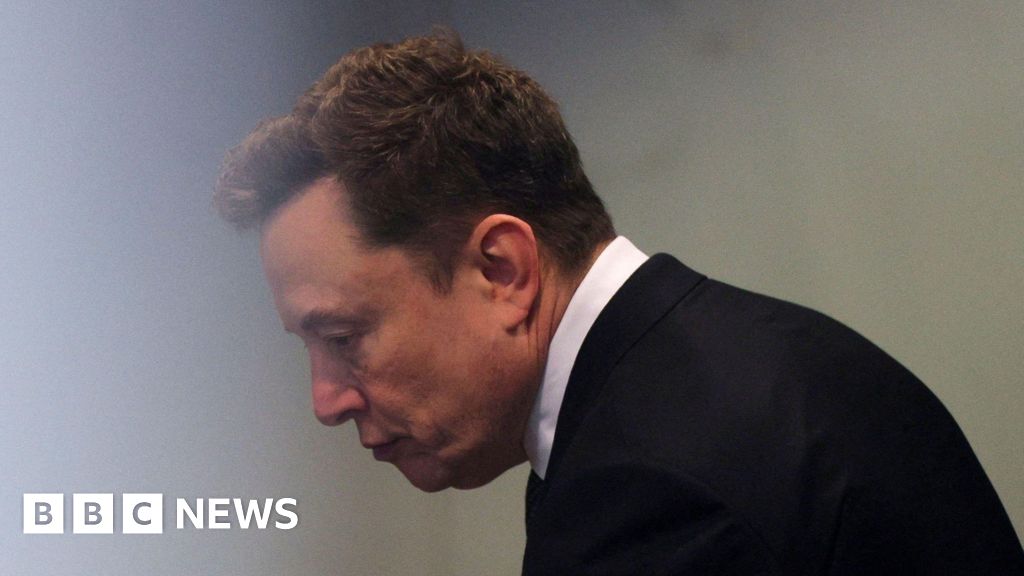
The announcement was brief. Elon Musk, speaking on 6 May 2026, said xAI would be dissolved as a separate company and absorbed into SpaceXAI — effectively folding his flagship AI venture into the operational infrastructure of SpaceX. No regulatory filing accompanied the statement. No board resolution was referenced. The restructuring was presented as an internal corporate decision, which, legally speaking, it was. The question it raises is whether that legal framing is sufficient.
What Musk has done is restructure one of the most consequential technology entities in the world — one whose outputs already touch defense contracts, data infrastructure, and financial modelling — by placing it inside a corporate structure that answers primarily to himself. The move follows a pattern that has become familiar in Silicon Valley: a technology platform grows powerful enough that its internal governance becomes a public matter, and then its principal rewrites that governance on his own terms. The announcement that xAI would become SpaceXAI is, at its core, a statement about where the boundaries of accountability should sit. Musk has decided: with him.
The Architecture of Unaccountability
Corporate law permits considerable flexibility in how entities are organised. A parent company can absorb a subsidiary, rebrand a division, or restructure a holding group for entirely legitimate commercial reasons — tax efficiency, operational coherence, reduced overhead. None of those reasons are inherently suspect. What makes the xAI-to-SpaceXAI move different is the nature of what is being absorbed. xAI developed and deployed systems that interact with real-world infrastructure. Grok, the company's AI assistant, is embedded in X Premium subscriptions. xAI's data centres process inputs that shape information environments affecting hundreds of millions of users. These are not speculative products in a research lab. They are deployed systems with measurable influence on public discourse, financial markets, and, increasingly, defence-adjacent operations through the SpaceX connection.
When an entity with that level of systemic influence undergoes structural change, the default assumption that internal corporate governance is sufficient starts to strain. SpaceX is a private company. Its ownership is concentrated. Its board is not a public institution. Its financial disclosures, to the extent they exist at all, are governed by private-shareholder agreements rather than securities regulators. Converting xAI from a named AI company with a discrete institutional identity into an internal division of SpaceX removes a layer of visibility that, however imperfect, had some practical effect. A company called xAI attracts scrutiny. An AI team inside SpaceX does not — not in the same way.
Power Without an Counterweight
The consolidation of AI capability under individual control is not unique to Musk. It is a broader dynamic in the technology sector, accelerated by the fact that the most capable AI systems require compute infrastructure that only a handful of private entities can afford to build and operate. But Musk's restructure is a particularly legible example because the stakes are explicit. He controls SpaceX, which is the primary launch provider for US national security satellites. He controls Starlink, which provides connectivity across active conflict zones. He controls access to X, one of the world's most-trafficked information platforms. Layering xAI — now SpaceXAI — into that constellation does not create a conflict of interest in any legally actionable sense. It does something more structurally significant: it concentrates decision-making over AI systems with geopolitical reach inside a single proprietary chain of command.
The question is not whether Musk intends harm. The question is whether the architecture he is building has adequate friction against harm. Independent AI labs maintain board structures, investor oversight, and in some cases external safety evaluations precisely because the developers of these systems recognise that their outputs require external check. Musk's restructure is a step away from that model. SpaceXAI will be governed by the same internal logic that governs SpaceX — which is to say, by Musk and the small circle around him. That is a meaningful reduction in the accountability surface area of one of the most powerful AI operations in the world.
A Governance Deficit the Whole Sector Shares
The response from the AI governance community — to the extent there is one — has been muted. This is partly structural. No government agency currently has clear statutory authority to review a corporate restructuring that moves an AI division from one subsidiary to another. The US AI Safety Institute, established to evaluate advanced AI systems, has faced repeated questions about why it has not assessed major proprietary models — including those produced by well-capitalised AI developers with direct government contracts. The honest answer is that the governance architecture has not kept pace with the capability architecture. Advanced AI systems are built at a pace that regulatory frameworks cannot match, and the people building them have both the incentive and the legal right to organise their corporate structures in ways that reduce external visibility.
This is not a problem unique to Musk. It is the operating environment of the entire sector. The announcement that Samsung's market capitalisation crossed $1.2 trillion, itself a measure of how much capital is flowing into technology and AI-adjacent manufacturing, underscores the financial scale at which these entities now operate. When companies of that scale can restructure major AI operations through announcements rather than regulatory proceedings, the implication is clear: the frameworks meant to govern powerful technology were designed for a different era. They assumed that power at this scale would be distributed across institutional actors — governments, publicly listed corporations with independent directors, regulated utilities. What they did not anticipate was the emergence of private, individual-controlled constellations that span communications, space infrastructure, and AI development simultaneously.
Musk's restructure of xAI is legal, financially coherent, and almost certainly commercially sensible. That is not the point. The point is that when the most consequential AI infrastructure in the world is reorganised by a single individual, outside any public process, and with the legal authority to do so entirely unimpeded, the question of who governs AI is not an abstract policy debate. It is a question being answered in real time, by default, in a single individual's favour.
The people who built these systems have ensured that those systems face almost no external check on their deployment. Whether that changes depends on whether governments decide that AI infrastructure — like electrical grids, like financial clearinghouses — is the kind of critical system that requires accountability structures commensurate with its societal reach. Right now, that reckoning has not arrived. Musk's announcement on 6 May suggests he is not holding his breath.
Wire provenance
This editorial synthesis draws on the following public wire/social posts:
- https://t.me/Cointelegraph/3875
- https://t.me/Cointelegraph/3874
- https://t.me/Cointelegraph/3872