Project Deadlock: How Trump's Hormuz Gambit Ran Aground
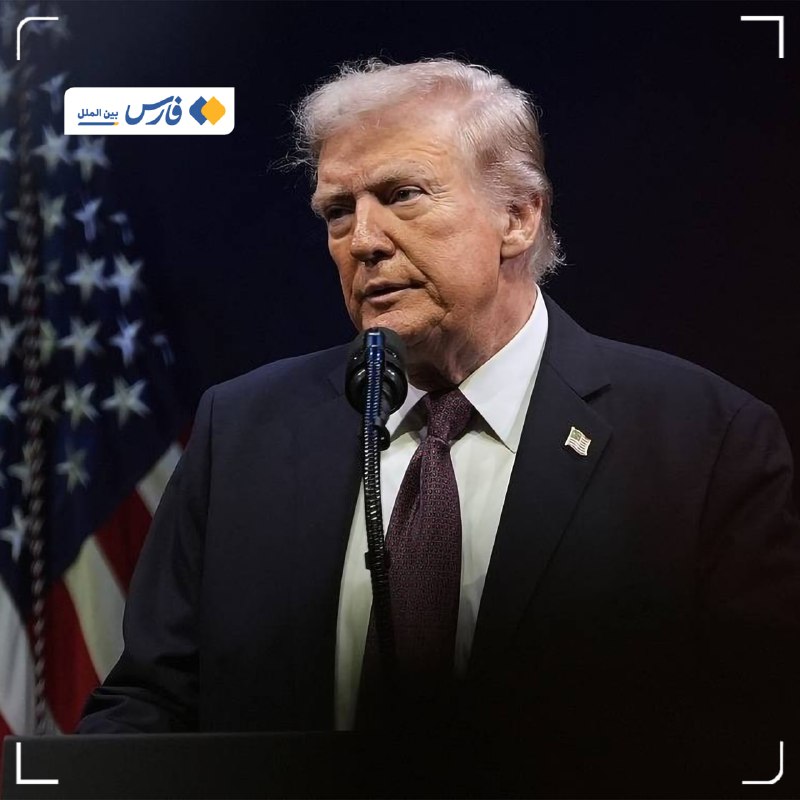
On 5 May 2026, President Donald Trump announced what his administration called "Project Freedom" — a US effort to clear stranded vessels from the Strait of Hormuz, the narrow corridor through which roughly a fifth of the world's oil passes. Two days later, on 7 May 2026, Trump reversed course. The operation was being paused, he said, to allow space for a final agreement with Iran. The about-face was stark: what the White House had framed as a goodwill humanitarian gesture was, in Tehran's reading, an act of economic coercion dressed in diplomatic clothing. And the reversal, Iranian officials made clear, was not a concession — it was vindication.
The episode exposes something the administration's rhetoric has consistently obscured: the United States entered this standoff without the leverage it needed to win it. Iran does not need permission to close Hormuz. It has owned the geography for decades, and no amount of rebranding changes the underlying facts of power at that chokepoint.
The World's Most Dangerous Chokepoint
The Strait of Hormuz is not a metaphor. It is a 33-mile-wide passage between Oman and Iran through which approximately 21 million barrels of oil flow daily — roughly a fifth of global consumption. Every litre that moves from the Persian Gulf to international markets passes through it. Tankers too large to divert through any alternative route — the Cape of Good Hope adds weeks and millions in costs — must pass through waters Iranian forces monitor closely. This is not a technical limitation that clever engineering can overcome; it is a physical fact embedded in the region's bathymetry and trade infrastructure.
US military planners have long understood the strait's centrality. The Fifth Fleet operates from Bahrain, and American warships routinely transit the area. But operating there and controlling it are different things. Iran's anti-ship missile batteries, fast-attack craft, naval mines, and asymmetric capabilities give it options that a traditional blue-water fleet cannot fully counter. Iranian commanders have tested these capabilities in live-fire exercises near the strait, and the US intelligence community has assessed, repeatedly, that any military conflict in the Hormuz vicinity would disrupt oil flows — regardless of which side prevailed.
That asymmetry is the quiet engine driving the diplomatic scramble. Tehran knows it cannot sustain a prolonged military confrontation, but it does not need to. It needs only to credibly threaten disruption, and markets respond. Brent crude prices rose sharply as the initial Hormuz escalation unfolded in early May 2026, before easing as traders weighed the pause announcement.
The Language of Coercion
"Project Freedom" was designed, in the administration's telling, as a humanitarian intervention. The narrative held that a number of vessels had become stranded near the strait — victims of a sanctions and legal grey zone that had made insurance and port access difficult — and that the United States was stepping in to guide them safely through. It was, the White House suggested, an act of benevolence. Iran saw it differently.
Iran's Foreign Minister Abbas Araghchi was direct. The operation, he said, was not about stranded vessels. It was pressure. He described "Project Freedom" as "Project Deadlock," a name that quickly circulated in regional diplomatic circles and was picked up by state-adjacent media. The framing mattered: Araghchi was not merely dismissing the initiative, he was renaming it for domestic and international audiences, stripping away the humanitarian veneer and exposing the coercive logic underneath.
The Trump administration had options for how to respond to that characterisation. It could have pushed ahead and forced Iran to either acquiesce or escalate visibly. Instead, it paused. That decision tells us something important about the limits of the administration's approach to Tehran — and about what Iran actually controls in this relationship.
Deadlock and the Diplomatic Off-Ramp
The pause was framed as an opening for a final agreement. Trump said the United States would finalise an Iran deal or walk away. Iranian officials have, in past weeks, indicated a willingness to talk — or at least to appear willing, which serves their own purposes of keeping Europe and Asia uncertain about whether confrontation is inevitable. The question is not whether talks can happen but whether they can produce anything substantive.
The structural problem has not changed across administrations. Iran wants sanctions relief — real, verifiable, sustained relief — before it agrees to any nuclear constraints. The United States, under successive presidents, has demanded the opposite: Iranian concessions first, verification, then sanctions relief. That sequencing dispute has killed every negotiation since the 2015 Joint Comprehensive Plan of Action, which Iran honoured until the United States withdrew in 2018 under the first Trump administration.
The current round shares that DNA. Araghchi has made clear that Tehran views any deal through the lens of what was lost when Washington abandoned the JCPOA. Iran's nuclear programme has advanced considerably since 2018 — not to weapons-grade, but to levels that give it latent breakout capacity. That capability is itself a negotiating asset. Iran knows that every month it enriches uranium is a month the West grows more nervous, and that nervousness is worth more than any goodwill gesture from Washington.
What the pause represents, then, is less a genuine diplomatic opening than a breathing space. The administration needs something it can call a win. Iran needs the sanctions pressure to lift without making substantive concessions. These are not compatible positions, and the gap between them has not narrowed because the operation was renamed and then suspended.
The Regional Ripple
If the Hormuz standoff were merely a bilateral US-Iran matter, its resolution would be complicated enough. But the strait's importance extends across the Gulf, and the pause has ripple effects across a region already unsettled by shifting American commitments.
Saudi Arabia and the UAE have watched the episode closely. Both Gulf states have coordinated with Washington on Iran policy, but they also have their own calculations. Sustained disruption to Hormuz — whether through actual closure or through the credible threat of it — would devastate their revenues and destabilise their budgets. They have been quietly building alternative export infrastructure, including the East-West crude pipeline that can bypass the strait, but that capacity is not yet sufficient to absorb a prolonged disruption.
Israel has watched with considerably more alarm. Iranian nuclear advancement and any hint of diplomatic normalisation between Washington and Tehran are treated in Tel Aviv as existential concerns. Any deal that leaves Iran with latent enrichment capacity will face fierce opposition in Israel, and the window for a US-Israel consensus on Iran has been narrowing for years.
European states, caught between pressure from Washington to maintain sanctions and interest from their own energy industries in Iranian oil, have been largely passive observers. Their diplomatic leverage is limited, and their own nuclear negotiations with Iran under the E3 format have stalled. They are, in this conversation, footnote actors — present but not shaping.
China and India, both major importers of Iranian oil who have cultivated Tehran relationships precisely because Washington imposed secondary sanctions made others skittish, are watching the pause with a different calculus. They have sustained Iranian oil flows through sanctions workarounds, and they have no interest in a US-Iran resolution that restores full sanctions enforcement. They will watch any deal carefully, and they have options to dilute its enforcement if it does not suit their interests.
Stakes and the Road Ahead
The pause buys time. It does not resolve the underlying problem, which is that the United States wants to constrain Iran's nuclear programme without offering the sanctions relief Tehran says it needs to make any agreement credible. Iran, for its part, wants sanctions relief without substantive constraints on its programme — and it has the geographic advantage to make that position stick, at least for now.
The stakes are real and they are not abstract. A sustained Hormuz disruption — even a credible threat that causes insurers and shippers to impose risk premiums — adds cost to every barrel of oil flowing to Asian markets, Europe, and the Americas. It inflates energy prices at precisely the moment global inflation concerns are重新 emerging. It destabilises governments in importing nations and gives Russia and other producers leverage they are happy to exercise.
If no deal emerges from this pause, the administration faces a choice: escalate or accept the deadlock. Escalation carries risks — Iranian retaliation at sea, through proxies, or via nuclear advancement — that no American administration has been willing to absorb. Acceptance means living with a Iran that has moved measurably closer to weapons capacity while holding a strategic chokepoint the world cannot do without. Neither option is comfortable. The pause, in that light, is not a strategy. It is the space between two unacceptable alternatives, dressed in the language of diplomacy.
The fundamental question — whether the world's sole superpower can coerce a regional power that controls a critical chokepoint into abandoning its primary security insurance — was answered in the brief. The strait was never going to be unclogged by a press release and a rebranding. Iran knew that before the operation launched. And when the administration paused it two days later, Tehran's foreign minister was not gracious in his response. He was precise: Project Deadlock. That is what this was, and that is what it remains.
This publication covered the pause announcement through a geopolitical lens focusing on leverage asymmetry and the strait's structural importance, rather than treating the reversal as a diplomatic breakthrough or a concession to Iranian pressure.
Wire provenance
This editorial synthesis draws on the following public wire/social posts:
- https://t.me/Irna_en/3456
- https://t.me/LiveMint/2248
- https://x.com/polymarket/status/192089472156