Sportsbooks Are Watching: Why Bryce Harper and the Books Have More in Common Than You Think
Sportsbooks and sharp bettors are converging on the same names. Bryce Harper's patient approach at the plate makes him a consistent target for player prop bets, but the relationship between bettor and book reveals something deeper about how the gambling industry really works.
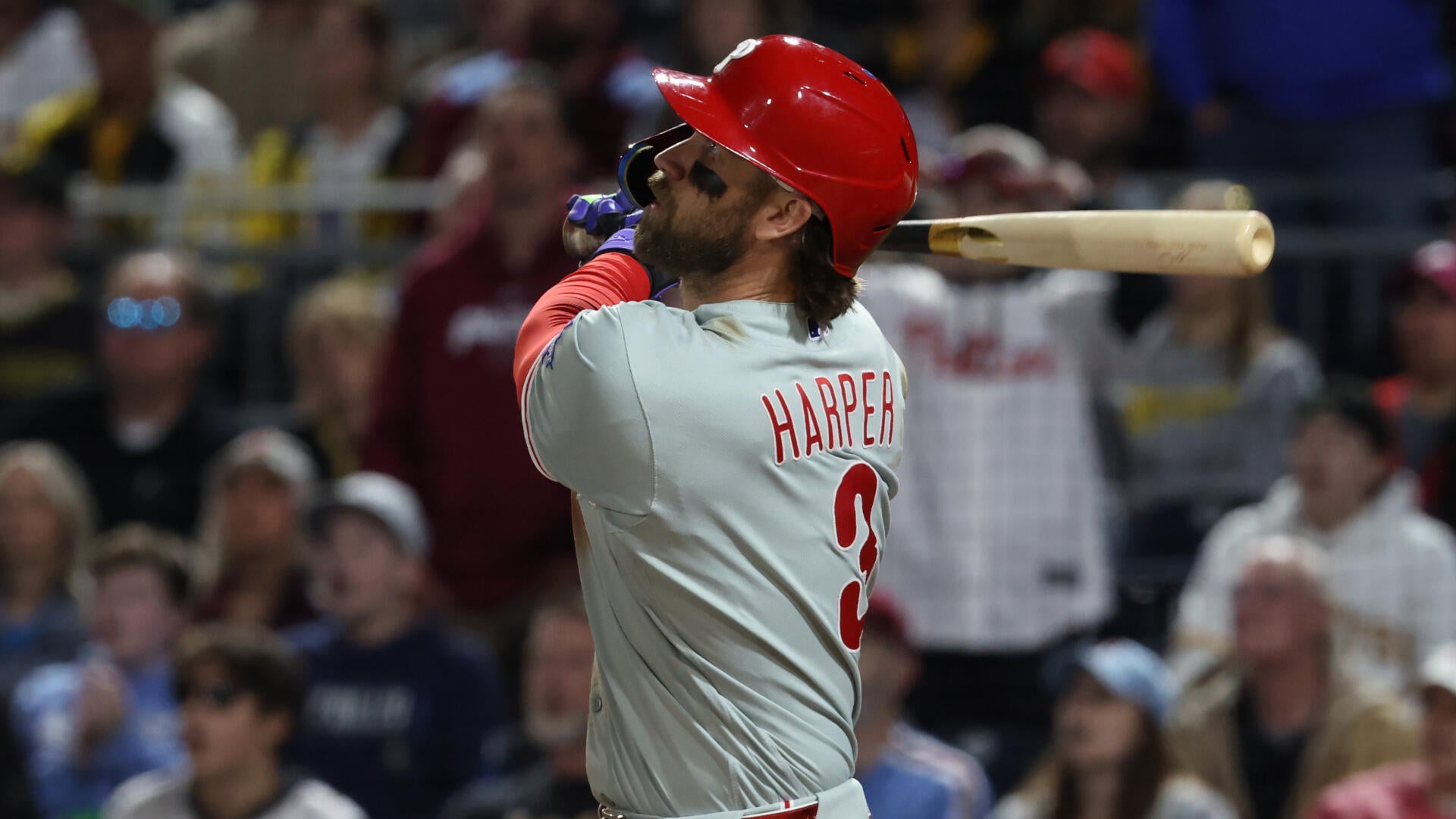
On a Tuesday morning in early May 2026, a SportsLine MLB analyst published his daily home run picks for the evening's slate. Among the names: Bryce Harper. The piece framed the pick as actionable intelligence—analysis meant to inform a bet. But the framing obscures something the gambling industry rarely advertises: the sharpest sportsbooks are already watching the same signals.
Player prop betting—wagering on whether an individual athlete will record a specific statistical output in a given game—has become one of the fastest-growing segments of the legal sports wagering market since the Supreme Court struck down the Professional and Amateur Sports Protection Act in 2018. The appeal is straightforward: you do not need to pick the winner, only whether Harper hits a home run or Shohei Ohtani drives in two runs. The bets are micro-level, legible, and fast to settle. They also generate significant hold—the percentage of wagers sportsbooks retain after paying winners—for the houses that offer them.
Harper occupies a particular space in this market. The Philadelphia Phillies slugger has long drawn the attention of oddsmakers not simply because of his power but because of his approach. A patient hitter who works deep counts and frequently sees elevated pitch counts, Harper tends to either draw walks or see enough pitches to hit the kinds of mistakes that end up over the plate. That profile does not always translate to raw home run totals in any given week, but it tends to produce outcomes that are more predictable than the average player over a larger sample. For sportsbooks running algorithmic position management, that predictability is worth tracking.
The books are not passive in this arrangement. When a player like Harper shows up on a published prop list—whether from SportsLine, a sharp-action Discord server, or a Vegas square's board movement—there is a feedback loop. Early money on Harper's over/under home run total signals confidence to other bettors, which generates additional action, which can move the line. Sportsbooks then adjust their risk exposure accordingly, often hedging across correlated markets to ensure they are not overly exposed in either direction. The bettor who thinks they are getting an edge is often responding to a market that has already priced that information into the line.
This is not a critique of individual bettors who study the game seriously. The baseball betting community includes sophisticated analysts who track pitch-type usage, barrel rates, and platoon splits with a rigor that rivals what front offices were doing a decade ago. Some of them find genuine edges. But the structural asymmetry matters: sportsbooks employ dedicated risk-management teams, have access to proprietary data, and set lines with the explicit goal of balancing action so that regardless of the outcome, the house takes a cut. The individual bettor is making a wager. The sportsbook is running a business.
What makes this dynamic particularly visible in baseball is the volume of data. A sport with 162 games per team per season generates enormous sample sizes, which means that variance—the gap between expected outcome and actual result—smooths out faster than in lower-frequency sports like football or basketball. A bettor who backed Harper in April has a reasonable chance of being right by June if the underlying analysis was sound. That legibility attracts sharp money, which forces books to be more precise, which in turn makes the lines harder to beat. The result is a market that is genuinely competitive by the standards of American gambling.
There is also a cultural dimension worth noting. The normalisation of sports betting in states that have legalised it since 2018 has produced a generation of fans who encounter betting content as seamlessly as they encounter game recaps. A SportsLine analysis on a Tuesday morning reads like any other sports feature. The information environment has adapted to accommodate wagering as a default use case. This is not inherently sinister—it reflects consumer demand—but it does mean that the line between coverage and promotion has become thinner in spaces where the two are adjacent.
The broader question is what this means for the integrity of the game itself. MLB and the players' union have maintained that as long as outcomes are not being fixed, the existence of betting markets does not threaten competitive integrity. That position has limits. When player prop lines are publicly available and widely discussed, they create financial stakes that attach to individual at-bats. The pressure is not the same as a pitcher deliberately walking a batter to influence a game outcome, but it is a different relationship to the sport than the one that existed before widespread legalisation. Players, coaches, and team employees now operate in an environment where their performance has a direct financial reference point that is visible to the public and tied to gambling products.
Harper's presence on a daily prop board is a small example of a large trend. The market has normalised, the books are watching, and the information asymmetry between house and bettor is structural rather than incidental. Understanding that dynamic is not a reason to avoid betting—it is a reason to be clear-eyed about what the bet actually represents.