The Surrender Framework: Why Trump's Iran Negotiations Aren't Diplomacy
When the opening position of every round of talks is that one side has already agreed to capitulate, the process is not negotiation — it is staged capitulation dressed in diplomatic language.
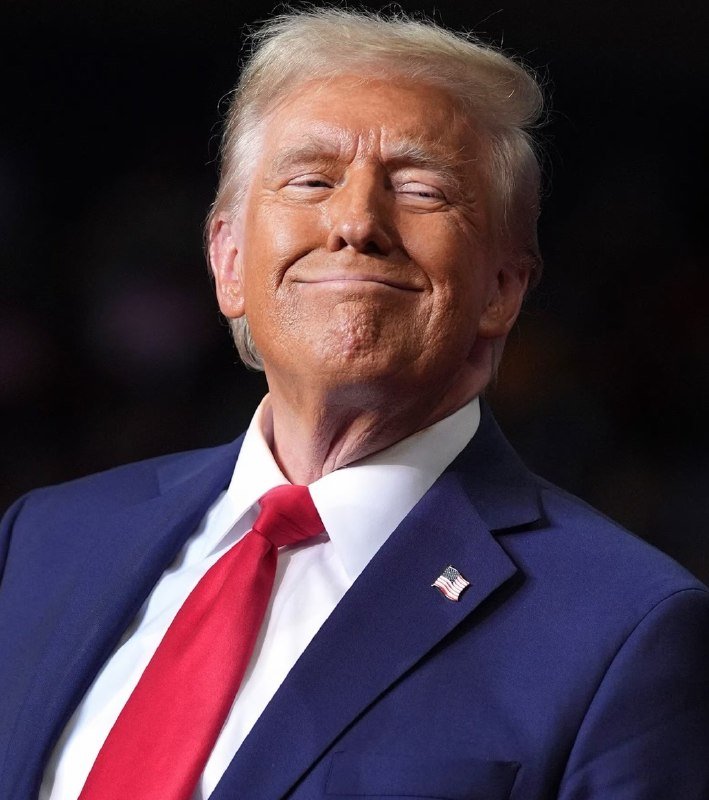
On 6 May 2026, departing for what his administration described as a pivotal round of talks with Tehran, President Trump stated flatly that Iran cannot have a nuclear weapon, adding a qualifier that revealed more than he intended: "Whether I make the Pope happy or not, Iran cannot have a nuclear weapon. He seemed to be saying they can; I say they cannot." The framing was not incidental. It was the entire negotiating position.
That position — repeated across three days of public statements — is that Iran's government has already accepted the outcome demanded of it, and that talks are simply the mechanism for formalising a surrender that has already occurred. "Iran cannot have a nuclear weapon. They have agreed to that," Trump said on 6 May 2026, per Tasnim News. The implication is that any departure from that premise represents a breach, not a counter-proposal. This is not diplomacy. It is a press release written in the form of a negotiation.
The Logic of Pre-Agreed Terms
Diplomacy, at its most functional, is a process by which two parties with incompatible initial positions arrive at something neither would have chosen unilaterally. That requires flexibility — not in objectives, but in the language and sequencing used to reach them. The Trump administration's approach closes that window at the outset.
Reporters pressed the contradiction on 6 May 2026. One challenged Trump directly: "You are facing an opponent in Iran who is not willing to surrender." According to Tasnim News, Trump responded by asking why the reporter assumed non-surrender, then suggested the reporter lacked knowledge of the situation. When the reporter noted that Iran had fired at U.S. ships days earlier, Trump characterised those incidents as marginal. The exchange was revealing not for its substance but for its structure: a leader who insists negotiations are proceeding toward a predetermined conclusion, treats evidence of ongoing resistance as an inconvenience rather than a data point.
The stock market framing compounds the problem. On 6 May 2026, Trump stated that equities were higher than when "we started this war." By his administration's own account, no formal congressional authorisation for hostilities against Iran exists. By standard interpretations of the War Powers Resolution, the executive branch's authority to initiate or expand armed conflict without legislative approval is contested. Treating an undeclared military campaign as a settled fact — and using equity prices as a scoreboard — conflates financial market sentiment with strategic achievement.
The Drone and the Deadline
Iran shot down an American MQ-9A drone on the night of 5 May 2026, according to reporting carried on 6 May 2026. The timing, hours before the latest round of public statements about imminent resolution, did not appear to dampen the administration's optimism. Trump said on 14:37 UTC that it was "too soon to prepare for an Iran peace deal signing," then added at 14:58 and 18:33 UTC that the conflict had a "very good chance" of ending soon — all on the same day.
The Polymarket market on Iranian toll-collection rights in the Strait of Hormuz, cited at a 6 percent probability of Trump agreeing to the demand, suggests that traders view Iranian negotiating leverage as minimal. That reading may be correct in the short term. But markets price probabilistic outcomes over near-term horizons; they are not equipped to price the downstream credibility costs of a negotiation that one side treats as theatre.
The missile depletion claim — that Iran retains approximately 18 to 19 percent of its pre-conflict inventory, per Trump on 6 May 2026 — is presented as evidence of strategic success. It is also, however, a description of an adversary that retains a functioning arsenal at all. A government with 19 percent of its original strike capability is not defeated. It is wounded. Wounded parties with territorial depth, asymmetric deterrence options, and coherent command structures do not capitulate at the negotiating table because the other side's leader believes victory is already achieved.
The Price of Pretending
Trump has also framed economic coercion as the mechanism of success. He told reporters on 6 May 2026 that he had expected oil to reach $200 to $250 per barrel and that prices at $100 represented a partial shortcoming of his preferred strategy. The economic logic — that sufficient pressure would produce Iranian capitulation — failed to account for the structural reality of a petrostate with domestic production capacity and the ability to absorb short-term revenue loss.
The price of oil at $100, not the $200-250 corridor the administration projected, represents neither victory nor defeat in the narrowest economic sense. But it does reveal that the leverage calculus was wrong. When the coercive instrument underperforms, the political framework built on top of it needs revision — not repetition.
The Pope reference is worth noting. Vatican officials had reportedly signalled concern about escalatory dynamics in the Gulf. Trump's dismissal — "whether I make the Pope happy or not" — may be politically legible to a domestic base. Internationally, it signals that third-party mediation or quiet diplomatic back-channels will not be welcomed. That is a choice, but it closes options that have historically been useful in Iranian nuclear negotiations.
What Remains Unresolved
The sources do not specify what concrete concessions Iran has offered, what documentation of any pre-agreement exists, or whether any bilateral channel beyond the public messaging exists. The Polymarket market on Hormuz toll rights suggests the Iranian side has tabled specific demands — demands the market assigns a 6 percent probability of being accepted. Absent a verifiable Iranian statement in the sourced material, those demands cannot be characterised here.
What is verifiable is the shape of the American position: pre-agreed outcome, economic leverage as primary instrument, military degradation as evidence of imminent success, and a public posture that treats Iranian resistance as an information problem rather than a negotiating reality. That position may yet produce a formal document. But a document signed under the framework Trump has described is not a deal — it is a capitulation with a signature line.
This publication framed the exchange as a negotiation with uncertain prospects. Wire coverage leaned toward covering it as a process moving toward conclusion. Neither framing fully accounts for the structural gap between declared intent and the observable behavior of both parties.
Wire provenance
This editorial synthesis draws on the following public wire/social posts:
- https://t.me/tasnimnews_en/123456
- https://t.me/ClashReport/789012
- https://x.com/unusual_whales/status/1520345912345678901
- https://x.com/sprinterpress/status/1520341234567890123